In the realm of industrial automation and process control, the precise and reliable detection of liquid levels is paramount. Among the myriad of sensing technologies available, proximity sensors stand out for their non-contact operation and durability. The CQF16-06EPSEW1 represents a specific, high-performance model within this category, designed to meet rigorous industrial demands. This article provides a comprehensive technical analysis and application guide for this sensor.
The CQF16-06EPSEW1 is a cylindrical, inductive proximity sensor. Its core operating principle is based on electromagnetic induction. The sensor generates a high-frequency oscillating electromagnetic field from its active face. When a conductive metallic target (such as a tank float, paddle, or the tank wall itself if conductive) enters this detection field, eddy currents are induced in the target. This causes a change in the oscillation amplitude within the sensor, which is detected by the internal circuitry. This change triggers a switching signal—typically a solid-state PNP or NPN output as per the model's specification—indicating the presence or absence of the target, and by extension, the liquid level.
Decoding the model number "CQF16-06EPSEW1" offers immediate insight into its key specifications, though exact interpretations can vary slightly by manufacturer. Typically, 'CQF' may denote the series or housing type. '16' often indicates the housing diameter, in this case, 16mm. '06' could refer to the sensing distance, likely 6mm. The suffix 'EPSEW1' is crucial, detailing electrical and connection properties: 'E' might specify a certain housing material or thread type (e.g., M16x1), 'P' often denotes PNP output configuration (sourcing), 'S' could imply a short-circuit and reverse polarity protected design, 'E' might indicate a DC 3-wire system, and 'W1' often specifies the connection type, such as a 2-meter PVC cable.
Key technical characteristics of the CQF16-06EPSEW1 typically include:
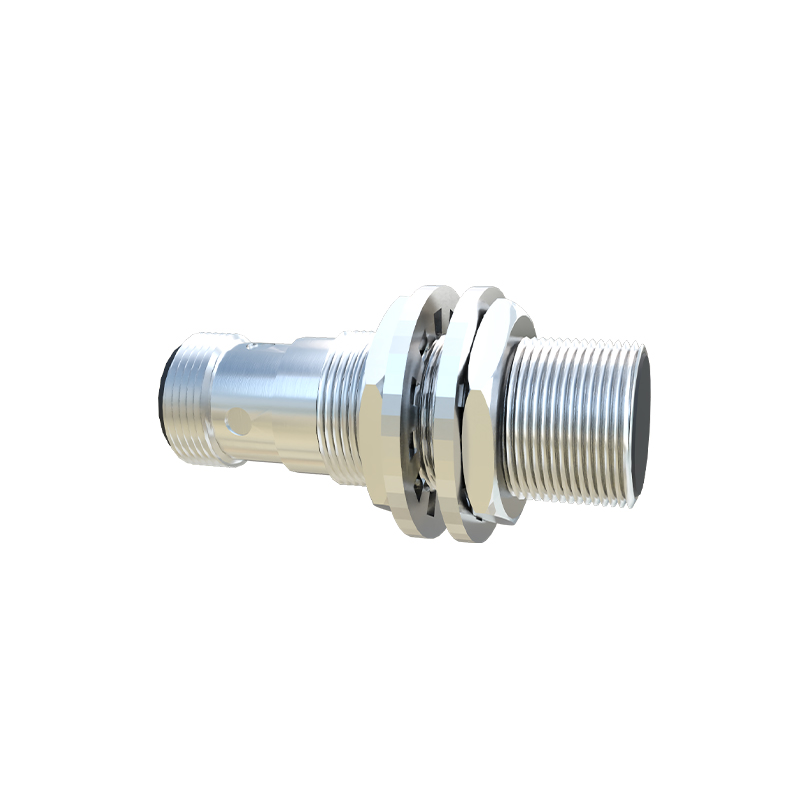
Sensing Principle: Inductive, non-contact.
Sensing Range: Approximately 6mm (nominal). The effective or guaranteed operating distance (Sn) is usually 80% of this, around 4.8mm, accounting for manufacturing tolerances and environmental factors.
Output Type: Commonly a 3-wire DC PNP normally open (NO) or normally closed (NC) transistor output.
Supply Voltage: A standard range, e.g., 10-30V DC.
Output Current: Rated for switching small loads, often up to 200mA, suitable for connecting directly to a PLC input module.
Housing: Cylindrical, threaded (e.g., M16x1), often made of nickel-plated brass or stainless steel, offering good resistance to industrial environments.
Protection Rating: Typically IP67, making it dust-tight and capable of withstanding temporary immersion in water, which is essential for liquid level applications where splashes or condensation are present.
Switching Frequency: A high value, allowing for detection of rapidly changing levels.
The primary application for the CQF16-06EPSEW1 in liquid level control is as a point-level detector. It is not a continuous level transmitter. Common implementation methods include:
1. Float Actuation: A metallic float, rising and falling with the liquid level, acts as the target for the sensor mounted externally or in a dry well.
2. Paddle/Wiper Detection: The sensor detects a metallic paddle attached to a rotating shaft. When liquid rises and stops the paddle's rotation, the sensor triggers.
3. Bypass Chamber: The sensor is mounted on an external, transparent column connected to the main tank. A metallic float inside the column is detected at predetermined high or low levels.
4. Direct Detection: For conductive tank walls (metal), the sensor can sometimes be mounted externally to detect the presence or absence of liquid directly inside, utilizing the change in dielectric constant, though this is more common with capacitive sensors.
Installation and commissioning require careful attention. Ensure the sensor is mounted securely using its threaded body. The sensing face must be positioned precisely within the nominal sensing distance from the target. Factors like target material (steel, aluminum, brass), size (must meet the minimum specified), and approach direction (axially is best) significantly affect performance. Always wire according to the datasheet: brown wire to DC+, blue wire to DC-, and the black (or white) wire as the switched output signal to the load (e.g., PLC input). Incorporate electrical protection like fuses if necessary.
For optimal performance