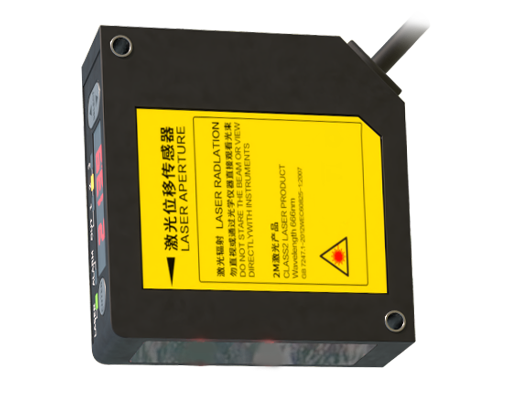
In the realm of velocity and airflow measurement, the evolution from traditional pitot tubes and hot-wire anemometers to advanced optical systems marks a significant technological leap. Laser Air Speed Sensors, specifically those based on Laser Doppler Velocimetry (LDV) or related optical principles, represent this cutting edge. The central question for engineers and system integrators is: Are they good? The answer is a nuanced "yes," but with critical considerations dependent on the application's specific demands.
Fundamentally, a laser air speed sensor operates by projecting a laser beam into the measurement volume. Particles or molecules in the airflow scatter the light. By analyzing the frequency shift of the scattered light (the Doppler effect), the sensor's processor calculates the velocity of the particles, which is assumed to equal the airspeed. This non-intrusive, optical measurement stands in stark contrast to mechanical probes that must physically interact with the medium.
The advantages are substantial and often decisive for high-end applications. First and foremost is exceptional accuracy and resolution. Free from mechanical inertia and hysteresis, these sensors can detect minute velocity fluctuations with high frequency response, making them ideal for turbulence research, wind tunnel testing, and combustion analysis. Secondly, they offer true non-intrusive measurement. The laser beam does not disturb the flow field, eliminating probe-induced errors—a critical factor in aerodynamic studies and clean environments. Third is wide dynamic range and calibration-free operation. Unlike pitot tubes whose accuracy can vary with density and angle of attack, the LDV principle provides a direct, fundamental measurement of speed, often requiring no in-situ calibration. Finally, they excel in measuring complex flows, including reversing flows, high turbulence, and flows in harsh environments (extreme temperatures, corrosive atmospheres) where physical probes would fail or degrade.

However, the technology is not a universal panacea. Its primary limitation is cost. The sophisticated optical components, lasers, and signal processing electronics make laser sensors significantly more expensive than conventional alternatives. They also have a dependency on seeding particles. For clean air flows (like high-altitude aviation), natural particulates may be insufficient, requiring the introduction of seeding material, which complicates the system. Furthermore, the systems can be relatively bulky and complex compared to a simple pitot-static probe, posing integration challenges on aircraft or compact machinery. The alignment sensitivity of the optical path also demands stable mounting and can be susceptible to vibration misalignment.
So, are they good? For research and development in aerospace, automotive, and fluid dynamics, they are unparalleled tools, often the "gold standard." In industrial process control for gases, where precise, non-contact measurement is vital (e.g., semiconductor fabrication vents, HVAC optimization), they provide unique value. For aviation, while not yet replacing pitot tubes for primary airspeed indication due to cost and complexity, they are emerging as invaluable secondary systems for flight test instrumentation and detecting hazardous conditions like airspeed system failures or icing.

In conclusion, laser air speed sensors are exceptionally "good" at providing high-fidelity, non-intrusive velocity data where performance justifies the investment. Their suitability is not about being universally better, but about being specifically superior for applications demanding the highest accuracy, minimal flow disturbance, or operation in challenging conditions. The choice hinges on a trade-off analysis: prioritizing ultimate measurement quality against factors of cost, complexity, and operational logistics. For the right application, they are not just good; they are transformative.