In the realm of industrial automation and machine design, proximity sensors are ubiquitous components, prized for their ability to detect the presence or absence of an object without physical contact. A common and often critical question arises: Can proximity sensors detect glass? The answer is not a simple yes or no; it hinges entirely on the underlying sensing technology and the specific properties of the glass material in question. Understanding the principles of different proximity sensor types is key to selecting the right solution for applications involving glass detection.
The primary categories of proximity sensors include inductive, capacitive, ultrasonic, and photoelectric sensors. Each operates on a distinct physical principle, leading to vastly different interactions with glass.
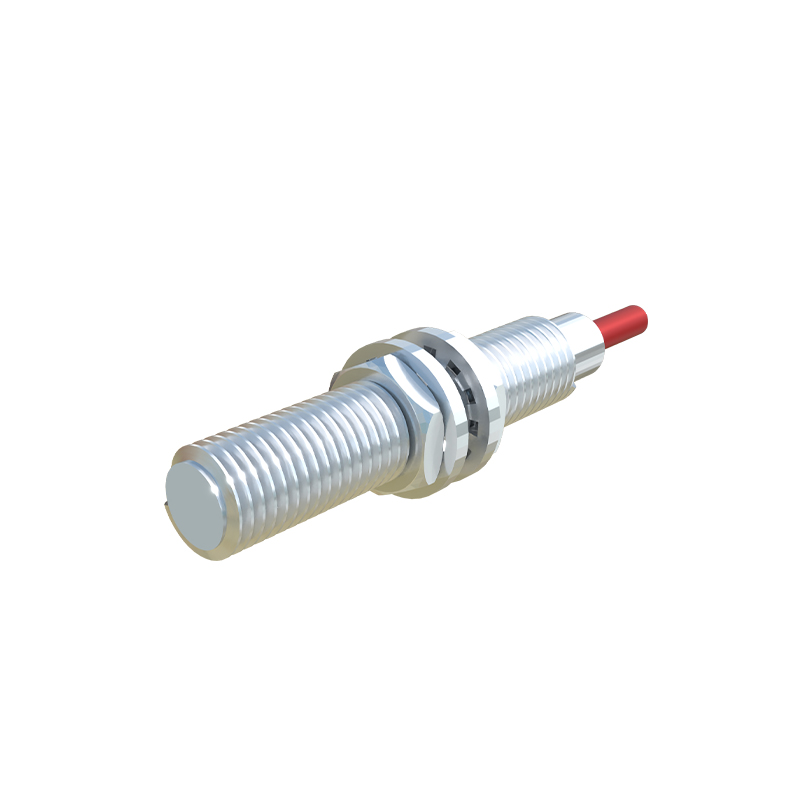
Inductive Proximity Sensors are fundamentally incapable of detecting standard glass. These sensors generate an electromagnetic field and detect changes caused by eddy currents induced in conductive metals. Since glass is an excellent electrical insulator and non-metallic, it does not affect the sensor's electromagnetic field. Therefore, inductive sensors will not register the presence of glass objects. They are strictly for metallic targets.
Capacitive Proximity Sensors, however, offer a potential solution. These sensors function by detecting changes in capacitance. They generate an electrostatic field and can sense both conductive and non-conductive materials, provided the material has a dielectric constant different from air. Glass has a dielectric constant typically ranging from 5 to 10 (vacuum=1, air≈1), which is significantly higher than air. This means a capacitive sensor can theoretically detect glass. In practice, detection is reliable but highly dependent on sensor sensitivity adjustment, the thickness of the glass, and environmental factors like humidity or contaminants on the glass surface. For thin glass sheets or bottles, a properly tuned capacitive sensor can be very effective.
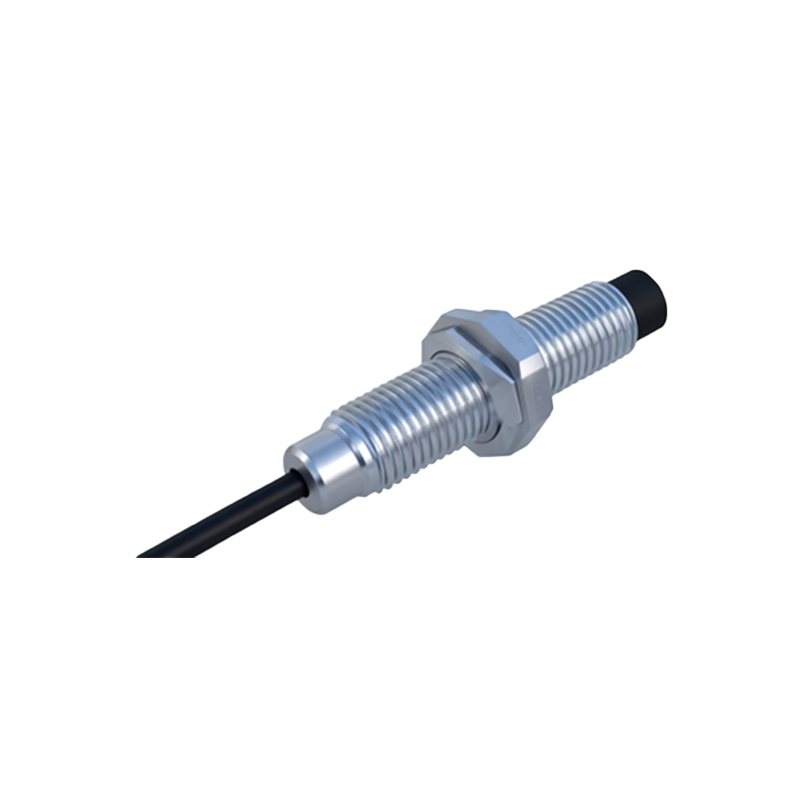
Ultrasonic Proximity Sensors are another excellent choice for detecting glass. They work by emitting high-frequency sound waves and measuring the time for the echo to return. Since sound waves reflect off most solid surfaces, including glass, ultrasonic sensors can reliably detect glass objects regardless of color, transparency, or surface finish. They are particularly useful for detecting glass containers, windows, or panels at varying distances. However, factors like the angle of incidence, very thick acoustic insulation, or highly absorbent surfaces can sometimes pose challenges.
Photoelectric Sensors present a more nuanced case. These sensors use light beams (visible, infrared, or laser) and detect the presence of an object by either the interruption of the beam (through-beam), reflection from the object (retro-reflective or diffuse reflective). Standard transparent glass poses a significant challenge for diffuse reflective sensors, as most of the light passes through rather than reflects back. Through-beam sensors, where the emitter and receiver are separate units, can detect transparent glass because the glass interrupts the light path. Specialized versions, like polarized retro-reflective or convergent beam sensors, can also be configured to detect clear glass by filtering out direct reflections from the glass surface itself. Laser-based sensors are often the most precise for such applications.
Key application considerations include the type of glass (clear, tinted, frosted, coated), required sensing distance, environmental conditions (dust, moisture, temperature), and required response speed. For instance, detecting empty vs. filled glass bottles on a filling line might combine a capacitive sensor for bottle presence and a photoelectric sensor for liquid level.
In summary, while the common inductive sensor is useless for glass detection, capacitive, ultrasonic, and specific photoelectric sensors are capable technologies. Capacitive sensors are suitable for close-range detection of glass itself. Ultrasonic sensors provide robust, medium-range detection unaffected by optical properties. Photoelectric sensors, especially through-beam or specialized reflective types, offer high precision for clear glass detection. The optimal selection demands a clear understanding of the application parameters and the physical principles governing each sensor type. Consulting sensor datasheets and manufacturers for specific material testing is always recommended for critical installations.