Inductive proximity sensors are fundamental components in modern industrial automation, offering non-contact detection of metallic objects. Among the various configurations, the PNP cylindrical design stands out for its robustness, reliability, and widespread application in diverse environments. This article delves into the operational principles, key specifications, wiring methodologies, and practical application considerations for PNP cylindrical inductive proximity sensors.
At its core, an inductive proximity sensor generates an electromagnetic field via a coil and oscillator circuit housed within its cylindrical body. When a ferrous or non-ferrous metal target enters this field, eddy currents are induced on the target's surface. This causes a change in the oscillation amplitude, which is detected by a threshold circuit. In a PNP (sourcing) type sensor, the output switch (typically a transistor) connects the load to the positive supply voltage when an object is detected. This is in contrast to NPN (sinking) types. The cylindrical metal or polymer housing, often with M8, M12, M18, or M30 threaded barrels, provides mechanical strength, environmental protection (commonly rated IP67 or higher), and easy installation.
Key technical specifications define a sensor's suitability for an application. Sensing distance, or 'Sn', is a critical parameter, typically ranging from 1.5mm to 15mm for standard cylindrical models, with a guaranteed operational distance of 0.81 x Sn. It is crucial to note that this rating is based on a standard mild steel target; different materials like aluminum or stainless steel have reduction factors that decrease the effective sensing range. The operating frequency, or switching frequency, indicates how quickly the sensor can detect objects passing by, which is vital for high-speed counting or positioning tasks. Another essential specification is the output configuration: the PNP, normally-open (NO) or normally-closed (NC) logic. A PNP NO sensor provides a positive voltage signal upon target detection, which is the most common configuration compatible with many programmable logic controller (PLC) input modules in Europe and Asia.
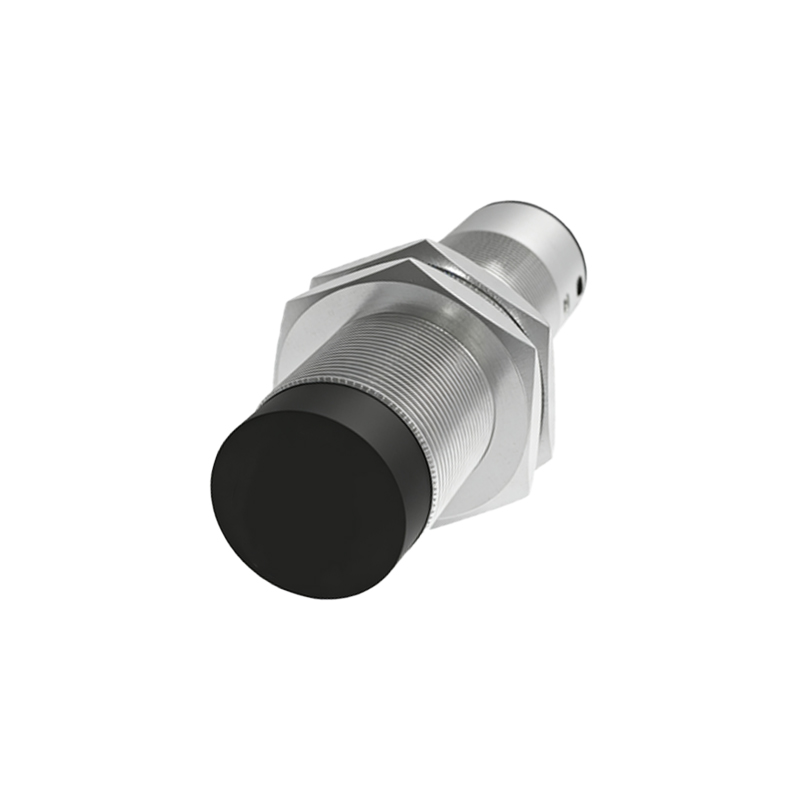
Wiring a PNP cylindrical sensor is straightforward but requires attention to detail. A standard three-wire DC sensor has brown (or red), blue, and black wires. The brown wire connects to the positive DC supply voltage (typically +10 to +30 VDC), and the blue wire connects to the DC common or 0V. The black wire is the PNP output signal line. When the sensor is active, it sources current from the supply, through the sensor's output transistor, and out the black wire to the load (e.g., a PLC input). The load is then connected between the black wire and the blue wire (0V). Always ensure the power supply is stable and within the sensor's rated voltage range, and incorporate protective devices like fuses or surge suppressors in harsh electrical environments.
Selecting the right PNP cylindrical sensor involves several application-specific considerations. First, identify the target material and required sensing distance, applying the appropriate correction factor. The housing material is also critical; stainless steel housings offer superior chemical resistance for washdown areas in food and beverage, while nickel-plated brass is common for general industry. Environmental factors such as temperature extremes, presence of cutting fluids, oils, or dust, dictate the required ingress protection (IP) rating. For applications involving different metals, factor-frequency sensors can be an optimal choice as they can be tuned to ignore certain non-target metals. Furthermore, consider electrical noise in the installation area; using shielded cables and proper grounding techniques is essential for stable operation, especially when sensors are near variable frequency drives (VFDs) or welding equipment.
Installation and maintenance practices significantly impact sensor longevity and performance. Maintain the specified lateral and axial spacing between multiple sensors to prevent mutual interference. Ensure the target approaches the sensor's sensing face perpendicularly for maximum range and repeatability. Avoid mounting the sensor directly on a vibrating surface, as this can lead to premature failure. Regular maintenance should include checking for physical damage, buildup of debris on the sensing face, and verifying the output signal with a multimeter or PLC diagnostics. Understanding the LED indicator status (power, stability, output activation) is key for quick troubleshooting.
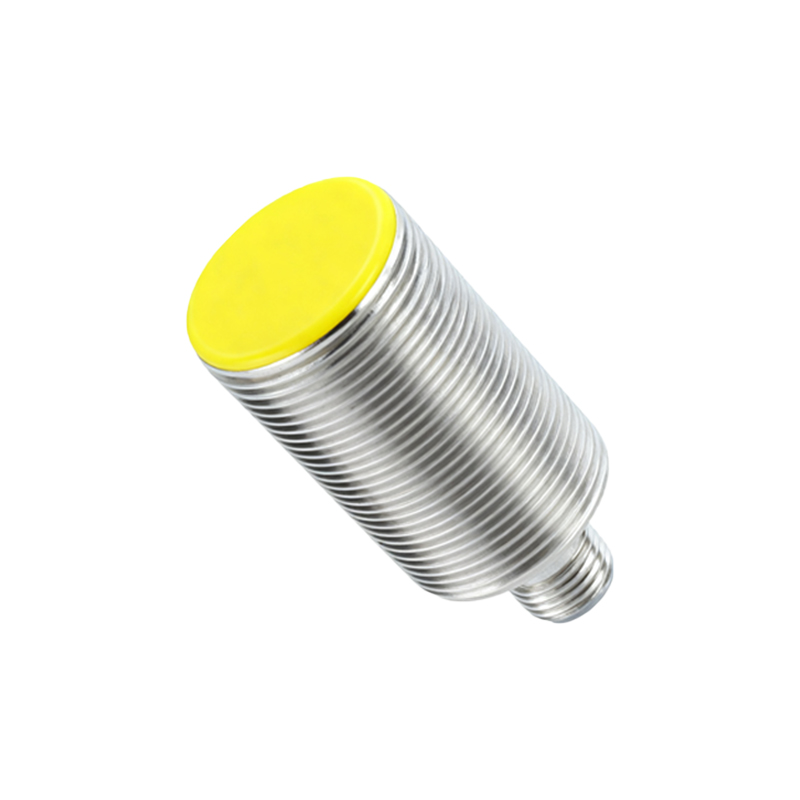
In conclusion, the PNP cylindrical inductive proximity sensor is a versatile and indispensable workhorse in factory automation, material handling, packaging, and automotive assembly. Its PNP output logic, combined with a rugged cylindrical form factor, provides a reliable solution for detecting the presence, absence, or position of metal objects without physical contact. By carefully considering the technical parameters, environmental conditions, and proper installation guidelines, engineers and technicians can ensure optimal system performance, reduced downtime, and enhanced operational safety. As industrial systems evolve towards greater connectivity, these sensors continue to serve as the fundamental sensory nodes for the Internet of Things (IoT) in manufacturing.