Metal proximity sensors are fundamental components in modern industrial automation, playing a critical role in object detection, positioning, and process control without physical contact. Their operation is based on the principle of electromagnetic induction or changes in an oscillating circuit's characteristics. Primarily, inductive proximity sensors are used for detecting metallic objects. The core of such a sensor consists of a coil wound around a ferrite core, an oscillator, a signal evaluator, and an output circuit.
When power is applied, the oscillator generates a high-frequency alternating electromagnetic field that radiates from the active face of the sensor. In the absence of a metallic target, this field remains stable, and the oscillator operates at its base frequency. However, when a conductive metal object enters this electromagnetic field, eddy currents are induced on the surface of the metal. These eddy currents draw energy from the oscillator's field, causing a measurable energy loss or a change in the oscillation amplitude. The sensor's evaluation circuit detects this damping or frequency shift. Once the change exceeds a predefined threshold, it triggers the output switching element—typically a solid-state transistor—to change state, signaling the presence of the target.
The sensing range, or nominal switching distance, is a key specification and is defined for a standard target of mild steel. Different metals affect the sensor differently due to their varying electrical conductivity and magnetic permeability. For instance, steel (a ferromagnetic material) can be detected at the sensor's rated distance. Non-ferrous metals like aluminum or copper, while good conductors, are non-magnetic and typically have a reduced effective sensing range, often 30-60% of the rated distance for steel, because they induce eddy currents differently. Stainless steel, depending on its grade (ferritic, austenitic), can also have a reduced sensing factor.
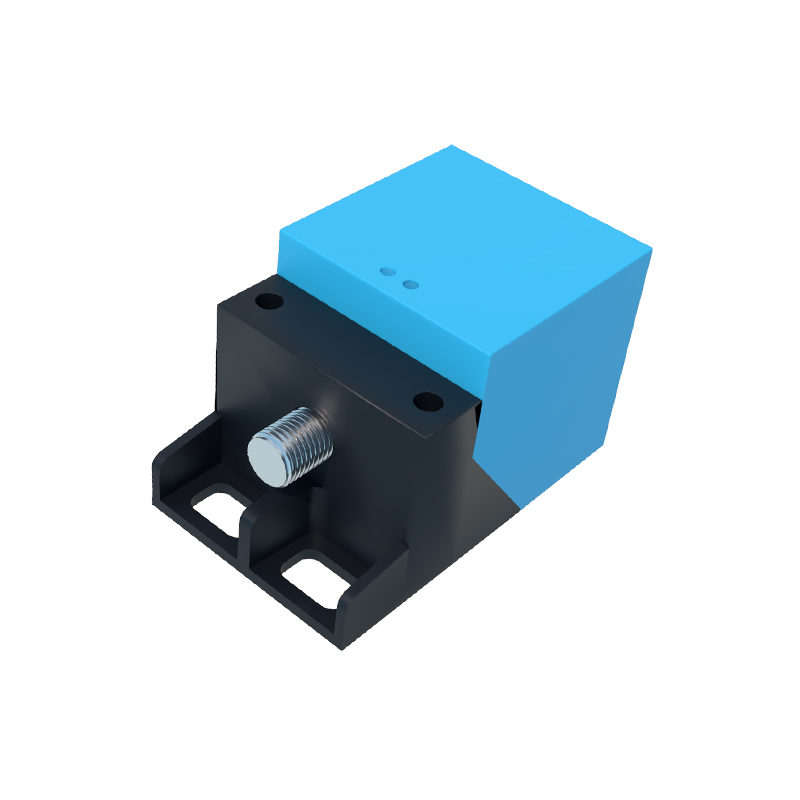
Another important principle involves the sensor's hysteresis. This is a built-in characteristic that prevents output chatter when a target is at the exact switching point. The switch-on point (when the target approaches) and the switch-off point (when the target moves away) are slightly different, ensuring clean, stable output signals even with vibration or minor positioning variations.
Beyond standard inductive sensors, high-frequency oscillation types offer enhanced sensitivity for small or thin metal parts. Furthermore, some specialized sensors utilize the principle of magnetic field disturbance for detecting permanent magnets, often called magnetic proximity sensors or reed switches, but these are distinct from standard inductive metal detectors.
The applications are vast, from simple tasks like counting metal parts on a conveyor, detecting the position of a machine tool slide, or confirming the presence of a cap on a bottle, to complex safety interlocking systems. Their robustness, fast response time (often in microseconds), and long service life—owing to the absence of mechanical contact and wear—make them indispensable in harsh industrial environments with dust, oil, or coolant.
In summary, the working principle of a metal proximity sensor hinges on the interaction between its generated electromagnetic field and a metallic target. The resulting induction of eddy currents alters the sensor's internal electrical parameters, which is precisely evaluated to provide a reliable switching signal, enabling precise, wear-free automation.