Lidar, an acronym for Light Detection and Ranging, is a remote sensing technology that measures distance by illuminating a target with laser light and analyzing the reflected light. The construction of a typical lidar sensor is a sophisticated integration of optics, electronics, and mechanical components, working in concert to generate precise three-dimensional environmental data. Understanding its physical construction is key to appreciating its capabilities in applications ranging from autonomous vehicles to topographic mapping.
At the heart of any lidar sensor is the laser emitter. This component generates the coherent, monochromatic light pulses that serve as the system's probing signal. Most contemporary lidar systems use solid-state lasers, often in the near-infrared spectrum (e.g., 905 nm or 1550 nm wavelengths), as they offer a good balance of eye safety, atmospheric penetration, and detector sensitivity. The laser diode is meticulously controlled by driving electronics to emit extremely short, high-power pulses at rates that can exceed hundreds of thousands per second.
The emitted laser pulse is then directed through a series of optical components. Beam expanders and collimators shape and narrow the beam to reduce divergence, ensuring the light travels as a tight, focused column over long distances. This conditioned beam is then steered toward the target environment. The method of steering defines one of the primary classifications of lidar construction: mechanical, solid-state, or hybrid.
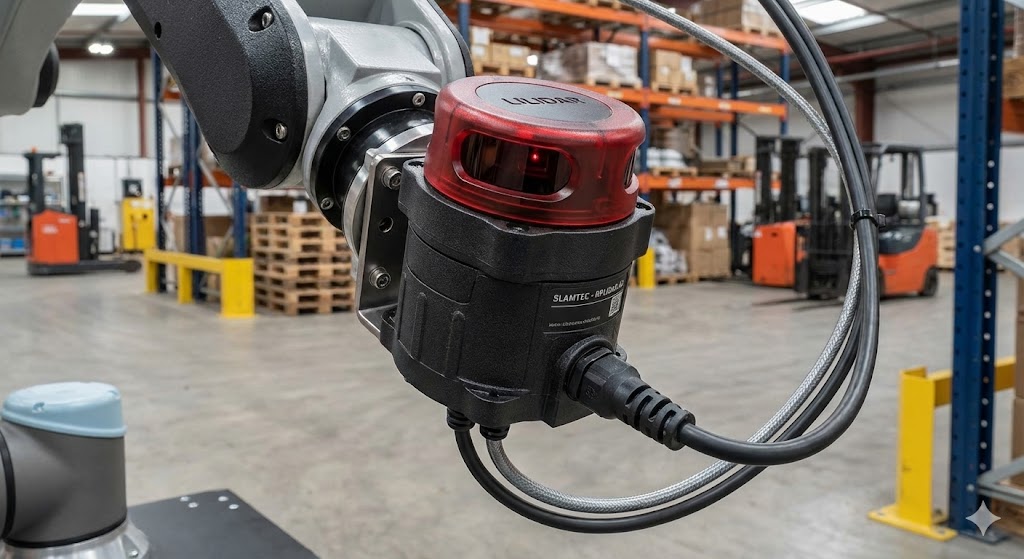
In traditional mechanical rotating lidar, the laser emitter and receiver are mounted on a rotating platform. A motor spins the entire assembly, typically at 5 to 20 revolutions per second, providing a 360-degree horizontal field of view. This design often incorporates mirrors or prisms to further direct the beam. While offering excellent coverage, the moving parts introduce concerns about durability, size, and cost.
Modern advancements favor solid-state or semi-solid-state designs. Micro-Electro-Mechanical Systems (MEMS) lidar uses tiny, oscillating mirrors to steer the laser beam electronically without bulk rotation. Optical Phased Array (OPA) lidar, a pure solid-state approach, manipulates the phase of light waves across an array of emitters to steer the beam with no moving parts at all. Flash lidar, another solid-state variant, illuminates the entire scene with a wide, diffuse laser pulse in a single flash, relying on a specialized two-dimensional sensor array to capture the return signals from multiple points simultaneously. These designs promise greater robustness, smaller form factors, and potential for mass production.
After the laser pulse reflects off a target, the returning photons travel back toward the sensor. The receiver subsystem is tasked with capturing this faint signal. The primary component here is the photodetector, commonly an Avalanche Photodiode (APD) or a Silicon Photomultiplier (SiPM). These semiconductors are designed to be exquisitely sensitive to the specific wavelength of the laser. When a photon strikes the detector, it triggers a cascade of electrons, generating a measurable electrical current. Optical filters are placed in front of the detector to block ambient light (like sunlight) that would otherwise overwhelm the sensitive receiver, allowing only the narrow band of the laser's wavelength to pass through.
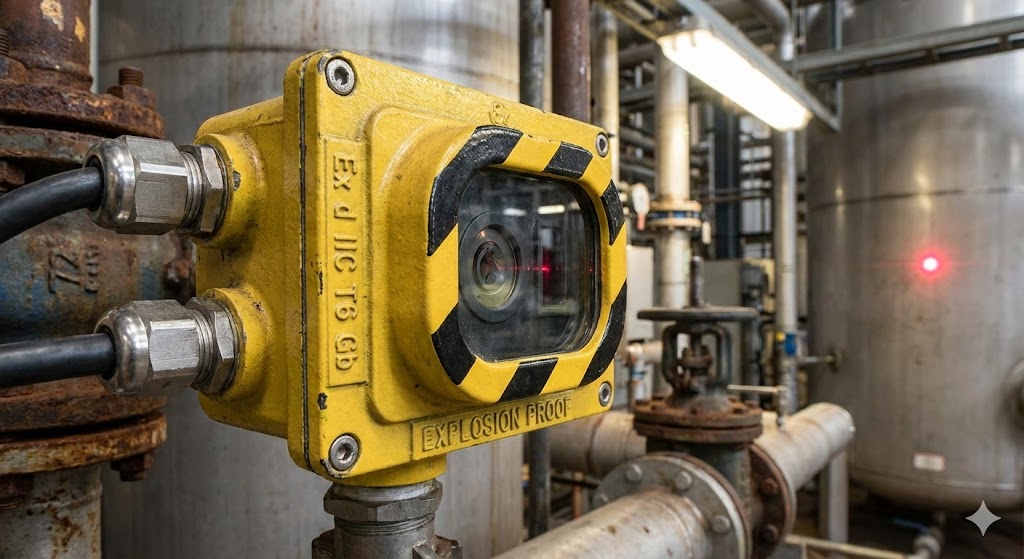
The timing circuitry is the chronometer of the system. It precisely measures the time interval between the emission of a laser pulse and the detection of its return echo. Since the speed of light is a known constant, this Time-of-Flight (ToF) measurement is used to calculate the distance to the target with remarkable accuracy. Modern electronics can resolve time differences in picoseconds, translating to distance measurements accurate to within centimeters.
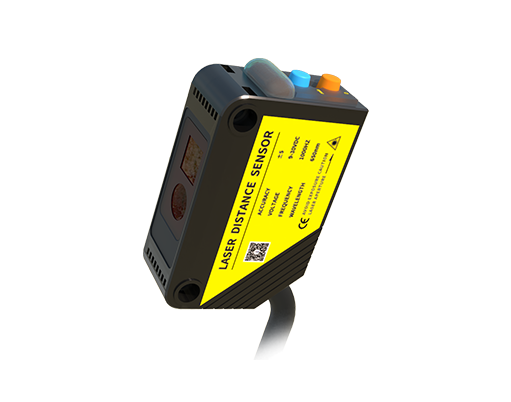
The raw distance (range) measurement for a single point is just the beginning. Each measurement is tagged with the precise angular orientation of the beam steering mechanism at the moment of emission. By combining the measured range with the azimuth (horizontal) and elevation (vertical) angles, the system computes the precise 3D coordinates (X, Y, Z) of each point in space. A collection of millions of these points forms a "point cloud," a detailed digital representation of the scanned environment.
Supporting this core functionality are critical ancillary systems. A high-performance inertial measurement unit (IMU) and sometimes a GNSS receiver are integrated into many surveying or mobile lidar systems. The IMU tracks the sensor's own orientation and acceleration, while GNSS provides absolute position. This data is fused with the lidar point measurements to correct for platform movement and georeference the point cloud in real-world coordinates. All these components are governed by a central processing unit that synchronizes firing, data acquisition, and preliminary processing, managing the immense data stream.
Finally, the housing and thermal management system are vital for reliable operation. The enclosure must protect delicate optics from dust, moisture, and physical shock, often meeting IP ratings for ingress protection. As lasers and electronics generate heat, effective heat sinks or active cooling systems are employed to maintain stable operating temperatures, ensuring consistent wavelength emission and detector performance.
In summary, the construction of a lidar sensor is a masterful feat of engineering, combining pulsed laser sources, precise beam steering optics, sensitive photon detectors, and nanosecond-accurate timing electronics. The evolution from bulky mechanical spinners to compact solid-state systems is driven by the demand for reliability, scalability, and integration. This intricate assembly transforms the simple principle of measuring light's time-of-flight into a powerful tool for perceiving and mapping the world in three dimensions, forming the foundational perception layer for autonomous systems and geospatial science.