In the landscape of industrial automation, sensors are the fundamental components that bridge the physical and digital worlds. Among the diverse sensor technologies available, diffuse laser sensors have carved out a significant niche due to their precision, versatility, and reliability. Unlike through-beam or retro-reflective sensors that require separate emitters and receivers, diffuse sensors house both elements in a single unit. They operate on the principle of emitting a laser beam and detecting the portion of light that is diffusely reflected back from the target object. This self-contained design simplifies installation and alignment, making them a preferred choice for numerous challenging applications.
The core working principle of a diffuse laser sensor involves a modulated laser diode emitting a focused beam of light. When this beam strikes an object within its detection range, a fraction of the light is scattered back towards the sensor. A highly sensitive photodetector, typically a position-sensitive device (PSD) or a CMOS array, captures this reflected signal. The onboard electronics then evaluate the intensity and, in more advanced models, the time-of-flight or triangulation data of the returned light. A key feature is the background suppression capability found in many models. By evaluating the angle of the reflected beam, these sensors can effectively ignore objects beyond a set distance, ensuring detection is only triggered by the intended target within the defined sensing window. This is crucial for applications where the background environment is cluttered or variable.
The advantages of diffuse laser sensors are manifold. Their high precision allows for detection and measurement with sub-millimeter accuracy. The focused laser spot enables the detection of very small objects or precise edges, which is invaluable in electronics assembly or precision machining. Furthermore, their ability to work with a wide variety of surface materials, colors, and textures—though with varying reflectivity—adds to their flexibility. Modern sensors incorporate intelligent functions like teach-in programming for setting thresholds, IO-Link communication for digital parameterization and diagnostics, and robust housing ratings (IP67/IP69K) for harsh environments involving dust, moisture, or washdowns.
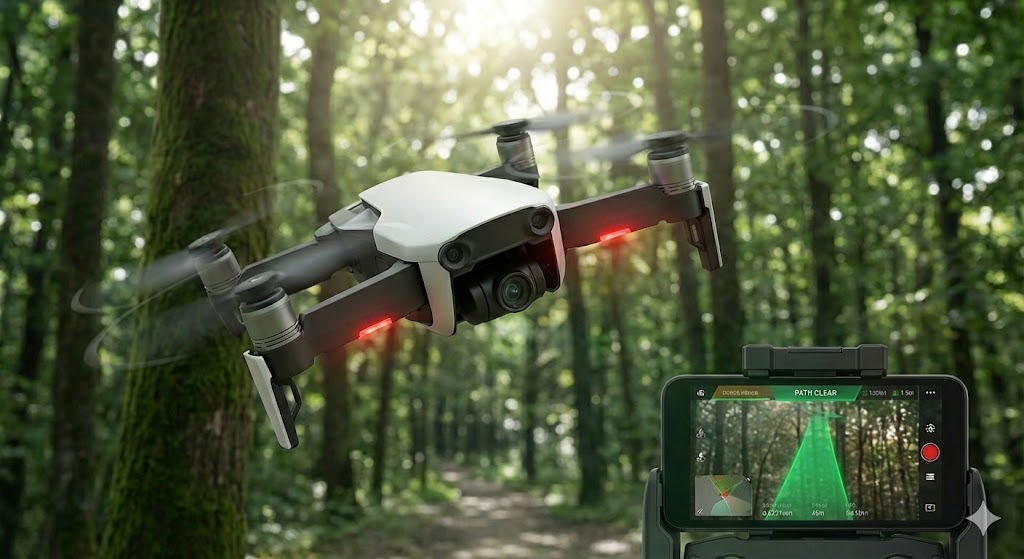
Applications for diffuse laser sensors span across virtually every industry. In packaging, they reliably detect the presence of transparent films, glass bottles, or labels on high-speed lines. In material handling, they are used for precise positioning, palletizing, and fill-level control in bins or silos. The automotive industry employs them for robot guidance, part presence verification, and gap measurement. In electronics manufacturing, their fine spot size is perfect for inspecting micro-components, wafer handling, and verifying connector pin alignment. Logistics and warehousing utilize them for dimensioning parcels and guiding automated guided vehicles (AGVs).
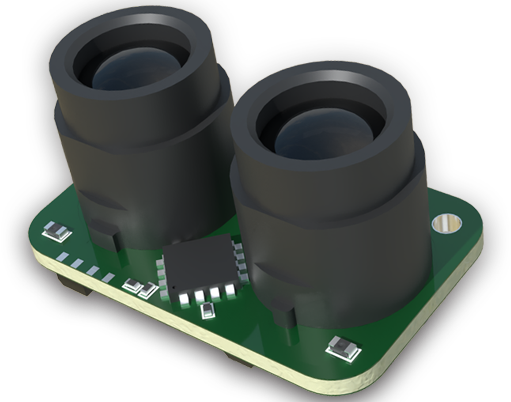
Selecting the appropriate diffuse laser sensor requires careful consideration of several parameters. The sensing range is primary; it must accommodate the maximum and minimum distances to the target. The size and color of the target object directly influence the required laser spot size and the sensor's sensitivity setting, as dark or absorbent materials reflect less light. The required accuracy and repeatability will dictate whether a standard background suppression model suffices or if a more precise triangulation-based sensor is necessary. Environmental conditions such as ambient light, temperature extremes, and potential contaminants mandate specific housing and lens materials. Finally, the output type (PNP/NPN, analog, IO-Link) and response time must be compatible with the control system's speed and architecture.
In conclusion, diffuse laser sensors represent a sophisticated and adaptable solution for modern industrial sensing challenges. Their combination of compact design, high accuracy, and advanced features like background suppression makes them indispensable for tasks demanding reliable object detection, positioning, and inspection. As Industry 4.0 drives demand for smarter, more connected devices, the integration of digital communication protocols in these sensors will further enhance their role in creating responsive and data-rich automated systems. Engineers and system integrators must thoroughly analyze application requirements to leverage the full potential of this powerful technology, ensuring optimal performance and longevity in their automated processes.