In the realm of modern electronics and automation, proximity sensor components form the invisible backbone of countless interactive and safety-critical systems. These sophisticated devices detect the presence or absence of nearby objects without any physical contact, enabling smarter, safer, and more efficient operations across industries. At their core, proximity sensors function by emitting an electromagnetic field or a beam of radiation, such as infrared light, and then looking for changes in the field or return signal. The specific components responsible for this capability vary significantly based on the underlying technology.
The most prevalent types include inductive, capacitive, and photoelectric sensors. Inductive proximity sensors are the workhorses of industrial automation. Their key components consist of a coil wound around a ferrite core, an oscillator, a detection circuit, and an output circuit. When a metallic object enters the alternating magnetic field generated by the oscillator-driven coil, eddy currents are induced in the target. This causes a measurable change in the oscillation amplitude, which the detection circuit identifies, triggering the output switch. These sensors are renowned for their robustness, long service life, and immunity to environmental factors like dust or oil, making them ideal for detecting metal parts in machinery, conveyor systems, and automotive assembly lines.
Capacitive proximity sensors, on the other hand, can detect both metallic and non-metallic materials, including liquids, plastics, and wood. Their fundamental components involve a charging electrode that forms one plate of a capacitor, with the target object acting as the other plate. The sensor's internal circuitry, typically containing an oscillator and a threshold detector, measures the capacitance of this field. When an object enters the sensing zone, it alters the dielectric constant and increases the capacitance, which the circuit converts into a switch signal. This makes capacitive components crucial in level detection for tanks, material handling, and touch-sensitive interfaces.
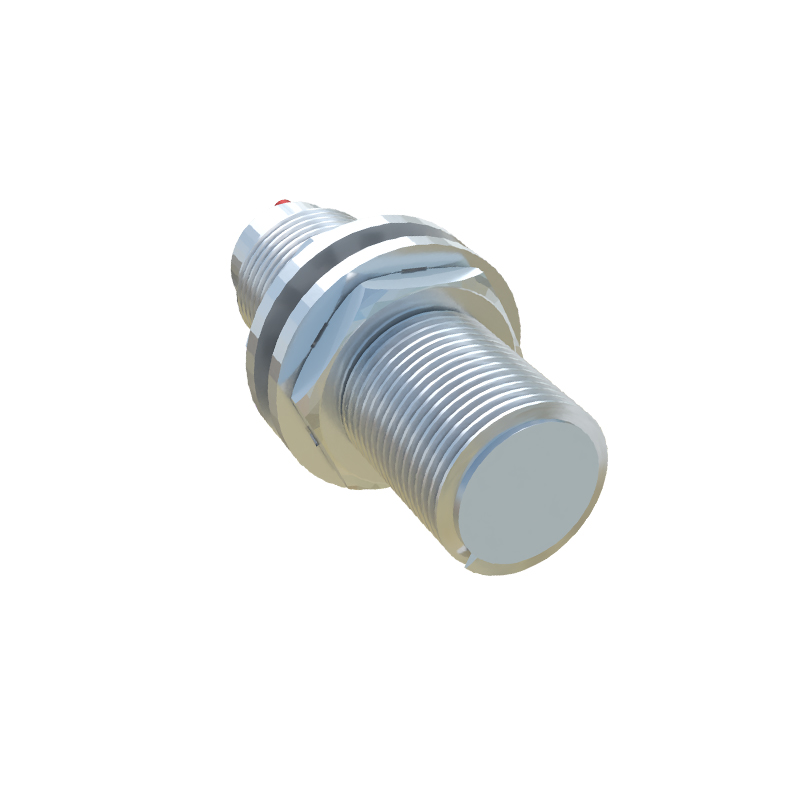
Photoelectric sensors represent a broad category utilizing light beams. Their essential components are a light emitter (usually an LED, with infrared being common), a photodetector (like a phototransistor or photodiode), and supporting signal processing circuitry. They operate in through-beam, retro-reflective, or diffuse (proximity) modes. In the diffuse mode for proximity sensing, the emitted light reflects off the target object back to the detector housed in the same unit. The receiver component must be precisely tuned to the emitter's wavelength. Advanced versions use modulated LED pulses to filter out ambient light interference. These sensors are indispensable for detecting small objects, color differentiation, and in clean environments.
Beyond these, ultrasonic sensors use a piezoelectric transducer as a core component to emit and receive sound waves, calculating distance based on the time-of-flight. Hall-effect sensors, used for magnetic proximity detection, rely on a semiconductor Hall element that produces a voltage when exposed to a magnetic field.
The selection of proximity sensor components is dictated by the application's specific demands: required sensing range, target material, environmental conditions (temperature, contaminants), response speed, and output requirements (digital NPN/PNP, analog). Innovations continue to miniaturize components, enhance sensing accuracy, and improve resistance to electromagnetic interference (EMI). From ensuring your smartphone screen turns off during a call to safeguarding operators around heavy robotic arms, the precise and reliable operation of these tiny components is fundamental to the seamless interaction between the digital and physical worlds. Their evolution continues to push the boundaries of what automated systems can perceive and achieve.