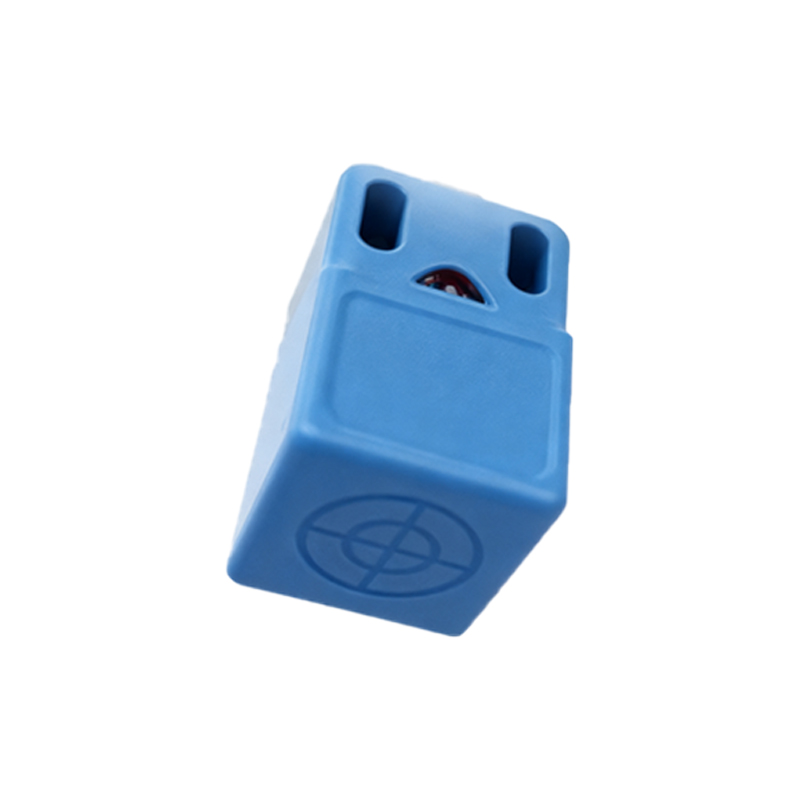
In the world of industrial automation, the seamless interaction between sensing devices and control systems forms the backbone of modern manufacturing. Among these critical components, proximity switches designed for integration with Programmable Logic Controllers (PLCs) stand out for their reliability, precision, and versatility. These sensors act as the primary "eyes" of an automated system, providing the essential digital or analog signals that inform a PLC about the state of a machine or process. Understanding their function, types, and application is key to designing efficient and robust automation solutions.
A proximity switch, in essence, is a sensor that detects the presence or absence of an object within its sensing range without any physical contact. When paired with a PLC, it transforms a physical event—like a part arriving on a conveyor, a robot arm reaching a specific position, or a door closing—into an electrical signal the controller can understand. This signal, typically a simple ON/OFF (discrete) or a varying voltage/current (analog), is read by the PLC's input module. The PLC's program, or ladder logic, then uses this input data to make decisions, triggering outputs such as starting a motor, activating a solenoid, or signaling an operator panel. This closed-loop cycle of sensing, logic processing, and actuation is what drives automated sequences.
Several core technologies power these indispensable sensors, each suited to different materials and environmental challenges. Inductive proximity switches are the workhorses for detecting metallic objects, primarily ferrous metals like steel and iron. They generate an electromagnetic field; when a metal target enters this field, it causes a change that the sensor detects. These are ideal for harsh environments with dirt, oil, or coolant, as their sensing face can be sealed. For non-metallic objects—plastic, wood, glass, liquids, or even granular materials—capacitive proximity switches are the go-to choice. They detect changes in capacitance caused by the presence of any material that alters the dielectric constant of the space around the sensor. Another major category is photoelectric sensors, which use a beam of light (visible, infrared, or laser) to detect objects. They offer the longest sensing ranges and can detect virtually any material, making them perfect for packaging, material handling, and complex positioning tasks. Finally, ultrasonic sensors use sound waves to measure distance or detect objects, excelling in applications involving clear liquids, transparent films, or where environmental factors like dust or steam would obscure photoelectric beams.
The integration of these sensors with a PLC system involves careful consideration of several technical parameters. First is the sensor output type. The most common is the NPN (sinking) or PNP (sourcing) digital output, providing a clean 24V DC signal to the PLC input, compatible with standard industrial control voltage. Analog outputs (4-20mA or 0-10V) are used when the measurement of distance or another variable is required, not just presence detection. Wiring is straightforward but critical: a typical three-wire sensor requires a DC power supply, a ground connection, and the signal wire connected to the designated PLC input point. Proper shielding and routing away from power cables are essential to prevent electrical noise from causing false triggers.
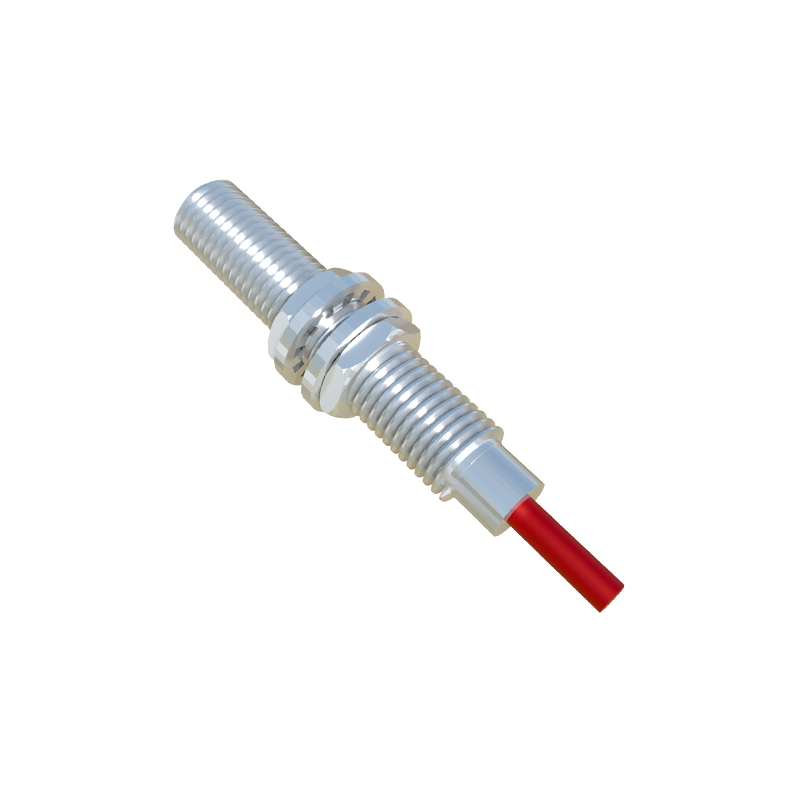
Selecting the right proximity switch for a PLC application demands a thorough analysis of the operating conditions. The sensing range, often specified as "nominal" or "rated," must be sufficient for the application with an appropriate safety margin. The target material's properties directly dictate whether an inductive, capacitive, or photoelectric sensor is needed. Environmental factors are paramount; sensors may need specific Ingress Protection (IP) ratings for water and dust resistance, resistance to chemicals, or the ability to withstand high temperatures or heavy vibration. For high-speed applications, such as counting parts on a fast-moving line, the sensor's response time—the speed at which it can switch its output after detecting a target—must be faster than the cycle time of the process. Finally, the physical housing style (barrel, rectangular, ring-shaped) must be chosen to fit the available mounting space and provide the correct sensing orientation.
The benefits of a well-implemented proximity switch and PLC sensor network are substantial. They enable unprecedented levels of precision and repeatability in machine control, directly contributing to consistent product quality. By automating detection and feedback, they drastically reduce cycle times and increase overall production throughput. Perhaps most importantly, they enhance safety by providing reliable signals for machine guarding, interlocking, and emergency stop circuits. From the precise positioning of components in an automotive assembly robot to the reliable counting of bottles on a filling line, proximity switch PLC sensors are the silent, reliable sentinels that make intelligent, responsive, and efficient industrial automation a reality.