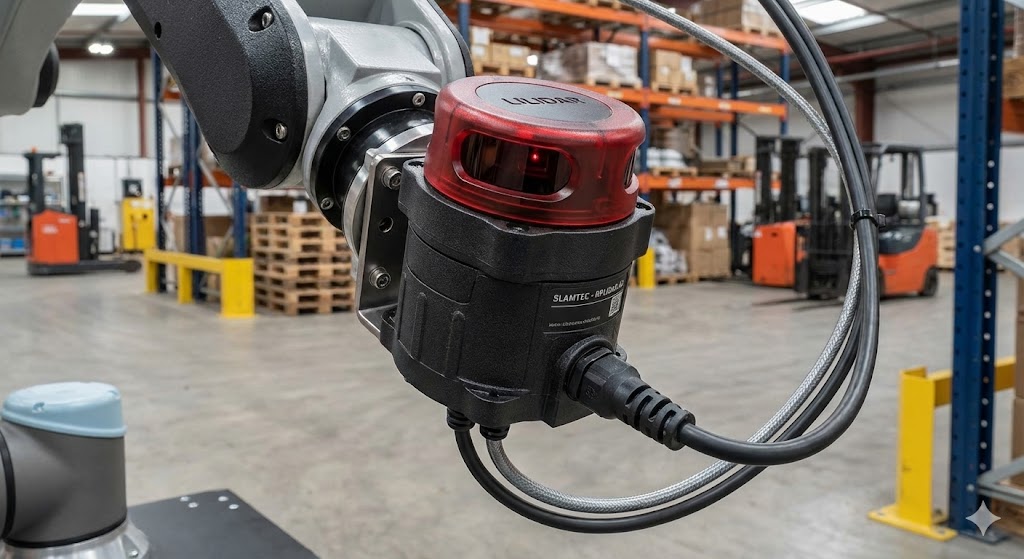
Selecting the appropriate laser sensor is a critical decision that impacts the efficiency, accuracy, and cost-effectiveness of various industrial and commercial systems. With numerous types available, understanding key parameters and application requirements is essential. This guide provides a structured approach to laser sensor selection, focusing on practical considerations rather than theoretical complexities.
The first step involves defining the primary measurement task. Are you measuring distance, position, thickness, or detecting the presence of an object? The answer dictates the sensor type. For precise distance measurement, laser triangulation sensors are often preferred for their high resolution at short to medium ranges. For very long distances, time-of-flight (ToF) or phase-shift sensors are more suitable. For simple presence detection or edge detection, a compact laser photoelectric sensor might be the most economical and robust choice.
Next, consider the technical specifications that directly affect performance. Range and Standoff Distance are fundamental. The measurement range is the distance over which the sensor can operate, while the standoff is the required distance between the sensor and the target. Ensure your application fits within these limits with some margin for safety. Resolution and Accuracy are often confused. Resolution is the smallest change the sensor can detect, while accuracy is how close the measurement is to the true value. High-precision tasks like semiconductor inspection demand micron-level resolution, while warehouse logistics may only need centimeter accuracy.
The target characteristics profoundly influence sensor choice. The material, color, surface texture, and size of the target object matter greatly. A shiny, reflective surface can cause specular reflection, leading to measurement errors, requiring a sensor with diffuse reflection technology or a specific angle of incidence. Dark, matte, or absorbent surfaces may require a sensor with higher output power. For transparent objects, such as glass or plastic films, specialized sensors with background suppression or true-through-beam configurations are necessary.

Environmental conditions are a frequently overlooked but critical factor. Industrial settings may expose the sensor to ambient light interference, dust, oil, moisture, vibration, or extreme temperatures. Look for sensors with high Ingress Protection (IP) ratings (e.g., IP67) for dust and water resistance. Sensors with a narrow spectral bandwidth or modulated laser light are better at rejecting ambient light from LEDs or sunlight. For high-vibration environments, robust housing and secure mounting are mandatory.
Output and integration requirements dictate how the sensor communicates with your control system. Common output types include analog (4-20 mA, 0-10 V), digital (PNP/NPN switches), and serial interfaces (RS-232, RS-485). Increasingly, industrial Ethernet protocols (EtherNet/IP, PROFINET, IO-Link) are offered for seamless integration into smart factories. IO-Link is particularly valuable as it provides detailed diagnostic data and parameterization capabilities beyond a simple switch signal.

Finally, balance performance with practical constraints: cost, physical size, and ease of setup. A highly accurate sensor is of little use if it doesn't fit in the mechanical enclosure or exceeds the project budget. Many modern sensors feature intuitive teach-in functions or software for quick configuration, reducing installation time and complexity.
In conclusion, there is no universal "best" laser sensor. A methodical selection process that prioritizes the measurement task, target properties, operating environment, and integration needs will lead to an optimal choice. Consulting with sensor manufacturers and reviewing detailed datasheets for real-world performance data is always recommended before finalizing a purchase. By carefully evaluating these factors, you can ensure reliable, long-term sensor performance that meets your specific application demands.