Laser sensors have become indispensable tools in modern industrial processing, offering unparalleled precision, speed, and non-contact measurement capabilities. Their operation is fundamentally based on the principles of optics and photonics, tailored to meet the rigorous demands of manufacturing environments. Understanding the core principles behind these sensors is key to leveraging their full potential in applications ranging from quality control and positioning to thickness measurement and defect detection.
At the heart of any laser sensor is the laser source itself, typically a semiconductor laser diode. This source emits a highly focused, coherent, and monochromatic beam of light. Coherence means the light waves are in phase, allowing the beam to stay narrow over long distances. Monochromaticity, or single wavelength, is crucial for minimizing interference from ambient light and ensuring consistent measurements. This stable, concentrated light beam serves as the perfect "ruler" or "probe" for industrial sensing.
The core working principles of laser sensors for processing can be categorized into several main types, each suited for specific tasks:
1. Triangulation Principle: This is one of the most common methods for distance and displacement measurement. The laser diode projects a visible spot onto the target surface. The reflected light from this spot is focused by a receiving lens onto a position-sensitive detector, typically a CCD or CMOS array. The key is that the emitter, the reflected spot on the target, and the receiver form a triangle. As the distance to the target changes, the position of the light spot on the detector shifts. By precisely calculating this shift, the sensor's electronics can determine the target's distance or profile with micron-level accuracy. This principle is extensively used for contour scanning, weld seam tracking, and part presence verification.
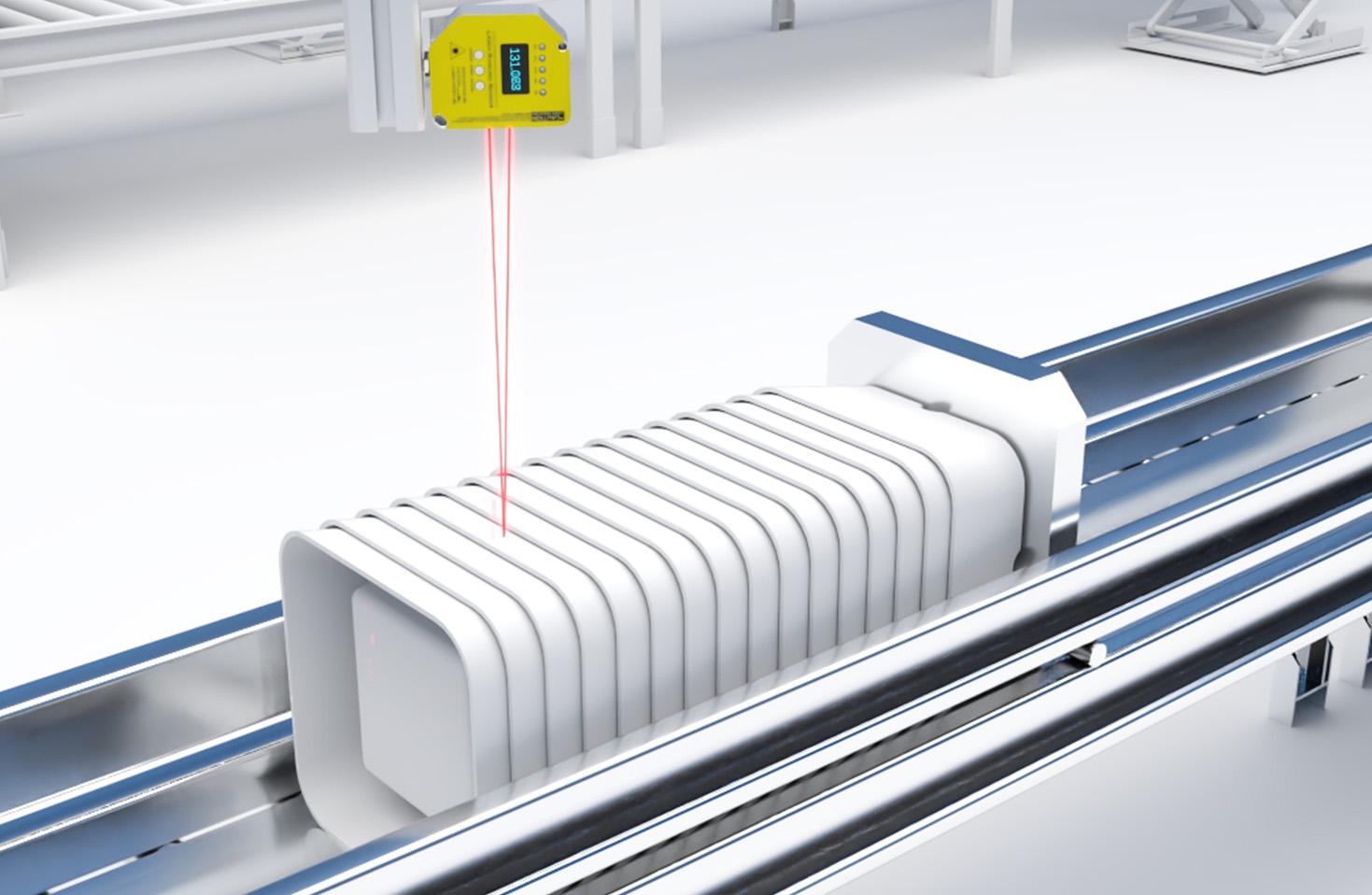
2. Time-of-Flight (ToF) Principle: Used for longer-range measurements, this method calculates distance based on the time it takes for a laser pulse to travel to the target and back. The sensor emits short, high-intensity laser pulses. A high-speed photodetector captures the reflected pulse. An internal clock measures the elapsed time. Since the speed of light is a known constant, the distance can be calculated using the formula: Distance = (Speed of Light × Time of Flight) / 2. ToF sensors are ideal for applications like bulk level monitoring, large object positioning, and vehicle guidance in warehouses.

3. Confocal Principle: This principle offers exceptional resolution for thickness and displacement measurement, even on transparent or reflective surfaces. Here, a white light or multi-wavelength laser source is used. The light is focused onto the target through a special chromatic lens. This lens disperses the light so that different wavelengths focus at different distances. Only the wavelength that is perfectly focused on the target surface is reflected back efficiently into the detector. By analyzing the wavelength of the returned light, the sensor determines the exact distance to the target. This method is paramount in measuring the thickness of glass, transparent films, or single-sided measurement of hot surfaces.
4. Interferometry Principle: For the highest possible precision at the nanometer scale, laser interferometers are employed. They work on the principle of splitting a laser beam into a reference path and a measurement path. The beam reflected from the target (measurement path) recombines with the reference beam. The interference pattern created by the superposition of these two waves is analyzed. Any minute movement of the target changes the optical path length, causing a shift in the interference fringes. Counting these fringe shifts allows for ultra-precise measurement of displacement, vibration, and surface flatness, critical in semiconductor manufacturing and precision machining.
Beyond distance, laser sensors also utilize principles for measuring other properties. Laser Doppler Vibrometry measures vibration velocity by detecting the frequency shift (Doppler effect) in laser light scattered from a vibrating surface. Diffuse Reflection Sensors simply detect the presence or absence of an object by the intensity of reflected scattered light.
The effectiveness of a laser sensor in a processing environment depends on several factors. The surface properties of the target (color, roughness, material) affect the amount and quality of reflected light. Shiny surfaces can cause specular reflection, directing light away from the receiver, while dark, absorbent surfaces may return too weak a signal. Advanced sensors incorporate automatic gain control and algorithms to compensate for these variations. Environmental conditions like dust, steam, or ambient light interference must be considered, often necessitating protective housings or filters. Finally, the evaluation electronics are what transform the raw optical signal into a stable, high-speed, and communicable digital output, integrating seamlessly with PLCs and robotic controllers.
In conclusion, the principle of operation defines the application. Triangulation sensors provide high precision at short ranges for detailed profiling. Time-of-Flight sensors cover larger areas efficiently. Confocal sensors solve challenging measurements on difficult materials, and interferometric sensors deliver ultimate precision. By selecting the appropriate principle-based laser sensor, manufacturers can achieve new levels of automation, quality assurance, and process efficiency, driving forward the capabilities of modern industry.