In the demanding environments of modern industrial automation, proximity switch sensors are indispensable components for detecting the presence or absence of objects without physical contact. Among their most critical performance parameters is the ability to withstand high-temperature conditions, a factor that directly influences system reliability, maintenance cycles, and overall operational safety. This article delves into the technical aspects, material science, and application considerations surrounding the high-temperature resilience of these vital sensors.
The core challenge for proximity switches in high-heat scenarios lies in the inherent sensitivity of their internal components. Standard inductive, capacitive, or magnetic sensors utilize coils, oscillators, and integrated circuits that are susceptible to performance degradation or permanent failure when exposed to temperatures beyond their specified range. Excessive heat can lead to insulation breakdown in wire windings, drift in oscillation frequency, and malfunction of semiconductor elements. Consequently, the sensor may exhibit reduced sensing distance, erratic switching behavior, or a complete loss of function, potentially causing unplanned downtime in critical processes such as metal forging, glass manufacturing, or automotive paint drying ovens.
To combat these issues, manufacturers employ several advanced engineering strategies. The primary line of defense is the selection of high-temperature materials. This begins with specialized housing materials. While standard sensors often use plastics like PBT or PA, high-temperature variants utilize PPS (Polyphenylene Sulfide), PEEK (Polyether Ether Ketone), or even ceramic housings. These materials maintain structural integrity and insulation properties at temperatures ranging from 150°C to over 200°C continuously. The sensing face, a critical point of thermal exposure, is frequently made from high-grade, temperature-stable stainless steel or specially formulated plastics.
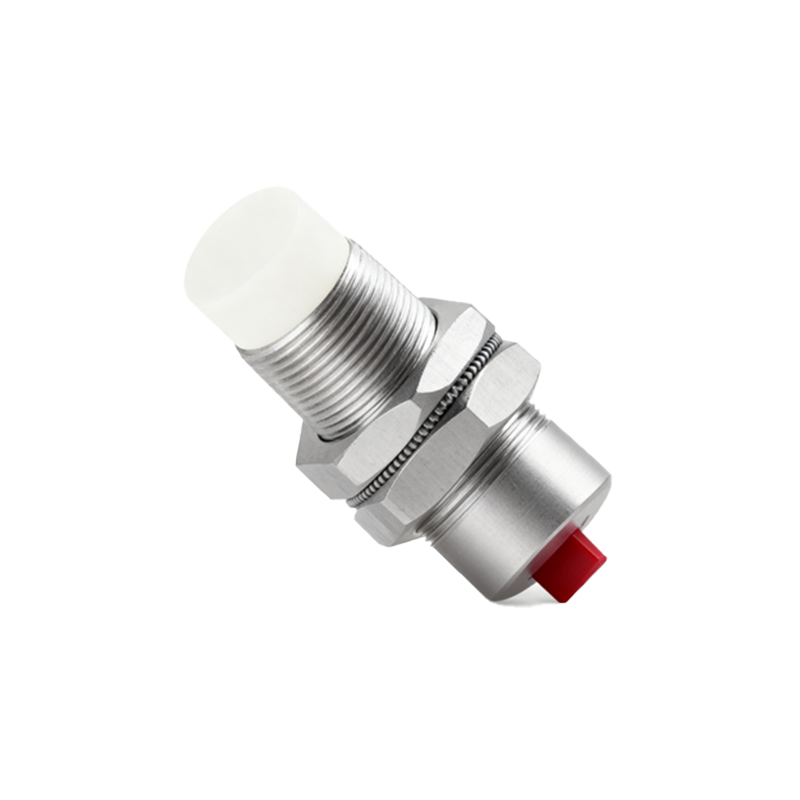
Internally, the construction is equally robust. High-temperature epoxy resins are used for potting electronic components, providing excellent thermal conduction to dissipate heat while protecting against vibration and moisture. The wire coils are wound with enameled wire featuring Class H (180°C) or higher insulation ratings. Furthermore, the semiconductor chips themselves are often sourced as industrial- or military-grade components, designed for extended operation at elevated junction temperatures. For the most extreme environments, such as near turbine engines or in foundry applications, sensors may be equipped with active or passive cooling mounts or thermal barriers to shield the electronics from radiant heat.
The selection of a high-temperature proximity sensor is not merely about a maximum temperature rating. Engineers must consider the complete thermal profile. Key specifications include:
Continuous Operating Temperature: The ambient temperature range within which the sensor guarantees all performance specifications.
Peak Temperature Rating: The maximum short-term temperature the sensor can endure without damage, often relevant during process upsets or cleaning cycles.
Thermal Cycling Resistance: The sensor's ability to withstand repeated expansion and contraction from temperature swings without cracking solder joints or breaking seals.
Sensing Distance Derating: It is crucial to understand that the nominal sensing distance (Sn) typically decreases as temperature increases. Manufacturers provide derating curves, and designers must account for this to ensure reliable detection at operating temperature.
Proper installation is paramount. Even a sensor rated for 200°C can fail prematurely if installed incorrectly in a high-heat zone. Best practices include ensuring adequate air circulation around the sensor body, using mounting brackets that do not act as heat sinks conducting heat directly to the sensor, and selecting high-temperature rated cables and connectors. The cable jacket material, often overlooked, must also be rated for the environment; silicone rubber or PTFE (Teflon) jackets are common choices for high-temperature duty.
In conclusion, the high-temperature resistance of proximity switch sensors is a sophisticated engineering achievement, blending advanced materials, meticulous component selection, and robust design. For industries operating furnaces, welding lines, die-casting machines, or food sterilization equipment, specifying sensors with appropriate high-temperature ratings is not an option but a necessity for ensuring continuous, safe, and efficient production. A thorough understanding of the thermal environment and the sensor's true capabilities under those conditions is the foundation of a reliable and resilient automation system.