Laser sensors have become indispensable tools across various industrial sectors due to their precision, reliability, and versatility. These devices operate by emitting laser beams and measuring the reflected light to determine distance, position, or presence of objects. One of the most notable characteristics of laser sensors is their high accuracy. Capable of achieving micrometer-level resolutions, they are ideal for applications requiring exact measurements, such as in semiconductor manufacturing or automotive assembly lines. Unlike traditional mechanical or ultrasonic sensors, laser sensors provide non-contact measurement, which minimizes wear and tear and reduces maintenance costs over time. This non-contact nature also allows for the inspection of delicate or hazardous materials without risk of damage or contamination.
Another key feature is the fast response time of laser sensors. They can process thousands of measurements per second, making them suitable for high-speed production environments where real-time monitoring is critical. For instance, in packaging industries, laser sensors ensure that products are correctly aligned and labeled at rapid speeds, enhancing overall efficiency. Additionally, laser sensors exhibit excellent environmental robustness. Many models are designed to withstand harsh conditions, including extreme temperatures, dust, and vibrations, without compromising performance. This durability makes them a preferred choice in challenging settings like mining, construction, or outdoor logistics.
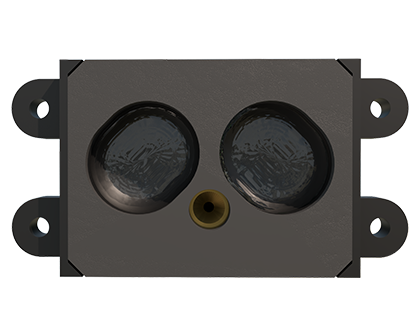
The adaptability of laser sensors is further enhanced by their ability to integrate with modern automation systems. Through interfaces such as Ethernet/IP, PROFINET, or IO-Link, these sensors can seamlessly communicate with programmable logic controllers (PLCs) and human-machine interfaces (HMIs), enabling advanced data analytics and predictive maintenance. For example, in smart factories, laser sensors contribute to Industry 4.0 initiatives by providing continuous feedback for optimizing processes and reducing downtime. Moreover, laser sensors come in various types, including diffuse, retro-reflective, and through-beam sensors, each suited for specific scenarios. Diffuse sensors are commonly used for detecting objects at short ranges, while through-beam sensors offer longer detection distances and higher accuracy for alignment tasks.
Energy efficiency is another advantage, as many laser sensors consume minimal power while delivering consistent performance. This aligns with global sustainability goals by lowering operational costs and reducing carbon footprints in industrial operations. In terms of safety, laser sensors often incorporate features like adjustable output power and protective housings to comply with international standards, ensuring safe usage around personnel. Applications span from quality control—such as checking dimensions or surface defects—to robotics, where they guide autonomous vehicles or robotic arms with precision. As technology advances, innovations like 3D laser scanning and LiDAR are expanding the capabilities of laser sensors, opening new possibilities in fields like autonomous driving and aerospace engineering.
In summary, laser sensors offer a combination of precision, speed, durability, and connectivity that drives industrial innovation. Their evolving designs continue to meet the growing demands for automation and quality assurance, solidifying their role as critical components in modern engineering landscapes.