Cylindrical proximity sensors are fundamental components in industrial automation, offering non-contact detection of metallic and, in some cases, non-metallic objects. Their robust, tubular design makes them ideal for harsh environments. However, their effectiveness is not merely plug-and-play; it hinges on the precise adjustment of several key parameters. Understanding and correctly setting these parameters is crucial for achieving reliable sensing, maximizing machine efficiency, and minimizing false triggers.
The most critical adjustable parameter is the sensing distance. Often referred to as the nominal sensing distance (Sn), this is the theoretical range at which a standard target will be detected under ideal conditions. It is vital to note that the effective sensing distance in practice is influenced by factors like target material, size, and temperature. For instance, a sensor calibrated for mild steel will have a reduced sensing distance for stainless steel or aluminum due to differences in electromagnetic properties. Engineers must always refer to the sensor's reduction factor chart. Furthermore, the installation environment plays a role; flush-mounted sensors (embedded in a metal bracket) have a shorter effective range than non-flush mounted ones. The key is to set the installation distance at approximately 70-80% of the rated sensing distance to ensure stable operation despite target variations or mechanical vibrations.
Closely tied to sensing distance is the hysteresis setting. Hysteresis is the difference between the switch-on point (when the target approaches) and the switch-off point (when the target recedes). This parameter is essential for preventing output chatter or oscillation when a target is positioned at the very edge of the sensing range. A sensor with adjustable hysteresis allows the engineer to define a "dead band." For example, if a sensor detects a target at 10mm, it might not turn off until the target moves back to 12mm. This ensures a clean, single switching action, which is critical for controlling actuators, counters, or safety interlocks. Insufficient hysteresis can lead to erratic control signals and potential damage to machinery.
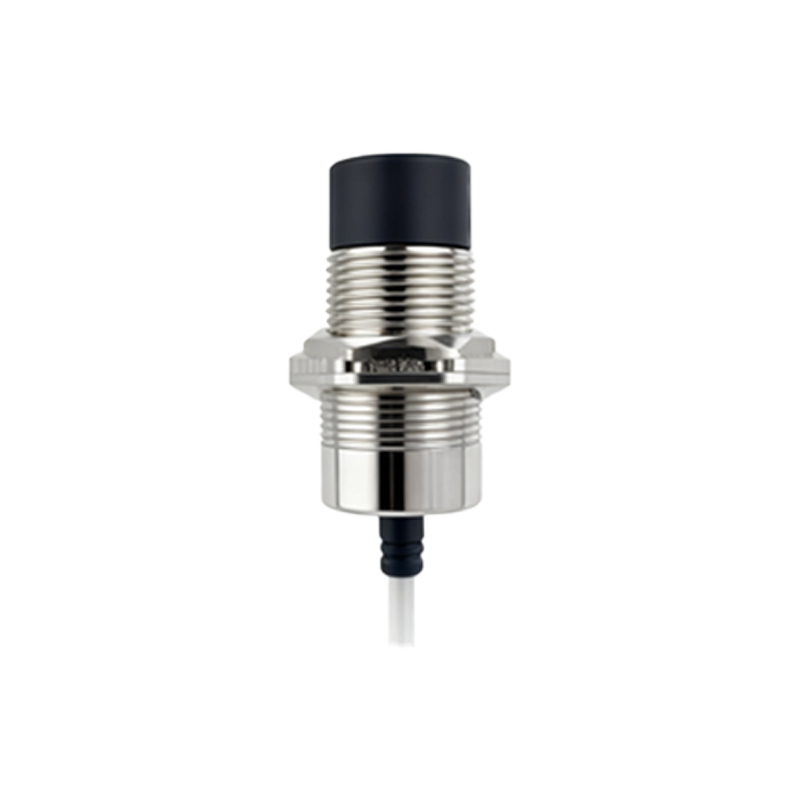
Another vital parameter is the response time or switching frequency. This defines how quickly the sensor can detect a target and change its output state, typically measured in milliseconds or as a frequency in Hertz (Hz). In high-speed applications, such as counting small parts on a fast conveyor or detecting teeth on a rotating gear, a slow response time will result in missed detections. Engineers must select and adjust this parameter so that it is faster than the cycle time of the target event. However, an excessively fast response time in a noisy electrical environment might make the sensor susceptible to interference. Some advanced sensors offer a programmable response time or built-in delay functions (on-delay/off-delay) to filter out signal noise or to synchronize with specific machine cycles.
For sensors with analog current (4-20mA) or voltage (0-10V) outputs, the scaling or output characteristic is a primary adjustment. This defines the relationship between the distance to the target and the output signal. Users can often set the start and end points of the linear range. For example, in a position feedback application, an engineer might scale the output so that 4mA corresponds to a target distance of 0mm and 20mA corresponds to 20mm. Precise calibration of this scaling is necessary for accurate analog measurement, crucial in applications like thickness monitoring, roll diameter measurement, or precise positioning systems.
Finally, the output configuration and function must be correctly set. This includes defining whether the output is normally open (NO) or normally closed (NC), a fundamental logic decision for control circuitry. Many modern programmable sensors offer enhanced functions like window mode (output activates only when the target is within a defined distance band), teach-in functionality for easy setup, and programmable output pulses. Additionally, parameters like temperature compensation and short-circuit protection modes may be adjustable on sophisticated models to enhance durability and stability in variable operating conditions.
In summary, the optimal performance of a cylindrical proximity sensor is not a given but an engineered result. By meticulously adjusting the sensing distance while accounting for material and installation effects, setting appropriate hysteresis to ensure stable switching, selecting a suitable response time for the application speed, scaling analog outputs accurately, and configuring the output logic and advanced functions, engineers can tailor these versatile devices to meet exact operational demands. This parametric fine-tuning transforms a standard sensor into a reliable and integral component of a robust and efficient automated system.