In the automated landscape of modern industry, the ability to detect the presence, absence, or position of an object without physical contact is paramount. Among the various technologies enabling this capability, photoelectric proximity sensors stand out for their versatility, reliability, and precision. These sensors operate on a simple yet powerful principle: they use light to sense objects. A light emitter, typically a light-emitting diode (LED), sends out a beam of visible red, infrared, or laser light. A receiver then detects changes in this light beam caused by the presence of an object. The sensor's electronics process this change and trigger an output signal.
The core working principle hinges on the behavior of light when it encounters an object. The sensor can detect an object through one of three primary methods: through-beam, retro-reflective, or diffuse reflection. In a through-beam setup, also called a opposed mode, the emitter and receiver are housed in separate units facing each other. An object is detected when it breaks the light beam between them. This method offers the longest sensing range and highest reliability, as it is less affected by the object's color, texture, or angle. It is ideal for precise detection over distances or in demanding environments.
Retro-reflective sensors house both emitter and receiver in a single unit. They rely on a reflector, often a specialized tape or prism, placed opposite the sensor. The emitted light beam travels to the reflector and bounces back to the receiver. An object passing between the sensor and the reflector interrupts this returning beam, triggering detection. This configuration simplifies wiring and alignment compared to through-beam sensors while still offering good range. A key feature is the use of polarizing filters to prevent the sensor from being fooled by shiny objects that might reflect light directly back, mimicking the reflector's signal.
The most common and compact type is the diffuse reflective sensor. Here, the emitter and receiver are also in one housing, but they detect the light reflected directly off the target object itself. The sensor activates when sufficient light from the emitter bounces off the object and returns to the receiver. The sensing distance is shorter and more dependent on the object's size, color, and surface finish—a white object reflects more light than a black one, for instance. Advanced versions use background suppression or fixed-field teaching to define a precise sensing window, ignoring objects beyond a set distance.
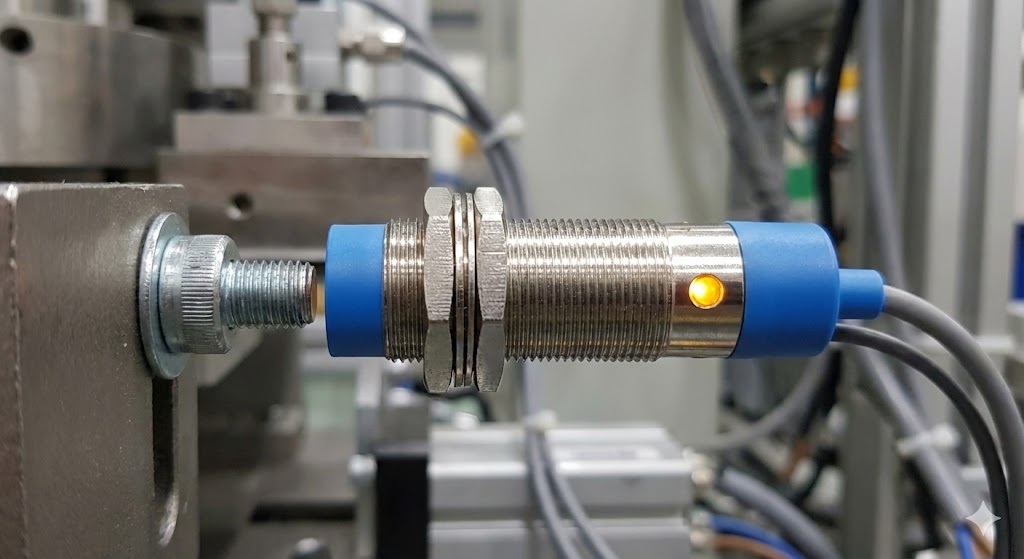
Beyond these, specialized variants like convergent beam and fiber optic types address niche needs. Convergent beam sensors focus the light at a specific point, allowing for extremely precise detection of small objects. Fiber optic sensors use flexible cables to transmit light, enabling sensing in tight spaces, high-temperature zones, or areas with high electromagnetic interference.
The applications for photoelectric sensors are vast and critical across sectors. In packaging and material handling, they count bottles on a conveyor, detect label positions, or confirm case sealing. Automotive assembly lines use them to verify part placement and robot positioning. In the food and beverage industry, they detect transparent films, liquid levels in bottles, and ensure proper cap placement. They are indispensable in warehouse automation for pallet detection and inventory management, and in printing for paper jam detection and web break monitoring.
Choosing the right photoelectric sensor requires careful consideration of several factors. The required sensing distance and the object's characteristics—its size, color, material, and surface—are primary drivers. Environmental conditions such as dust, fog, ambient light, and temperature extremes dictate the need for robust housings and specific light wavelengths. Infrared light, for example, penetrates dust better than visible red light. Output requirements, whether discrete (PNP/NPN) or analog, and the response speed needed for high-speed production lines are also crucial.
Compared to other proximity sensing technologies like inductive or capacitive sensors, photoelectric sensors excel at detecting non-metallic objects and offer much longer ranges. Inductive sensors only detect metals, and capacitive sensors detect materials based on their dielectric constant but have shorter ranges. Ultrasonic sensors, another non-contact option, are better for detecting sound-absorbing materials or in environments with heavy airborne contaminants, but they can be slower and more susceptible to temperature variations and acoustic noise.
Maintenance generally involves keeping the lens clean from dust and debris and ensuring stable mounting to prevent misalignment. Modern sensors incorporate diagnostic LEDs that indicate power status, output activation, and signal strength, greatly simplifying troubleshooting.
As Industry 4.0 and the Industrial Internet of Things (IIoT) advance, photoelectric sensors are evolving. Smart sensors with integrated IO-Link communication can transmit not just a simple on/off signal but also detailed parameter data like signal strength, operating temperature, and device health to a central controller. This enables predictive maintenance, remote configuration, and seamless integration into digital twin systems, pushing photoelectric sensing from a simple detection tool to a vital node in the smart factory data network.
Their non-contact nature, adaptability to diverse