In the realm of modern electronics and automation, the ability to detect the presence or absence of an object without physical contact is fundamental. Among the various technologies enabling this capability, light sensing proximity sensors stand out for their precision, versatility, and widespread adoption. These devices operate on the principle of emitting a beam of light, typically infrared (IR), and measuring the reflection to determine an object's proximity. This non-contact detection method is crucial in numerous applications, from consumer electronics to industrial automation.
The core technology behind most light-based proximity sensors involves a light-emitting diode (LED) and a photodetector. The LED emits a modulated infrared light beam. When an object enters the sensor's field of view, it reflects part of this light back towards the sensor. The integrated photodetector, often a photodiode or phototransistor, captures this reflected signal. An onboard circuit then processes this signal, converting the intensity of the reflected light into a measurable electrical output. This output can be a simple digital signal indicating presence/absence or an analog signal proportional to the distance. A key challenge is ambient light rejection. Sophisticated sensors use modulation techniques, emitting the IR light at a specific frequency, and the detector is tuned to respond only to that frequency, effectively filtering out interference from sunlight or artificial room lighting.
The advantages of light sensing proximity sensors are numerous. They offer high accuracy for short-range detection, typically from a few millimeters up to several centimeters. They are generally compact, cost-effective, and consume relatively low power. Furthermore, they can detect a wide variety of materials, although the reflectivity of the object's surface (color, texture) can influence the sensing range. For highly reflective surfaces, the range increases, while dark, absorbent materials may reduce it.
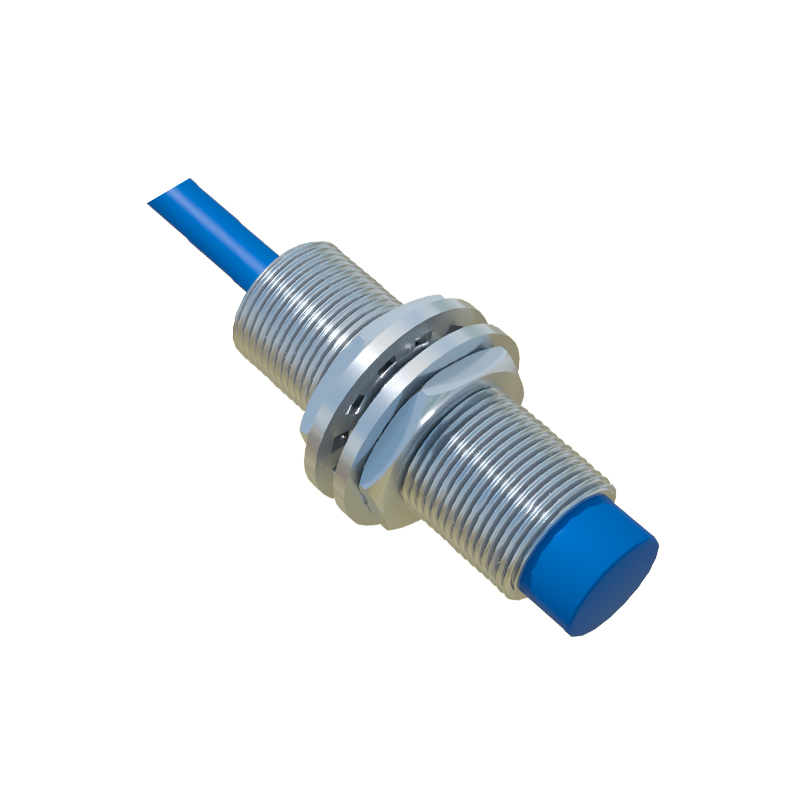
Applications for these sensors are vast and growing. In the consumer electronics sector, they are ubiquitous. A primary example is in smartphones and tablets, where a proximity sensor is used to detect when the device is held close to the user's ear during a call. This triggers the screen to turn off, preventing accidental touch inputs and saving battery power. Similarly, in laptops, proximity sensors can help implement features like "wake-on-approach," where the device powers up from sleep mode as the user gets near.
Beyond personal devices, these sensors play a critical role in industrial and commercial settings. They are integral to automated assembly lines, used for object counting, jam detection, and verifying the presence of components. In robotics, they provide essential input for obstacle avoidance and navigation. In the automotive industry, they are found in systems for automatic door activation, trunk opening, and driver monitoring systems to detect if the driver's head is turned away from the road. Even in retail, they enable touchless faucets, soap dispensers, and hand dryers, promoting hygiene and conserving resources.
Looking toward the future, the evolution of light sensing proximity technology is intertwined with advancements in other fields. The integration of Time-of-Flight (ToF) principles is a significant trend. ToF sensors measure the time it takes for a light pulse to travel to an object and back, allowing for much more precise distance measurement over longer ranges compared to traditional reflective intensity methods. This enables advanced features like gesture recognition in devices and more accurate spatial mapping in robotics.
Another frontier is the fusion of proximity sensing with other sensor types. Combining a light-based proximity sensor with an ambient light sensor (ALS) in a single package is common, allowing a device to automatically adjust screen brightness based on both the proximity of an object and the environmental lighting conditions. Furthermore, the miniaturization driven by Micro-Electro-Mechanical Systems (MEMS) technology continues to make these sensors smaller and more power-efficient, opening doors for their use in wearable technology and the Internet of Things (IoT).
In conclusion, light sensing proximity sensors are a mature yet dynamically evolving technology. Their fundamental operating principle is elegantly simple, but continuous innovation in signal processing, integration, and new measurement techniques like ToF ensures their relevance. As machines and devices become more interactive, context-aware, and autonomous, the demand for reliable, non-contact sensing will only increase. From turning off a smartphone screen to guiding an autonomous mobile robot, these tiny components will remain indispensable enablers of a more automated and intuitive world.