In the realm of industrial automation and precision measurement, the ability to detect the presence, absence, or position of an object without physical contact is paramount. Among the various non-contact sensing technologies available, laser proximity sensors stand out for their exceptional accuracy, speed, and versatility. These devices have become indispensable components in modern manufacturing, robotics, and safety systems, enabling higher efficiency, improved quality control, and enhanced operational safety.
At its core, a laser proximity sensor operates by emitting a focused beam of coherent light—a laser—towards a target object. The sensor then analyzes the light that is reflected back. The most common principle employed is the time-of-flight (ToF) method. In this method, the sensor precisely measures the time delay between the emission of the laser pulse and the reception of its reflection. Since the speed of light is a known constant, the sensor's internal processor can calculate the distance to the target with remarkable precision. Another prevalent principle is triangulation. Here, the emitted laser beam strikes the target, and the reflected light is focused onto a position-sensitive detector, such as a CCD or PSD. The angle of the reflected beam changes with the target's distance, causing the light spot to shift position on the detector. This shift is measured and converted into a precise distance value. Triangulation sensors are particularly effective for short-range, high-accuracy measurements.
The advantages of using laser proximity sensors are numerous. They offer extremely high resolution, often in the sub-micron range, making them suitable for applications demanding meticulous precision. Their response time is exceptionally fast, allowing for real-time detection and control in high-speed processes. The focused laser beam provides a small, precise sensing spot, enabling the detection of very small objects or precise edges. Furthermore, they are largely unaffected by the color, material, or surface texture of the target object, unlike some photoelectric sensors, providing consistent and reliable performance across diverse applications.
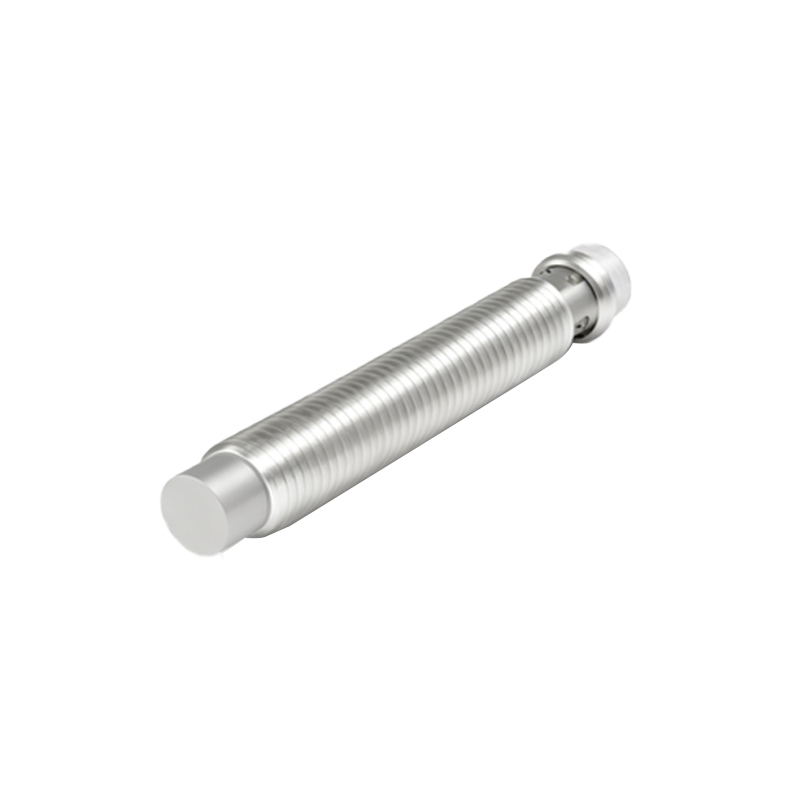
The applications of laser proximity sensors span a wide array of industries. In automotive manufacturing, they are used for robot guidance, weld seam tracking, and gap measurement between body panels. In the electronics sector, they ensure precise component placement on circuit boards and measure the thickness of silicon wafers. Within packaging and material handling, they detect product presence on high-speed conveyors, control stacking heights, and ensure accurate filling levels. They are also critical in aerospace for alignment tasks and in logistics for dimensioning packages. Beyond industrial settings, laser proximity sensors form the backbone of many safety systems, such as light curtains and area scanners that protect personnel from entering hazardous machine zones.
Selecting the right laser proximity sensor for a specific task requires careful consideration of several key parameters. The sensing range is fundamental; it must cover the required working distance. Accuracy and repeatability specifications determine how precise and consistent the measurements will be. The spot size of the laser beam is crucial when detecting small features. Response time must be compatible with the speed of the process. Environmental factors cannot be ignored; one must consider the sensor's housing rating (IP rating for dust and water resistance) and its ability to withstand temperature variations, vibration, and ambient light interference. Finally, the output signal type—whether analog (4-20mA, 0-10V), digital (PNP/NPN), or serial communication (IO-Link, RS-485)—must integrate seamlessly with the existing control system.
Installation and maintenance are straightforward but vital for optimal performance. Ensuring a stable mounting, free from vibration, is essential. The sensor must be aligned correctly with the target path. Keeping the lens clean from dust, oil, or debris is critical, as contamination can scatter or block the laser beam, leading to measurement errors or failure. Regular verification against a known reference distance is a good practice to maintain calibration.
In conclusion, laser proximity sensors represent a sophisticated and reliable solution for non-contact distance measurement and object detection. Their principle of operation, leveraging the consistent properties of light, provides unmatched precision in demanding industrial environments. By understanding their working principles, recognizing their vast application potential, and carefully matching sensor specifications to the task's requirements, engineers and technicians can harness this technology to drive innovation, enhance productivity, and ensure safety across countless modern applications.