Proximity sensors are indispensable components in modern industrial automation and countless electronic devices. Operating without physical contact, they detect the presence or absence of an object within a defined sensing range. This non-contact detection offers significant advantages, including high reliability, long operational life, and the ability to function in harsh environments where dirt, oil, or moisture would compromise mechanical switches. The core principle involves emitting an electromagnetic field, beam, or ultrasonic waves and detecting changes in the return signal or field when a target object enters the sensing zone.
Several primary technologies dominate the proximity sensor landscape, each with distinct operating principles and ideal use cases. Inductive proximity sensors are among the most common. They generate an oscillating electromagnetic field and detect the eddy current losses induced when a metallic object enters this field. Consequently, they are exclusively for detecting metals, with effective ranges typically from a few millimeters to about 60 millimeters. Their robustness makes them perfect for machine automation, position sensing in metalworking, and part counting on conveyor systems.
Capacitive proximity sensors, in contrast, can detect both metallic and non-metallic materials, including liquids, plastics, wood, and granules. They function by measuring changes in capacitance between the sensor's electrode and the ground. When any material with a different dielectric constant than air approaches, it alters this capacitance, triggering the sensor. This versatility makes them suitable for level detection in tanks (for liquids or powders), material handling, and presence detection of non-metallic objects.
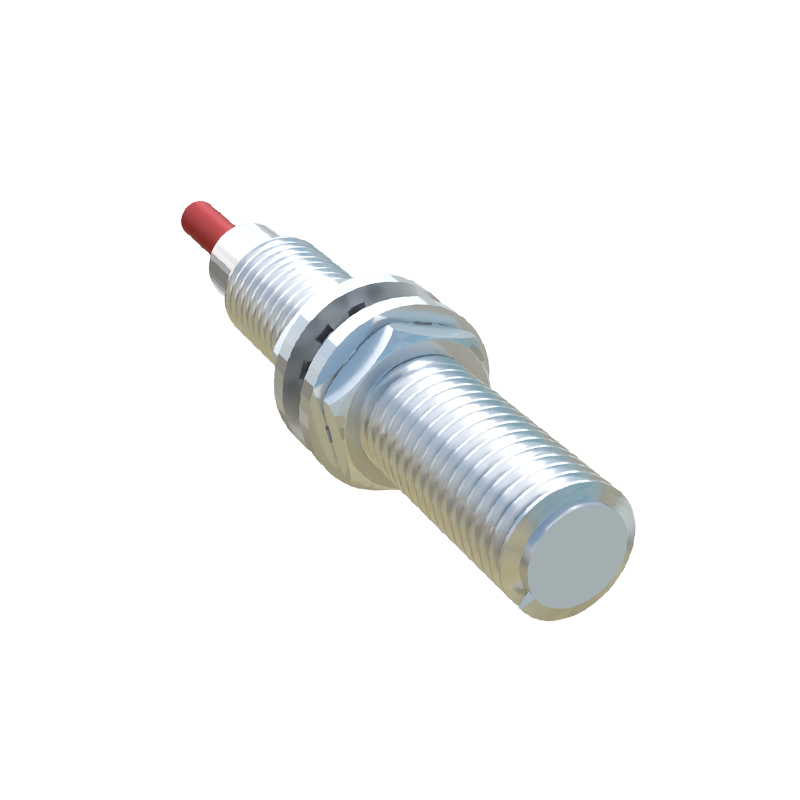
Ultrasonic proximity sensors employ high-frequency sound waves beyond human hearing. They measure the time interval between emitting a sonic pulse and receiving its echo reflected from a target object. This time-of-flight principle allows them to detect objects of virtually any material, solid or liquid, over longer distances than inductive or capacitive sensors—often up to several meters. They excel in applications like distance measurement, transparent object detection (where optical sensors fail), and level sensing in challenging conditions with dust or vapor.
Photoelectric sensors, another major category, use light beams (visible, infrared, or laser). A basic through-beam type has separate emitter and receiver units; detection occurs when the target object interrupts the light beam. A retro-reflective type uses a single unit and a reflector, while a diffuse (proximity-mode) sensor detects light reflected directly from the target itself. They offer very long sensing ranges and can detect tiny objects, but their performance can be affected by environmental factors like ambient light, color, and surface reflectivity. Common applications include packaging, object counting, and assembly line verification.
Selecting the right proximity switch requires careful consideration of several key parameters. First, identify the target material (metal only, all materials, liquid, etc.) to narrow down the technology. The required sensing distance is critical; always choose a sensor with a rated operating distance slightly greater than your application needs to account for installation tolerances and wear. Environmental conditions are paramount: factors like temperature extremes, washdown requirements, exposure to chemicals, or heavy vibration will dictate the needed housing material (e.g., stainless steel) and protection rating (IP67/IP69K for harsh environments).
Output configuration is another vital decision. Sensors commonly provide digital outputs like NPN (sinking) or PNP (sourcing) transistor outputs, which interface with programmable logic controllers (PLCs). Some models offer analog outputs (4-20 mA or 0-10V) for distance-proportional signaling, or even IO-Link for smart sensor communication. The physical size and mounting style (threaded barrel, rectangular, etc.) must also suit the mechanical constraints of the application.
In practice, inductive sensors monitor robotic arm positions in automotive assembly. Capacitive sensors ensure proper fill levels in food and beverage bottling lines. Ultrasonic sensors guide automated guided vehicles (AGVs) and manage bulk material inventory. Photoelectric sensors verify label placement on high-speed packaging machines. The evolution continues with "smart" sensors featuring integrated diagnostics, condition monitoring, and easy integration into Industrial Internet of Things (IIoT) frameworks, pushing predictive maintenance and overall equipment effectiveness (OEE) to new heights.
Understanding the fundamental technologies, their strengths, limitations, and key selection criteria empowers engineers and technicians to deploy these sensors effectively. The correct proximity sensor not only solves an immediate detection problem but also enhances system reliability, reduces downtime, and contributes to a more efficient and intelligent automated operation.