Color measurement has evolved far beyond the human eye. In industrial automation, quality control, and scientific research, the demand for objective, repeatable, and high-speed color analysis is critical. This is where laser sensors, specifically those employing advanced spectroscopic techniques, have become indispensable tools. Unlike traditional colorimeters or spectrophotometers that use broad-spectrum white light, laser-based systems offer unique advantages in precision, spatial resolution, and application versatility.
The fundamental principle behind laser color measurement is spectroscopy. A laser emits a highly focused, monochromatic (single wavelength) beam of coherent light onto the target surface. When this light interacts with the material, several phenomena occur: some light is absorbed, some is transmitted (if the material is translucent), and some is reflected. The key to color measurement lies in the reflected or scattered light. The chemical and physical properties of the material dictate how much of the incident laser light is absorbed and which wavelengths are reflected. A true color-measuring laser sensor does not use a single laser wavelength alone. Instead, it often employs a tunable laser or a combination of laser sources to probe the material at multiple specific wavelengths, or it uses a broadband supercontinuum laser source that acts like a brilliant white light but with laser-like coherence and intensity.
The reflected light is collected by sensitive detectors, typically a high-resolution spectrometer or an array of photodiodes. This captured light signal is essentially a spectral signature. Sophisticated algorithms then analyze this spectral data. They compare the intensity of reflected light at various wavelengths to reference data stored in memory. This process identifies the exact color coordinates within a standardized color space, such as CIE L*a*b* or RGB. The L*a*b* space is particularly prevalent in industry, where 'L' represents lightness, 'a*' denotes the red-green axis, and 'b*' represents the yellow-blue axis. The laser sensor calculates these values with remarkable accuracy, providing a digital, objective color value that is immune to human subjectivity or ambient lighting conditions.
The benefits of using laser sensors for color measurement are substantial. First is exceptional spatial resolution. The focused laser spot can be extremely small, allowing for color measurement on tiny components, specific regions of a product, or even individual threads in textiles. Second is high speed. A measurement can be completed in milliseconds, enabling 100% inline inspection of products on fast-moving production lines, such as in printing, food sorting, pharmaceutical packaging, or automotive paint shops. Third is non-contact operation. The laser does not touch the surface, making it ideal for measuring wet, hot, delicate, or sterile products without risk of contamination or damage. Fourth is robustness against ambient light. Since the laser light is intense and modulated, the sensor's electronics can filter out interference from factory lighting, ensuring stable readings in challenging environments.
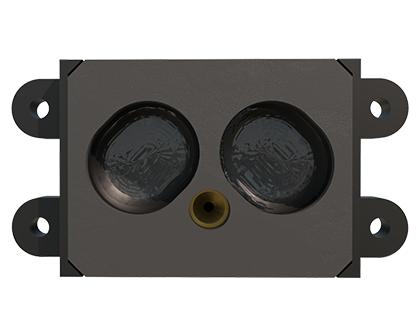
Practical applications are widespread. In the food industry, laser color sensors sort fruits, vegetables, and nuts by ripeness or quality, and verify the correct browning of baked goods. In manufacturing, they ensure color consistency of plastics, paints, and coatings, detect color-coded labels or wires, and monitor print quality. In textiles, they control dyeing processes by continuously measuring fabric color. In recycling, advanced laser-based systems can identify and sort different types of plastics by color and polymer type using their unique spectral fingerprints.
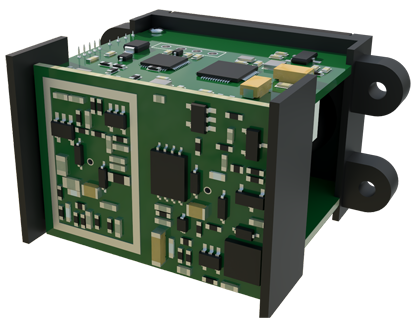
Implementing a laser color sensor requires careful consideration. The nature of the surface (glossy, matte, textured) can affect the reflection profile, often necessitating a fixed measurement geometry (like 45°/0° to mimic human vision) for consistent results. Calibration against known color standards is essential for absolute accuracy. While the initial investment may be higher than simpler photoelectric sensors, the return in terms of quality assurance, reduced waste, and automated process control is significant.

In conclusion, laser sensor technology has transformed color measurement from a subjective visual check into a precise, quantitative, and high-speed science. By leveraging the unique properties of laser light and sophisticated spectral analysis, these systems deliver reliable, objective color data that is crucial for modern automation, quality assurance, and research across countless industries. As laser and detector technologies continue to advance, we can expect even faster, more compact, and more affordable systems to further democratize this powerful capability.