In the realm of electronics and hardware tinkering, the concept of replacing one component with another, seemingly different one, often sparks curiosity and innovation. One such intriguing possibility is substituting a temperature sensor with a laser emitter. While these two components serve fundamentally different purposes—one measures thermal energy, the other projects coherent light—this swap is not about functional equivalence. Instead, it represents a fascinating exercise in understanding power requirements, signal interfacing, and physical integration within a circuit or system.
A temperature sensor, typically a device like a thermistor, RTD, or digital sensor (e.g., DS18B20), outputs a signal corresponding to ambient temperature. This signal is usually a varying resistance, voltage, or a digital data stream. Its primary need from the system is a stable reference voltage and a means to read its output. A laser emitter, such as a laser diode, requires a carefully controlled current to operate and emit light. It doesn't "output" data in the same way; it's an actuator, not a sensor. The core challenge of the swap lies in this input/output paradigm shift.
The first and most critical consideration is power. Temperature sensors are generally low-power devices. A laser diode, however, requires a specific drive current, often provided by a dedicated laser driver circuit to prevent thermal runaway and ensure stable operation. Simply connecting a laser diode to the pins where a temperature sensor was installed would likely result in failure—either the laser won't turn on due to insufficient current, or it could be instantly damaged by an incompatible voltage/current source. Therefore, the modification necessitates introducing an appropriate driver circuit that can be powered from the existing system's power rails. One must verify the voltage levels available (e.g., 3.3V, 5V) and design or select a driver that can function within those constraints.
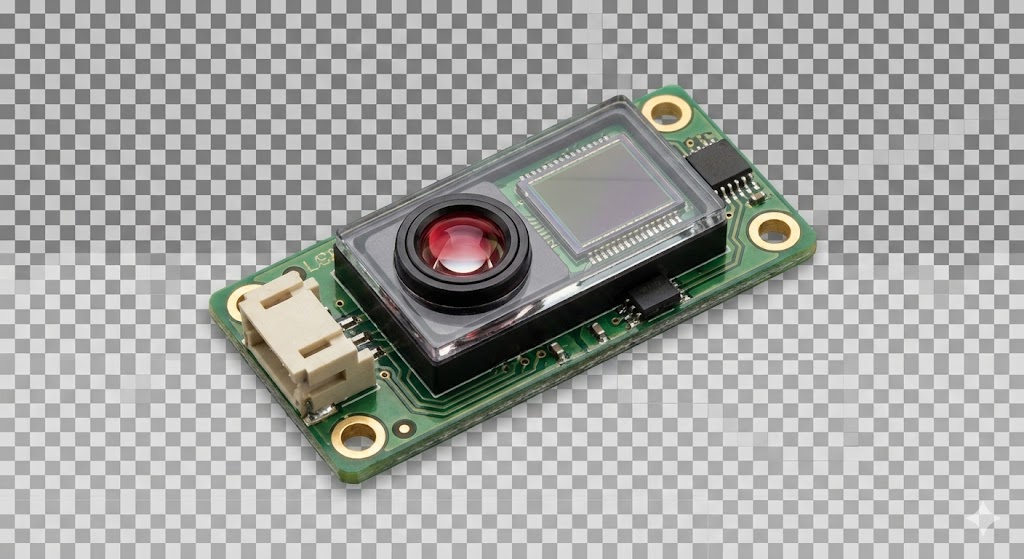
Next is the interface. If the original temperature sensor communicated digitally (e.g., via a 1-Wire or I2C bus), the system's microcontroller is programmed to send and receive specific commands to read temperature data. Replacing it with a laser emitter means repurposing those communication lines. One common approach is to use the digital signal that *would have* read the sensor to instead control the laser driver. For instance, a GPIO pin previously used for data could be reconfigured as an output to enable or disable the laser. More complex control, like modulating the laser's intensity, would require significant firmware changes to interpret existing commands into new control signals for the driver circuit. For analog sensors, the varying voltage output could potentially be used with a comparator circuit to trigger the laser at certain threshold "temperature" readings, creating a simple optical alarm system.
Physical integration presents another hurdle. Temperature sensors are often small and designed for thermal coupling to an environment or surface. Laser emitters may be larger and require heatsinking, especially for higher-power modules. The optical path also needs consideration—the laser must be positioned to project its beam usefully, which might involve adding a lens or adjusting the device's housing. Ensuring proper mechanical mounting and alignment is crucial for a successful modification.
It's vital to address safety. Laser emitters, even low-power ones, pose risks to eyesight. Any modification involving lasers must incorporate necessary safety features, such as proper labeling, housing that prevents accidental exposure, and adherence to local laser safety regulations (like FDA classifications in the US or IEC standards). This is non-negotiable and a key responsibility of the modifier.
Why attempt such a modification? Practical applications might include converting a temperature-monitoring device into a laser-based alignment tool, creating a unique triggering mechanism, or simply as an educational deep-dive into electronic interfacing. It teaches valuable lessons about reading datasheets, understanding power budgets, signal conditioning, and firmware-hardware interaction.
In conclusion, swapping a temperature sensor for a laser emitter is not a plug-and-play operation. It is an intermediate to advanced hardware project that demands careful analysis of the original circuit, thoughtful design of an intermediary driver stage, and likely modifications to the system's software. The process underscores a fundamental principle in hardware hacking: functionality is defined not just by components, but by the system that powers, controls, and interprets them. Successfully executing this swap demonstrates a strong grasp of converting a data input node into a controlled output actuator, a skill applicable to countless other customization projects.