In the world of industrial automation and smart devices, the ability to detect the presence or absence of an object without physical contact is paramount. This is where proximity switch photoelectric sensors come into play. These sophisticated yet robust devices are the silent workhorses behind countless automated processes, from assembly lines to consumer electronics. Unlike mechanical limit switches, they offer non-contact detection, leading to longer service life, higher reliability, and faster response times.
At its core, a photoelectric proximity sensor operates on a simple principle: it emits a beam of light and detects changes in the received light signal. The sensor typically consists of a light emitter, usually a Light Emitting Diode (LED), and a photodetector, such as a phototransistor or photodiode. When an object enters the sensing field, it interrupts or reflects the light beam, causing a change in the signal received by the photodetector. This change is processed by the sensor's internal circuitry, which then triggers a switching output—turning it ON or OFF.
There are several primary operating modes for these sensors, each suited for different applications. The through-beam type, also known as the opposed mode, uses separate units for the emitter and receiver. The object to be detected breaks the light beam between them. This mode offers the longest sensing range and high reliability but requires precise alignment of two separate components. The retro-reflective mode combines the emitter and receiver in a single housing. It uses a reflector to bounce the light beam back to the receiver. An object is detected when it blocks this reflected beam. This simplifies installation compared to through-beam sensors while still offering a good sensing distance. Finally, the diffuse reflective mode, or proximity mode, has both emitter and receiver in one unit. It detects an object by the light reflected directly off the object's surface. This is the most common and versatile type, allowing for easy installation as it only requires a single unit, though its sensing range is typically shorter and can be influenced by the object's color and surface texture.
The applications for photoelectric proximity sensors are vast and varied. In manufacturing, they are indispensable for object detection on conveyor belts, counting products, monitoring bin levels, and ensuring correct part positioning. In packaging machinery, they verify the presence of labels, control film feed, and detect fill levels. The automotive industry relies on them for robotic guidance, part verification, and safety curtain applications. Beyond heavy industry, they are found in everyday life: automatic doors at supermarkets, paper detection in printers and copiers, touchless faucets, and the screen-off function during phone calls when the device is held to the ear.
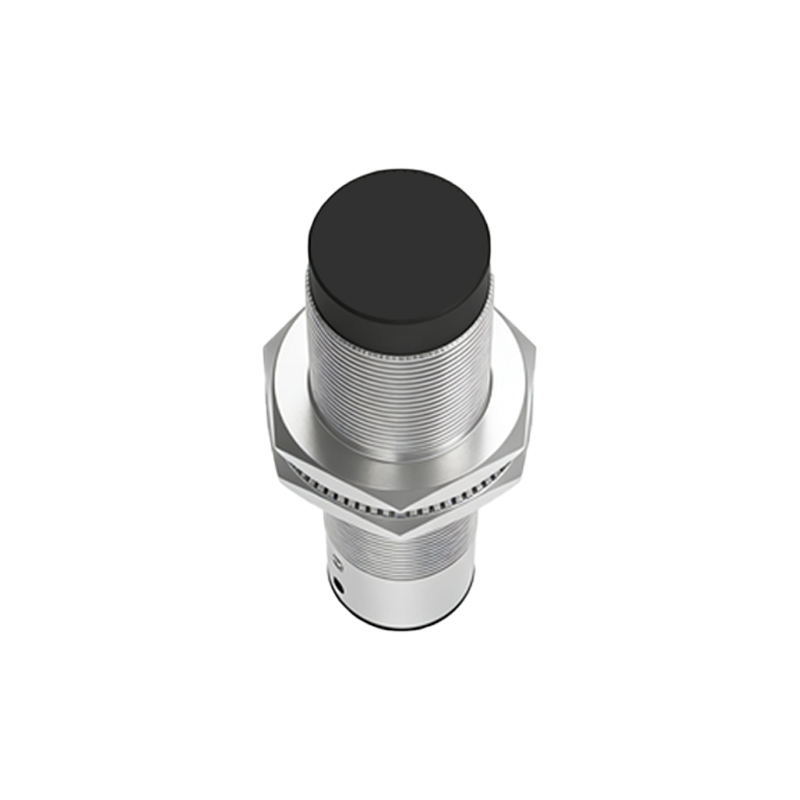
Selecting the right photoelectric sensor requires careful consideration of several key parameters. Sensing range is critical; it must be appropriate for the application without being excessive. The type of output (e.g., NPN, PNP, analog, or relay) must be compatible with the control system, such as a PLC. Environmental factors cannot be ignored. Sensors used outdoors or in washdown areas require high Ingress Protection (IP) ratings (e.g., IP67, IP69K) to withstand dust and water. The presence of ambient light, dust, fog, or vibration can also affect performance, necessitating sensors with robust housing and modulated LED light to ignore ambient light interference. Furthermore, the characteristics of the target object—its size, color, material, and surface finish—directly influence the choice of sensor type and its required sensitivity.
Modern advancements continue to enhance the capabilities of photoelectric sensors. Background suppression technology allows a diffuse sensor to ignore objects beyond a set distance, detecting only those within a specific range. Fiber optic versions enable sensing in extremely tight spaces or hostile environments by using flexible light guides. Laser-based sensors provide extremely precise detection for small objects or long ranges. The integration of IO-Link communication is a significant trend, allowing for digital parameter setting, remote diagnostics, and process data monitoring, paving the way for predictive maintenance and Industry 4.0 integration.
In conclusion, proximity switch photoelectric sensors are a fundamental component of modern automation. Their non-contact operation, versatility across different operating modes, and adaptability to challenging environments make them a preferred choice for engineers and designers. A thorough understanding of their working principles, application needs, and environmental constraints is essential for selecting the optimal sensor, ensuring reliable performance, and maximizing efficiency in any automated system.