In the world of industrial automation, process control, and precision measurement, ensuring accurate and reliable level detection is paramount. Among the various technologies available, the laser level sensor stands out for its exceptional precision, versatility, and non-contact operation. This article delves into the fundamental principles, key advantages, diverse applications, and critical factors for selecting the right laser level sensor for your needs.
At its core, a laser level sensor operates on the time-of-flight (ToF) principle. The sensor emits a focused pulse of laser light towards the target material's surface. This light beam is then reflected back to a receiver within the sensor. A highly precise internal clock measures the time elapsed between the emission and reception of the laser pulse. Since the speed of light is a known constant, the sensor's microprocessor can calculate the exact distance to the material's surface with remarkable accuracy. This distance measurement is then typically converted into a level value, often displayed as a percentage, volume, or specific unit of length relative to the sensor's mounting position.
The advantages of using laser technology for level measurement are significant. First and foremost is precision. Laser sensors can achieve measurement accuracies within millimeters, even over long ranges, making them ideal for applications where minute changes in level are critical. Their non-contact nature is another major benefit. The sensor does not touch the material, eliminating concerns about contamination, wear and tear, or affecting the flow properties of sensitive substances like powders, granules, or corrosive liquids. Furthermore, the highly focused laser beam allows for precise targeting, enabling measurements in vessels with internal obstructions like agitators, heating coils, or baffles. They are also largely immune to factors that plague other technologies, such as dust, changing material properties (dielectric constant, density), foam, vapor, or high process temperatures and pressures, provided the sensor's housing and window are appropriately rated.
The applications for laser level sensors span a wide range of industries. In the chemical and pharmaceutical sectors, they are used to monitor levels of aggressive acids, solvents, and granular raw materials in storage silos and process vessels. The food and beverage industry utilizes them for hygienic level control of powders, liquids, and solids in mixing tanks and hoppers. In water and wastewater treatment, they provide reliable level data in clarifiers, sludge tanks, and channels. The mining and bulk solids handling industry relies on them for inventory management of materials like coal, ore, and cement in large silos, where dust and long measurement ranges are common challenges. They are also increasingly used for collision avoidance and positioning in automated guided vehicles (AGVs) and robotics.
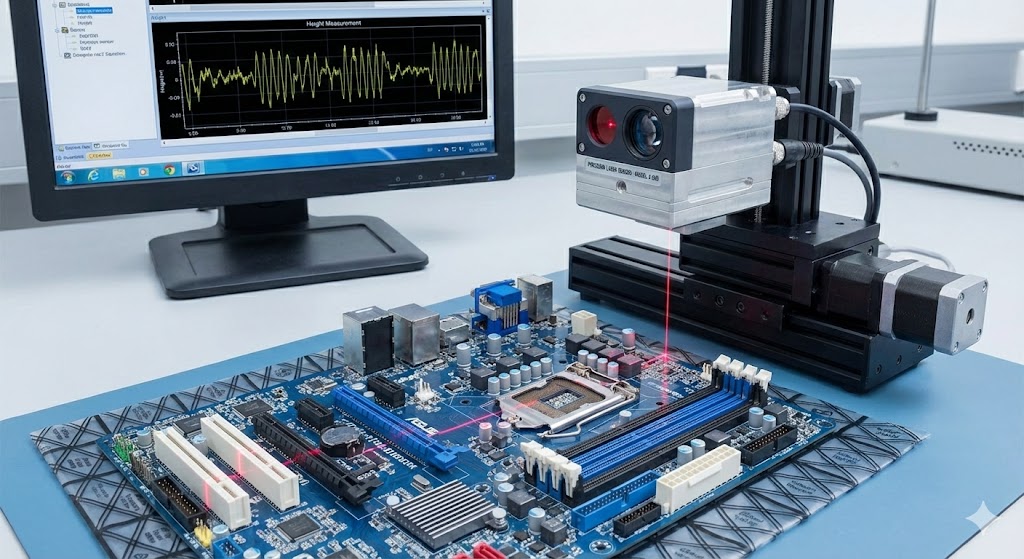
Selecting the appropriate laser level sensor requires careful consideration of several application parameters. The first is the measurement range. Sensors are available for short-range applications of a few meters to long-range models capable of measuring over 100 meters. The type of material surface is crucial; dark, absorbent, or rough surfaces reflect less laser light than bright, smooth ones, which can affect performance and may require sensors with higher laser power. Process conditions such as temperature, pressure, and the presence of dust or vapor will dictate the required ingress protection (IP) rating, housing material (often stainless steel), and possibly the need for a purge air connection to keep the optical window clean. The output signal is another key choice, with common options being analog (4-20 mA), digital (RS-485, Modbus), or switching signals. Finally, approval for use in hazardous areas (ATEX, IECEx) may be necessary for applications involving flammable gases or dust.
Installation and commissioning are straightforward but vital for optimal performance. The sensor must be mounted securely, ensuring a clear, unobstructed line of sight to the target material across its entire level range. Angling the sensor slightly off perpendicular can help avoid false reflections from shiny tank walls or internal structures. Most modern sensors feature intuitive configuration via push buttons or software, allowing for easy setup of the measurement range, output scaling, and damping to filter out signal noise from surface turbulence.
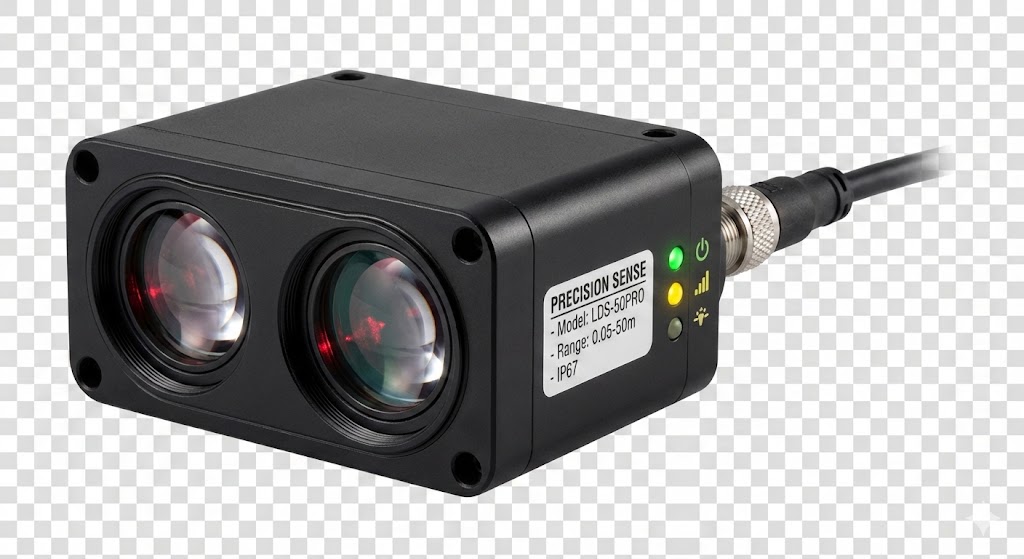
In conclusion, laser level sensors represent a sophisticated and highly effective solution for demanding level measurement tasks. Their combination of pinpoint accuracy, robust non-contact operation, and ability to function in difficult environments makes them a preferred choice across numerous industries. By thoroughly understanding the application requirements—including material properties, process conditions, and required performance—engineers and technicians can leverage laser sensor technology to achieve reliable, maintenance-free level control, enhancing both safety and efficiency in their operations.