In the world of automation and smart technology, proximity sensors are the silent sentinels, enabling machines to perceive their surroundings without physical contact. These devices detect the presence or absence of an object within a specific range, triggering an output signal. Their ability to operate reliably in harsh environments, provide high-speed response, and offer long service life makes them indispensable across countless industries.
At their core, proximity sensors work by emitting a field or beam and monitoring changes in that field caused by a target object. The specific technology employed defines their characteristics and ideal use cases. The most common types include Inductive, Capacitive, Ultrasonic, and Photoelectric sensors.
Inductive proximity sensors are the workhorses for detecting metallic objects. They generate an electromagnetic field. When a ferrous or non-ferrous metal enters this field, it induces eddy currents within the target, causing a change in the sensor's oscillation amplitude. This change is detected, and the sensor switches its output state. They are exceptionally robust, immune to environmental factors like dust or oil, and perfect for applications in metal machining, automotive assembly, and machine tooling. However, their limitation is clear: they only sense metals.
For non-metallic materials—liquids, powders, wood, plastic, or glass—capacitive proximity sensors are the solution. These sensors function similarly to inductive types but generate an electrostatic field. Any object with a dielectric constant different from air (which is nearly all materials) alters the capacitance of the sensor's field, triggering detection. This makes them versatile for level detection in tanks, material handling, and even detecting filled versus empty bottles on a production line. Their sensitivity can often be adjusted, but they can be influenced by environmental humidity or contaminants.
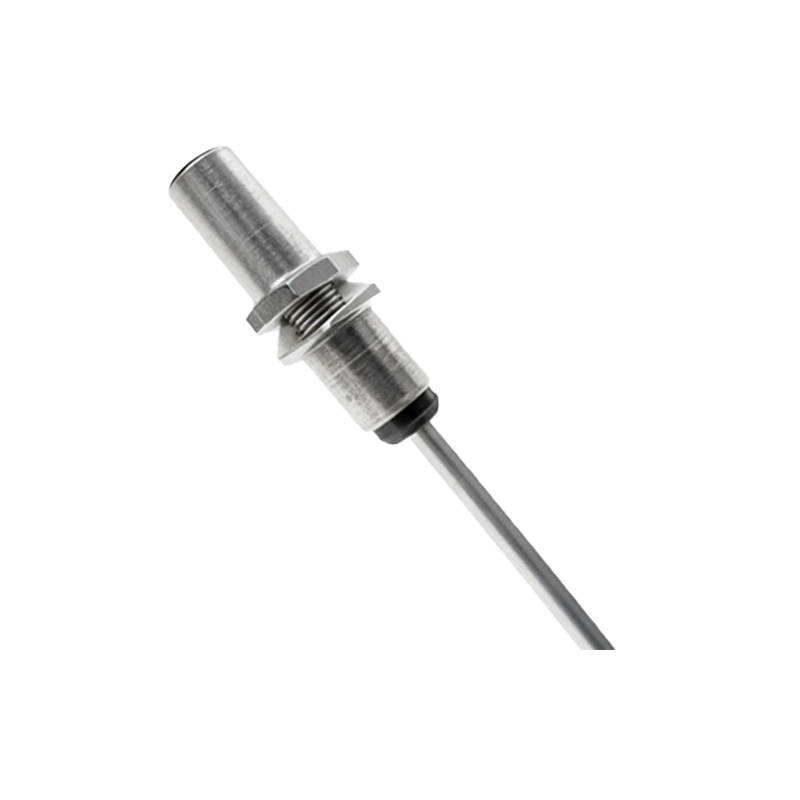
Photoelectric sensors use light, typically infrared or laser, to detect objects. They consist of an emitter and a receiver. There are three main configurations: through-beam (where the object breaks a beam between separate emitter and receiver units), retro-reflective (the object breaks a beam reflected back from a reflector), and diffuse (the sensor detects light reflected directly off the object). They offer the longest sensing ranges among standard proximity sensors and can detect virtually any material. You'll find them in packaging, pharmaceutical production, and automated door systems. Their performance can be affected by extreme ambient light, color, or surface transparency of the target.
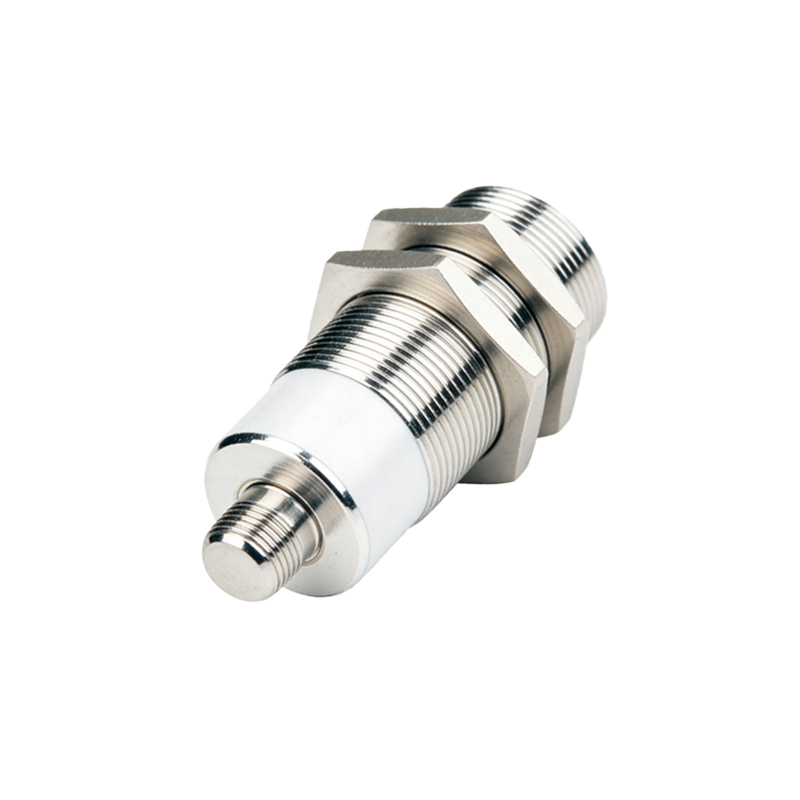
Ultrasonic sensors measure the time it takes for a sound wave to bounce back from an object. They emit high-frequency sound pulses and calculate distance based on the time-of-flight of the echo. Excellent for precise distance measurement and level sensing, they work reliably with solids, liquids, and granular materials, regardless of color or transparency. They are common in robotics for obstacle avoidance, tank level monitoring, and parking assistance systems. Factors like temperature, wind, and the object's sound-absorbing properties can influence their accuracy.
Selecting the right proximity sensor requires careful consideration of several key parameters. First, define the target material: metal, plastic, liquid? This narrows down the technology. Next, consider the required sensing distance or range, noting that the rated operating distance specified by manufacturers is under ideal conditions; a safety factor should be applied. The physical size and mounting style of the sensor must fit the application's spatial constraints. Environmental conditions are critical: will the sensor face splashing coolant, heavy vibration, extreme temperatures, or electromagnetic interference? The output type (e.g., NPN/PNP transistor, analog, IO-Link) must be compatible with the control system (PLC). Finally, factors like switching frequency (response speed) and whether a Normally Open (NO) or Normally Closed (NC) configuration is needed complete the selection checklist.
The applications are vast and growing. In manufacturing, they provide precise positioning for robotic arms, count products on conveyors, and confirm part placement. In automotive, they ensure door closure, detect brake pedal position, and enable parking sensors. In consumer electronics, they deactivate smartphone touchscreens during calls and enable touchless faucets. As Industry 4.0 and the Internet of Things (IoT) advance, smart sensors with integrated diagnostics and digital communication (like IO-Link) are becoming standard, providing not just detection but valuable data on process health and predictive maintenance.
In conclusion, proximity sensors are fundamental components that bridge the physical and digital worlds of automation. Understanding the strengths and limitations of each sensing technology—inductive, capacitive, photoelectric, and ultrasonic—is the first step toward a reliable and efficient design. By methodically evaluating the target, environment, range, and output requirements, engineers and technicians can select the optimal sensor, ensuring seamless operation, enhanced safety, and improved productivity in any automated system.