In the realm of industrial automation and precise object detection, double loop proximity sensors have emerged as a critical component for enhancing operational reliability and accuracy. Unlike single-loop or standard inductive sensors, these devices utilize two independent sensing loops to provide a more robust and fault-tolerant detection mechanism. This article delves into the working principles, common applications, and distinct benefits of double loop proximity sensors, offering a comprehensive overview for engineers and system integrators.
The fundamental principle behind a double loop proximity sensor is based on electromagnetic induction. Each loop within the sensor generates an oscillating electromagnetic field. When a metallic object enters the detection range of these fields, it induces eddy currents on the object's surface. This interaction causes a change in the oscillation amplitude within the sensing loops. The key differentiator lies in the dual-loop design. The two loops operate in tandem, continuously monitoring the detection zone. The sensor's electronics compare the signals from both loops. For an object to be registered as a valid detection, it must affect both loops within a specified, synchronized time frame. This dual verification process significantly reduces the likelihood of false triggers caused by environmental electrical noise, stray metallic debris, or minor fluctuations in the sensor's operating conditions.
This inherent reliability makes double loop proximity sensors indispensable in high-stakes industrial environments. One primary application is in automated assembly lines, particularly for safety-critical positioning. For instance, in robotic welding cells, these sensors are employed to confirm the precise location of a component before the welding operation commences. A false positive could lead to a misaligned weld, causing product defects or even equipment damage. The dual-loop verification ensures that the robot only activates when the part is correctly positioned. Another widespread use is in material handling systems, such as conveyor belts transporting metal parts. They are adept at detecting the presence, absence, or passage of items, even in the presence of vibration or conductive dust, ensuring smooth sequencing and preventing jams.
Furthermore, these sensors find extensive use in the automotive manufacturing sector. In press automation, they verify the correct placement of metal sheets in massive stamping presses. The consequences of an error here are severe, making the fault tolerance of a double-loop system essential. They are also integrated into elevator control systems to monitor the position of the cabin with high precision, contributing to safe and smooth floor-leveling operations. Beyond heavy industry, applications extend to packaging machinery for detecting metallic foils or components, and in access control systems where reliable detection of vehicles or doors is paramount.
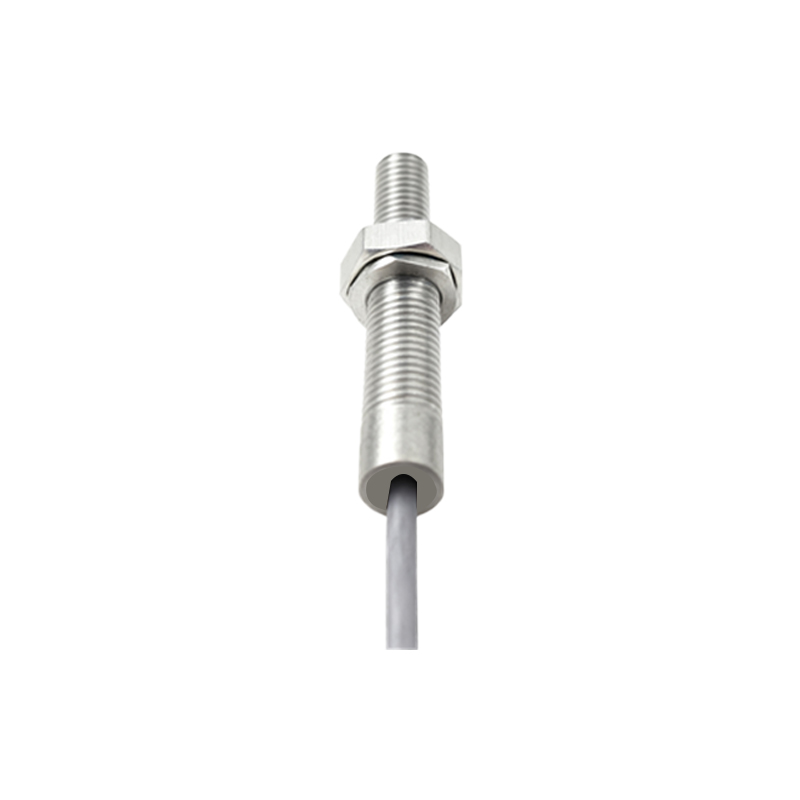
The advantages of opting for a double loop design are multifaceted. The most prominent is enhanced noise immunity. Industrial floors are electrically noisy environments filled with variable frequency drives, motor starters, and communication cables. The comparative signal processing in a double-loop sensor effectively cancels out common-mode electrical interference that might affect both loops similarly, ensuring stable operation. Secondly, they offer improved stability against temperature variations and supply voltage fluctuations. Since both loops are subject to the same environmental conditions on the same chip or housing, their performance drifts in unison, and the differential measurement minimizes the impact on the output signal.
Additionally, these sensors provide a higher degree of detection certainty. The requirement for simultaneous loop activation acts as a built-in diagnostic. If only one loop is triggered, it may indicate a potential sensor fault, external interference, or an object that is too small or improperly aligned. This feature supports predictive maintenance, alerting technicians to issues before they cause downtime. While the initial cost may be higher than a standard single-loop sensor, the reduction in false stops, improved product quality, and lower maintenance costs often result in a superior total cost of ownership over the system's lifecycle.
When selecting a double loop proximity sensor, several factors must be considered. The sensing distance, typically specified for mild steel, is crucial and must be chosen with an appropriate safety margin. The housing material, such as stainless steel or PBT plastic, should be selected based on the environmental exposure to chemicals, coolants, or physical impact. Output type (PNP/NPN analog or digital) must be compatible with the programmable logic controller (PLC) or other control circuitry. Finally, certifications for specific industries (e.g., ATEX for explosive atmospheres) may be necessary for certain applications.
In conclusion, double loop proximity sensors represent a significant advancement in detection technology, where reliability cannot be compromised. By employing a dual-loop, differential sensing approach, they deliver unparalleled immunity to interference and environmental factors. Their role in ensuring the safety, efficiency, and precision of modern automated systems is substantial. For applications where a single false signal carries a high cost, the investment in a double loop proximity sensor is not merely an option but a strategic necessity for robust system design.