In the realm of industrial automation, quality control, and robotics, the demand for accurate, non-contact measurement has never been greater. Laser sensors have emerged as a cornerstone technology, offering unparalleled precision and reliability. Unlike traditional mechanical probes or vision systems that can be influenced by ambient light or surface texture, laser sensors operate on the principle of optical triangulation or time-of-flight, providing consistent results in challenging environments.
The fundamental working principle of many high-precision laser displacement sensors is optical triangulation. A focused laser beam is projected onto the target surface. The reflected light from this point is then focused onto a position-sensitive detector, such as a CCD or PSD. When the distance to the target changes, the position of the reflected light spot on the detector shifts. This movement is precisely calculated by the sensor's internal processor to determine the exact distance or displacement. This method allows for resolutions in the sub-micron range and high sampling speeds, making it ideal for applications like thickness gauging, vibration analysis, and part profiling.
For longer-range measurements, time-of-flight (ToF) laser sensors are often employed. These sensors calculate distance by measuring the time it takes for a laser pulse to travel to the target and back. While typically offering slightly lower resolution than triangulation-based sensors, ToF sensors excel in measuring over distances of several meters and are widely used in applications like vehicle detection, bulk level monitoring, and large-scale dimensioning.
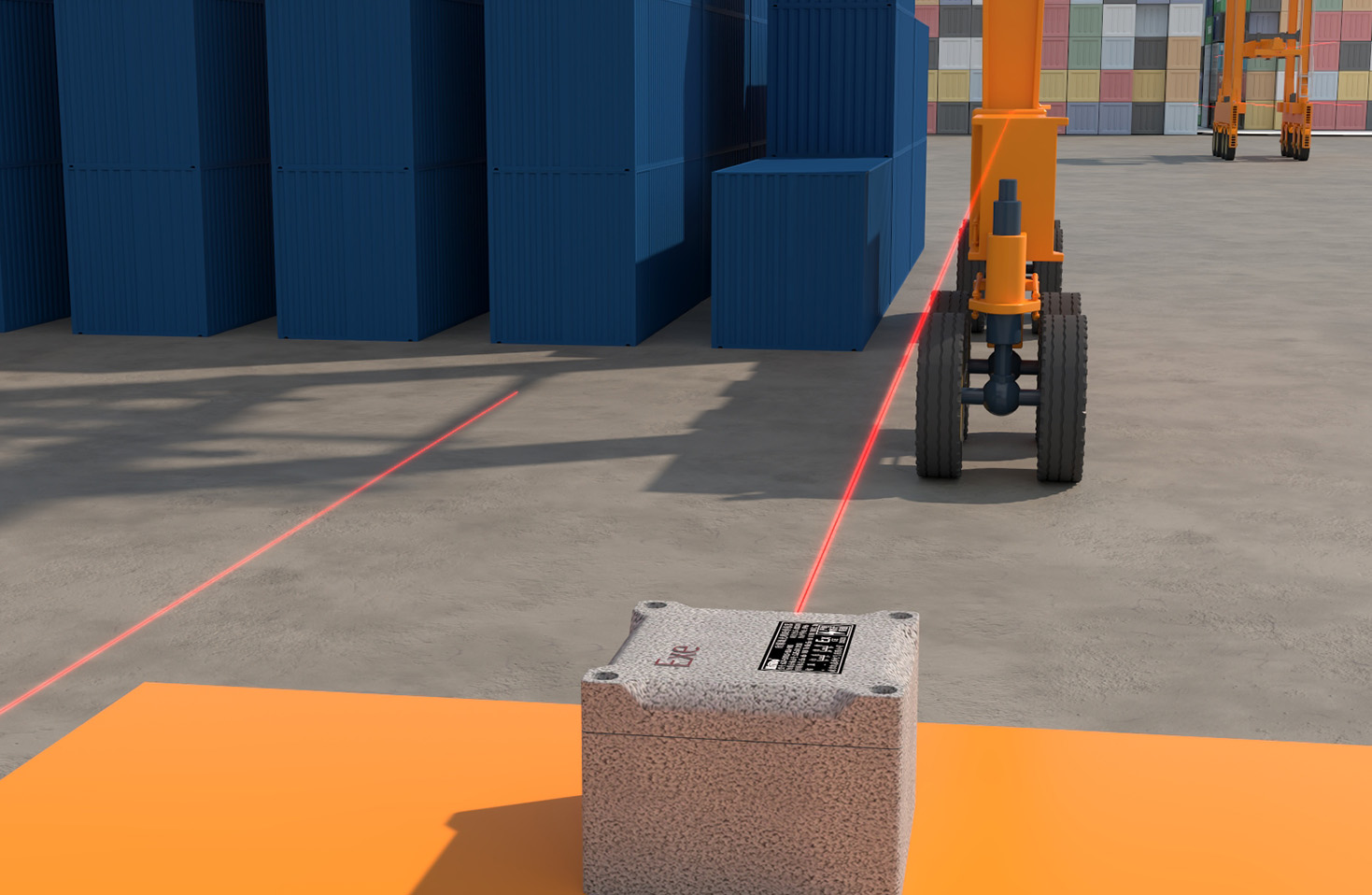
The advantages of laser measurement are manifold. The non-contact nature eliminates the risk of damaging delicate surfaces or the sensor itself through wear. It enables the measurement of hot, soft, or vibrating objects that would be impossible to touch. Furthermore, laser sensors provide extremely fast response times, allowing for real-time process control and 100% inline inspection on high-speed production lines. Their ability to measure minute details, such as the warp of a silicon wafer or the tread depth of a tire, is critical in modern manufacturing.
Selecting the right laser sensor requires careful consideration of several parameters. Key specifications include measuring range, spot size, resolution, linearity, and sampling rate. The surface condition of the target—whether it's shiny, dark, transparent, or rough—also significantly impacts performance. Modern sensors often come with advanced features like multi-peak detection to handle transparent materials, or automatic sensitivity adjustment for highly reflective surfaces.
Applications span virtually every industry. In automotive manufacturing, laser sensors ensure precise gap and flush measurements between body panels. In electronics, they verify the coplanarity of chip leads and the thickness of coatings. In logistics, they measure package dimensions for automated sorting and shipping cost calculation. The integration of laser sensors with robotic arms has created flexible measurement cells that can adapt to different product types, driving forward the concept of Industry 4.0.

Looking ahead, the evolution of laser sensing technology continues. The development of blue laser diodes has improved performance on organic materials and dark surfaces that traditionally absorb red laser light. Innovations in integrated optics and signal processing algorithms are pushing the boundaries of speed and accuracy while reducing sensor size and cost. As smart factories and digital twins become the norm, the role of the laser sensor as a critical data acquisition node will only become more central, providing the foundational measurements for intelligent decision-making and predictive maintenance.
In conclusion, laser sensor technology has fundamentally transformed precision measurement. By delivering fast, accurate, and reliable data without physical contact, it enables higher levels of automation, quality, and efficiency. For engineers and system integrators, understanding the capabilities and selection criteria of these powerful tools is essential for designing the advanced systems of today and tomorrow.