Speed measurement is a critical parameter in various industrial, scientific, and everyday applications. Among the many technologies available, laser sensor speed measurement stands out for its precision, non-contact nature, and versatility. This technology, fundamentally based on the Doppler effect or time-of-flight principles, offers significant advantages over traditional mechanical or radar-based methods.
The core principle behind many laser speed sensors is the Laser Doppler Velocimetry (LDV) technique. When a laser beam is directed at a moving object, the light reflected back experiences a frequency shift proportional to the object's velocity relative to the sensor. This shift, known as the Doppler shift, is meticulously analyzed by the sensor's photodetector and processing unit to calculate the exact speed. Another common method utilizes time-of-flight calculations, where the sensor measures the time delay between emitting a laser pulse and receiving its reflection. This is particularly effective for measuring the speed of objects passing at a known distance from the sensor.
The benefits of using laser sensors for speed measurement are substantial. Firstly, they are non-contact, meaning there is no physical interaction with the target object. This eliminates wear and tear, avoids affecting the object's motion, and allows measurement of delicate, hot, or hazardous materials. Secondly, they provide exceptionally high accuracy and resolution, capable of detecting minute velocity changes. Measurements are often accurate to within 0.1% or better. Furthermore, laser sensors offer a fast response time, capturing rapid speed fluctuations that other sensors might miss. Their focused laser beam allows for precise targeting, enabling measurement of specific points on an object, even in crowded environments.
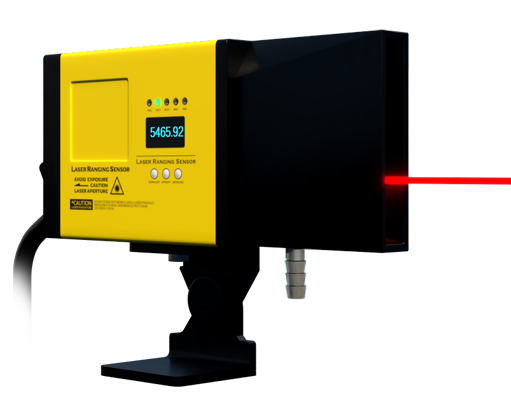
The applications of laser speed sensors are diverse and growing. In the automotive industry, they are used for testing vehicle dynamics, measuring tire slip, and in advanced driver-assistance systems (ADAS). Manufacturing lines rely on them to monitor conveyor belt speeds, control robotic arm movements, and ensure consistent production quality in paper, textile, and metal rolling mills. In scientific research, they are indispensable for studying fluid dynamics, wind tunnel testing, and vibration analysis. Traffic management systems employ laser sensors for accurate vehicle speed enforcement and traffic flow monitoring. Even in sports science, these sensors help analyze the speed of baseballs, tennis serves, or athlete movements.
When selecting a laser speed sensor, several factors must be considered. The measurement range, in terms of both minimum and maximum detectable speeds, is paramount. The required accuracy and resolution will dictate the sensor's class. The operating distance, or stand-off range, must be compatible with the application. Environmental conditions such as ambient light, temperature, dust, and vibration can affect performance, so choosing a sensor with appropriate ingress protection (IP) ratings and robust construction is crucial. Finally, output interfaces (e.g., analog voltage, digital protocols like USB or Ethernet) must integrate seamlessly with existing data acquisition or control systems.
Installation and alignment are critical for optimal performance. The sensor must be securely mounted to minimize vibration. The laser beam must be aligned perpendicular to the direction of motion for Doppler-based sensors, or at a precise distance for time-of-flight systems, to ensure accurate readings. Regular maintenance, primarily keeping the lens clean from dust and debris, is simple but essential for long-term reliability.

Compared to other technologies like radar sensors, laser sensors generally offer higher precision and a smaller measurement spot size. However, they can be more susceptible to performance degradation in poor weather conditions like fog or heavy rain, where radar might be more robust. Compared to traditional encoder wheels, laser sensors provide a maintenance-free, non-contact solution without inertia effects.
In conclusion, laser sensor speed measurement is a sophisticated, reliable, and highly accurate technology that has become a cornerstone in modern metrology. Its non-contact principle, combined with high speed and precision, makes it the preferred choice for demanding applications across industries from factory automation to aerospace testing. As technology advances, these sensors continue to become more compact, affordable, and integrated with smart features like embedded diagnostics and wireless connectivity, further expanding their role in an increasingly data-driven world.