In the realm of modern technology, where precision and reliability are paramount, the sensor laser diode stands as a fundamental component. This specialized semiconductor device is engineered not merely to emit coherent light, but to do so in a manner that is intrinsically linked to a sensing function. It represents a critical fusion of laser technology and photonics-based sensing, enabling a vast array of applications from industrial automation to consumer electronics and biomedical instrumentation.
Unlike standard laser diodes used primarily for illumination or data transmission, sensor laser diodes are optimized for interaction with their environment. Their design prioritizes characteristics such as wavelength stability, low noise, and precise output control. When the laser light emitted from these diodes strikes a target—be it a factory conveyor belt, a vehicle on a roadway, or biological tissue—the reflected or scattered light is captured by a photodetector. Changes in the properties of this returned light, such as its intensity, phase, or time-of-flight, are then analyzed to extract precise information. This process forms the basis for techniques like LIDAR (Light Detection and Ranging), triangulation-based distance measurement, and spectroscopic analysis.
The operational principle hinges on the diode's ability to generate a highly focused, monochromatic beam. Common materials include gallium arsenide (GaAs) and indium gallium arsenide (InGaAs), which determine the emitted wavelength, typically falling in the visible to near-infrared spectrum. For instance, a 650nm red laser diode might be used in a barcode scanner, while a 850nm or 1550nm infrared diode is essential for eye-safe LIDAR systems in autonomous vehicles. The choice of wavelength is critical, as it affects absorption, scattering, and safety, tailoring the diode to its specific sensing task.
The advantages of using laser diodes in sensing are numerous. Their small size, low power consumption, and solid-state robustness make them ideal for integration into compact and portable devices. They offer exceptional measurement resolution and speed, capable of detecting displacements on the nanometer scale or capturing 3D point clouds in real-time. Furthermore, their coherent light allows for interference-based measurements, enabling extremely sensitive detection of vibrations or minute changes in distance.
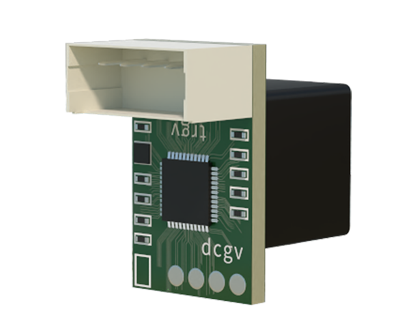
In practical application, these components are ubiquitous. In manufacturing, they are the heart of non-contact gauges that measure thickness, alignment, and defect detection with micron-level accuracy. In the automotive sector, they enable adaptive cruise control and collision avoidance systems through time-of-flight sensors. Environmental monitoring utilizes tunable diode laser absorption spectroscopy (TDLAS) to detect trace gases by measuring the absorption of specific laser wavelengths. Even in everyday life, they are found in optical computer mice, laser printers, and smartphone facial recognition systems.
However, the deployment of sensor laser diodes is not without challenges. Temperature fluctuations can cause wavelength drift, necessitating integrated thermoelectric coolers for high-precision applications. Optical feedback, where reflected light re-enters the laser cavity, can induce instability and noise, requiring optical isolators. Engineers must also carefully manage heat dissipation and ensure protection against electrostatic discharge to guarantee long-term reliability.
Looking forward, the evolution of sensor laser diodes is geared towards higher performance and integration. Developments in vertical-cavity surface-emitting lasers (VCSELs) offer lower cost, superior beam quality, and the ability to be fabricated in dense arrays, revolutionizing 3D sensing. Quantum cascade lasers are pushing capabilities into the mid-infrared range for advanced chemical sensing. The ongoing miniaturization and cost reduction will further permeate these components into the Internet of Things (IoT), smart infrastructure, and personalized healthcare devices.

In conclusion, the sensor laser diode is far more than a simple light source. It is a sophisticated transducer that converts electrical energy into a precise optical probe, forming the essential link between the digital world and physical reality. Its continued advancement is a key driver in the progress of automated, intelligent, and data-driven systems across all sectors of industry and society.