In the realm of industrial automation and safety systems, proximity sensors play a pivotal role in enabling non-contact detection of objects. Among the diverse range of sensors available, the PSAM12 proximity sensor stands out as a robust and reliable solution designed for demanding environments. This article delves into the technical specifications, operational principles, application scenarios, and key advantages of the PSAM12, providing a detailed overview for engineers and system integrators.
The PSAM12 is an inductive proximity sensor, engineered to detect metallic objects without physical contact. It operates on the principle of electromagnetic induction. The sensor generates an oscillating electromagnetic field from its active face. When a metallic target enters this field, eddy currents are induced within the target, causing a change in the oscillation amplitude. This change is detected by the sensor's internal circuitry, which subsequently triggers a switching signal. This fundamental principle ensures high reliability and longevity, as there are no moving parts subject to mechanical wear.

Key technical specifications of the PSAM12 include a standard sensing range, typically up to 12mm for steel targets, though this can vary based on the target material's properties. It is available in various housing designs, such as cylindrical threaded barrels, to facilitate easy installation. The sensor is rated for IP67 or higher ingress protection, making it resistant to dust and temporary immersion in water—a critical feature for harsh industrial settings like machining, material handling, and outdoor applications. Electrical outputs are commonly available in NPN (sinking) or PNP (sourcing) configurations, with both normally open (NO) and normally closed (NC) switching options, ensuring compatibility with a wide array of programmable logic controllers (PLCs) and control systems. Operating voltage ranges typically span from 10-30V DC, catering to standard industrial power supplies.
One of the standout features of the PSAM12 is its robust construction. The housing is often made of nickel-plated brass or stainless steel, providing excellent resistance to mechanical impacts, vibrations, and corrosive chemicals commonly found in industrial environments. Furthermore, it incorporates built-in protection against short-circuit, reverse polarity, and electromagnetic interference (EMI), enhancing system stability and preventing damage from common electrical faults.
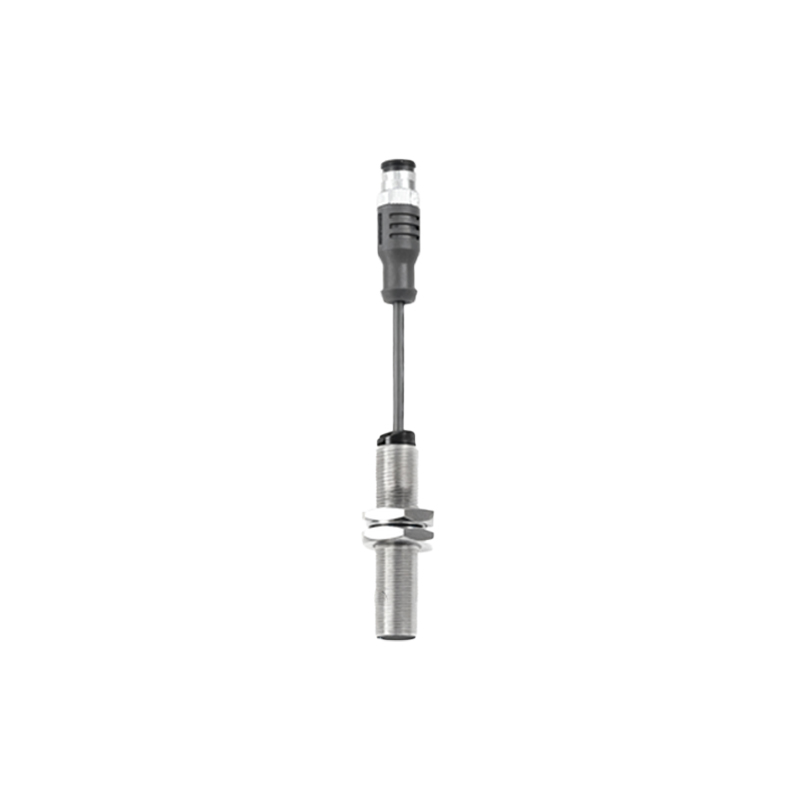
Application areas for the PSAM12 are extensive. In automotive manufacturing, it is used for part presence verification on assembly lines, ensuring components are correctly positioned before robotic welding or fastening. In packaging machinery, it detects the position of metallic lids or caps, synchronizing the sealing process. Within material handling systems, such as conveyor belts, the PSAM12 monitors the passage of metallic containers or pallets, enabling precise counting and sorting operations. It is also indispensable in safety systems, acting as a non-contact limit switch to detect the position of guards or doors on heavy machinery, thereby preventing accidental access during operation.
When selecting and installing the PSAM12, several best practices should be observed. First, ensure the target material is ferrous (like iron or steel) for optimal sensing distance; non-ferrous metals like aluminum or copper have a reduced effective range. The sensor should be mounted securely to minimize vibration-induced false triggers. It is also crucial to maintain an adequate clearance zone around the sensor's sensing face, free from other metallic objects, to prevent interference with the electromagnetic field. Regular maintenance, though minimal, involves checking for physical damage, accumulation of metallic debris on the face, and verifying electrical connections.
Compared to other sensing technologies like capacitive or ultrasonic sensors, the inductive PSAM12 offers distinct advantages for metal detection. It provides exceptionally fast response times, often in the microsecond range, which is vital for high-speed production lines. Its immunity to non-metallic substances (e.g., dust, oil, water droplets) ensures stable operation in dirty conditions where optical sensors might fail. However, its limitation to metallic targets is a key consideration; for detecting plastics, liquids, or other materials, alternative sensor types would be required.
In conclusion, the PSAM12 proximity sensor represents a mature and highly effective technology for industrial object detection. Its durability, precision, and adaptability make it a cornerstone in modern automation systems. By understanding its operational parameters and correctly integrating it into control architectures, engineers can significantly enhance the efficiency, safety, and reliability of their automated processes. As Industry 4.0 and smart manufacturing evolve, such robust foundational components remain essential for building resilient and intelligent industrial ecosystems.