Proximity sensors are essential components in modern industrial automation, enabling non-contact detection of objects within a specified range. Their structures vary significantly based on the underlying technology, each tailored to specific operational environments and requirements. This article explores the primary structural configurations of proximity sensors, detailing their design principles and typical use cases.
Inductive proximity sensors are among the most common types, primarily used for detecting metallic objects. Their core structure consists of a coil wound around a ferrite core, an oscillator, a detection circuit, and an output stage. Encased in a robust housing (often made of nickel-plated brass or stainless steel), these sensors generate an electromagnetic field. When a metal object enters this field, eddy currents are induced, causing a change in oscillation amplitude. The detection circuit monitors this change and triggers the output. Inductive sensors are valued for their durability, resistance to environmental contaminants like dust or oil, and high switching frequencies. They are widely deployed in machining centers, conveyor systems, and robotic assembly lines.
Capacitive proximity sensors can detect both metallic and non-metallic materials, including liquids, plastics, and wood. Structurally, they comprise two conductive electrodes (one acting as the sensor face) forming an open capacitor. These electrodes are connected to an oscillator circuit. When an object approaches the sensor face, it alters the dielectric constant of the surrounding space, changing the capacitance and thus the oscillation amplitude. This change is processed by the subsequent circuitry to generate an output signal. The housing is typically made from materials like PTFE or PBT to protect the sensitive components. Capacitive sensors are ideal for level detection in tanks, material handling, and packaging applications where diverse materials must be sensed.
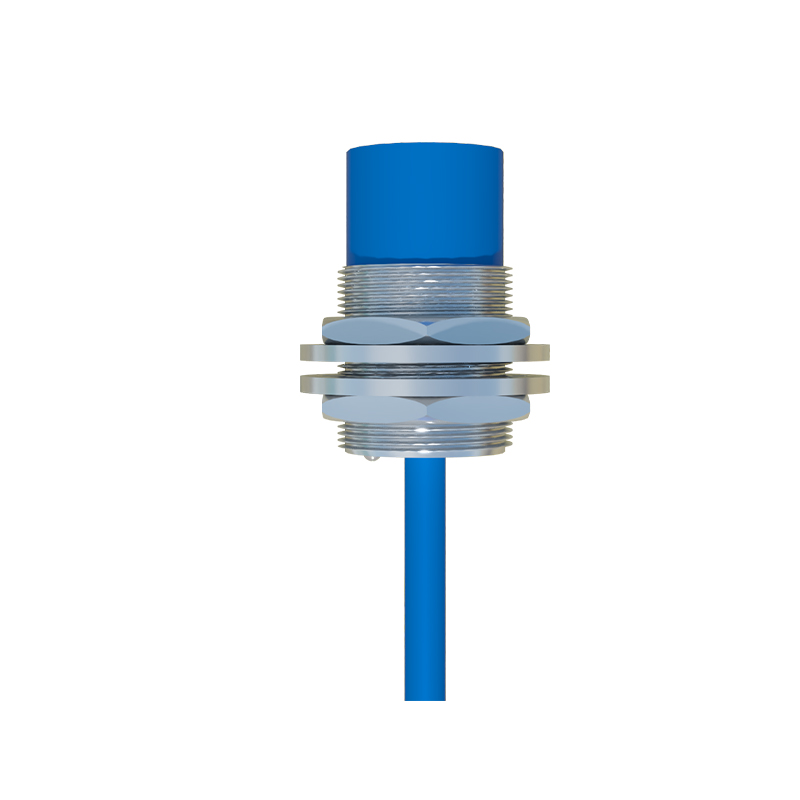
Magnetic proximity sensors, or reed switches, operate based on magnetic field interaction. Their structure includes two ferromagnetic reeds sealed within a glass tube filled with inert gas. When an external magnet approaches, the reeds magnetize and attract each other, closing the electrical contact. These sensors are simple, cost-effective, and require minimal power. They are commonly used in safety door monitoring, position sensing in cylinders, and low-speed counting applications. However, they are sensitive to mechanical shock and have limited switching cycles compared to solid-state alternatives.
Ultrasonic proximity sensors utilize sound waves for detection. Their structure integrates a piezoelectric transducer (which acts as both transmitter and receiver), a control circuit, and a housing designed to minimize acoustic interference. The transducer emits high-frequency ultrasonic pulses; when these pulses reflect off an object, the echo is received and analyzed. The time delay between emission and reception determines the object's distance. These sensors excel in harsh environments with dust, smoke, or varying light conditions. Typical applications include bulk material level monitoring, parking assistance systems, and object profiling on assembly lines.
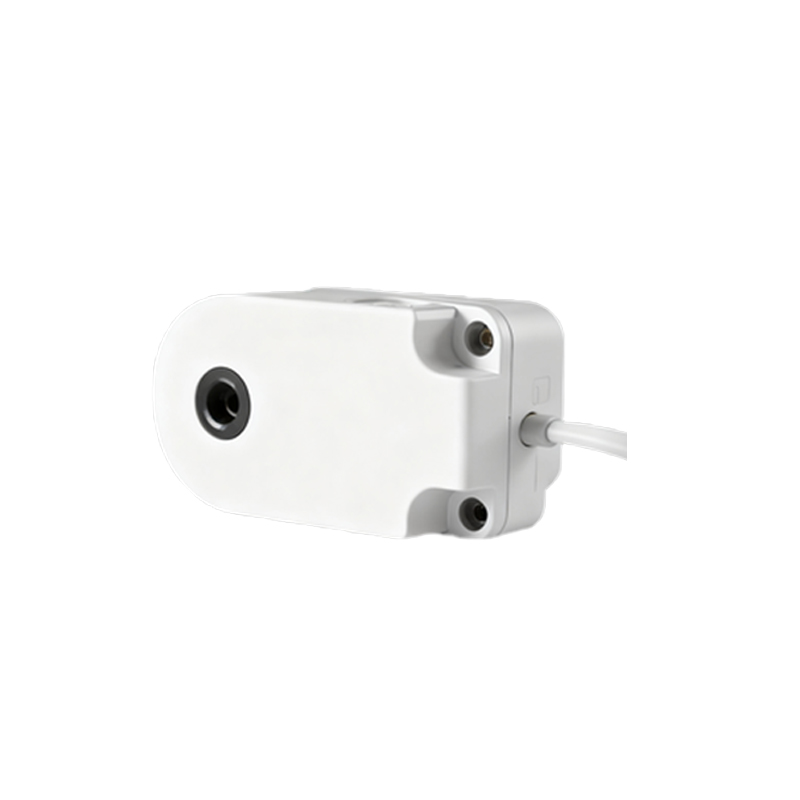
Optical proximity sensors rely on light beams, with structures divided into through-beam, retro-reflective, and diffuse-reflective types. Through-beam sensors consist of separate transmitter and receiver units; when an object interrupts the light beam, the receiver detects the loss of signal. Retro-reflective types combine transmitter and receiver in one housing, using a reflector to bounce light back; object detection occurs when the beam is blocked. Diffuse-reflective sensors detect light reflected directly from the object itself. Key components include an LED or laser diode, a phototransistor or photodiode receiver, and signal processing electronics. Housings are often made of engineered plastics with IP ratings for dust and water resistance. Optical sensors are prevalent in packaging, pharmaceutical automation, and electronic device touchscreens.
Each sensor structure presents distinct advantages. Inductive sensors offer high precision for metals but limited range. Capacitive sensors provide versatility but can be affected by humidity. Magnetic sensors are robust in dirty environments but have slower response times. Ultrasonic sensors handle complex surfaces well but may struggle with sound-absorbing materials. Optical sensors deliver high speed and accuracy but require clean optical paths. Selection depends on factors like target material, sensing distance, environmental conditions, and required output type (e.g., analog, digital, or IO-Link).
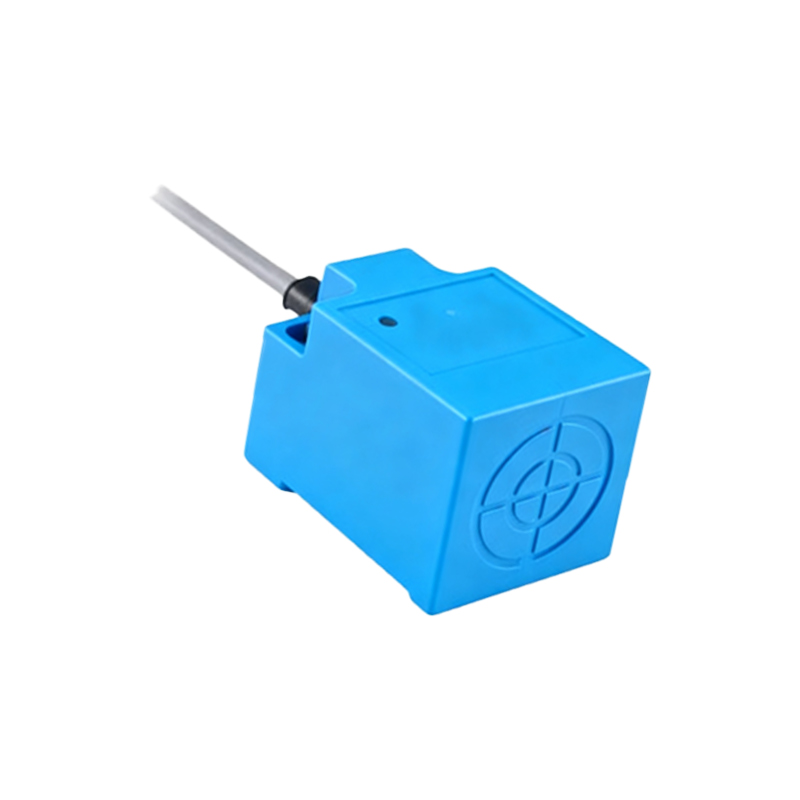
In summary, the structural diversity of proximity sensors enables tailored solutions across industries. Understanding these designs—from inductive coils to ultrasonic transducers—empowers engineers to optimize automation systems for reliability, efficiency, and safety. As Industry 4.0 advances, integration with smart networks and miniaturization will further evolve sensor architectures, enhancing their role in predictive maintenance and real-time monitoring.