In the realm of industrial automation and control systems, proximity sensors are indispensable devices. They are non-contact sensors designed to detect the presence or absence of an object within a specific range without any physical contact. This capability makes them ideal for harsh environments, high-speed counting, positioning, and safety applications where reliability and durability are paramount. The core principle involves generating an electromagnetic field or beam and detecting changes caused by a target object. This article delves into the primary types of proximity sensors, their operating principles, and typical applications.
The most common categorization of proximity sensors is based on their sensing technology. The first major type is the Inductive Proximity Sensor. These sensors detect metallic objects, primarily ferrous metals like iron and steel, though some models can also sense non-ferrous metals like aluminum, copper, and brass with reduced sensing range. They operate by generating an oscillating electromagnetic field from a coil wound around a ferrite core. When a metal object enters this field, eddy currents are induced on the metal surface, which dampens the oscillation amplitude. The sensor's circuit detects this change and triggers a solid-state output switch. Inductive sensors are renowned for their robustness, high switching frequency, and resistance to environmental factors like dust, dirt, and moisture. Common applications include detecting metal parts on conveyor belts, checking for the presence of nuts or bolts, and as end-position sensors in machine tools and robotic arms.
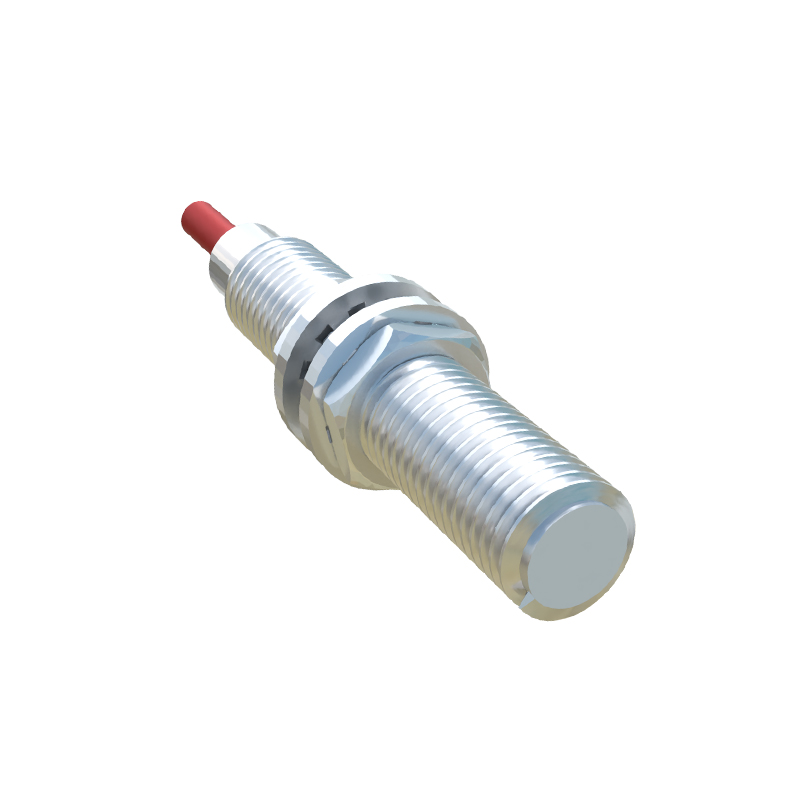
The second major category is the Capacitive Proximity Sensor. These versatile sensors can detect both metallic and non-metallic objects, including liquids, powders, plastics, glass, and wood. They function by generating an electrostatic field between two electrodes (often the sensor face and a ground plane). When any material with a dielectric constant different from air enters this field, it alters the capacitance of the system. The sensor's circuitry measures this change in capacitance and activates the output. Capacitive sensors are particularly useful for level detection of liquids or granular materials in tanks, detecting filled containers (like glass or plastic bottles), and monitoring the presence of non-metallic materials on production lines. Their sensitivity is often adjustable to compensate for different target materials or to ignore background objects.
Ultrasonic Proximity Sensors form another critical group. They operate on the principle of echolocation, similar to sonar. The sensor emits high-frequency sound waves (typically beyond human hearing) and then listens for the reflected echo from a target object. By measuring the time interval between the emitted pulse and the received echo, the sensor can calculate the distance to the object. This allows them not only to detect presence but also to provide precise distance measurement. They are effective for detecting objects of virtually any material, shape, or color, as long as the surface can reflect sound. Common uses include pallet detection in warehouses, liquid level sensing in transparent or opaque containers, loop control in winding machines, and collision avoidance for automated guided vehicles (AGVs).
Photoelectric Sensors, while sometimes categorized separately, are a fundamental type of proximity sensor. They use light beams to detect objects. The main sub-types include through-beam (where a separate emitter and receiver are used, and detection occurs when the beam is broken), retro-reflective (using a single unit and a reflector), and diffuse reflective (where the sensor detects light reflected directly from the target). Photoelectric sensors excel at long-range detection and can sense very small objects. They are insensitive to color and surface texture in some configurations. Applications are vast, ranging from bottle counting on filling lines and detecting transparent films to package sorting and security systems.
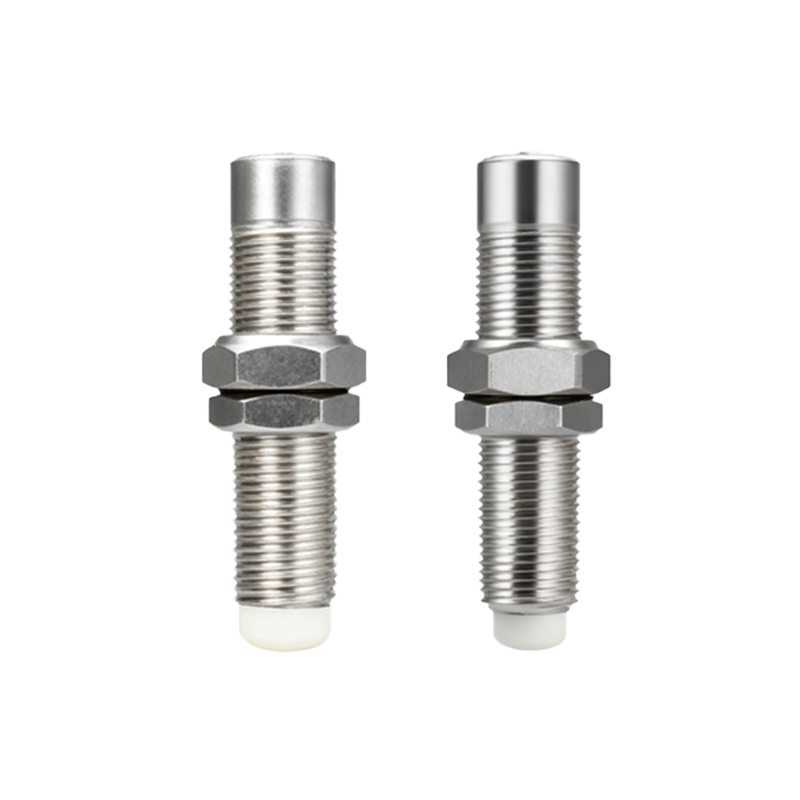
Magnetic Proximity Sensors, often called reed switches or Hall-effect sensors, detect the presence of a magnetic field, typically from a permanent magnet attached to a moving part. Reed switches use hermetically sealed ferromagnetic reeds that close when a magnet approaches. Hall-effect sensors produce a voltage change in response to a magnetic field. They are simple, cost-effective, and used in applications like detecting the open/closed status of doors or windows, sensing cylinder piston position in pneumatic systems, and in low-speed rotational encoding.
Selecting the right proximity sensor depends on several factors: the material of the target object (metal, plastic, liquid), the required sensing distance, the environmental conditions (temperature, presence of contaminants), the required response speed, and the output type needed (e.g., NPN, PNP, analog, IO-Link). Modern sensors also offer advanced features like teach-in functionality for easy setup, robust housing ratings (IP67, IP69K), and integration into industrial networks.
In conclusion, the family of proximity sensors—inductive, capacitive, ultrasonic, photoelectric, and magnetic—provides a comprehensive toolkit for engineers. Each type has its unique strengths and ideal application domains. Understanding their distinct operating principles and characteristics is crucial for designing efficient, reliable, and safe automated systems across manufacturing