In the demanding landscape of modern industrial automation, the quest for unparalleled precision, unwavering reliability, and robust performance is relentless. At the forefront of this technological frontier stand German original laser sensors, representing the pinnacle of optoelectronic measurement and detection. Renowned globally for their engineering excellence, stringent quality standards, and innovative design, these sensors have become indispensable components across a vast spectrum of applications, from intricate assembly lines and automated logistics to harsh environmental monitoring and high-precision metrology.
The foundation of this reputation is built upon a deep-seated commitment to *Präzision* (precision) and *Qualität* (quality). German manufacturers adhere to rigorous design philosophies and production processes, often certified under standards like DIN and VDI. This results in laser sensors with exceptional accuracy, often in the micrometer range, and minimal measurement drift over time and temperature fluctuations. The laser sources themselves are engineered for stability and longevity, ensuring consistent output power and beam characteristics. This level of precision is critical in applications such as wafer alignment in semiconductor fabrication, gap detection in automotive body-in-white assembly, or thickness measurement in continuous strip production.
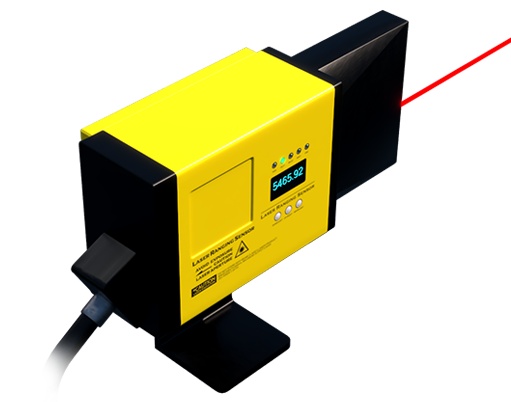
Beyond raw accuracy, the hallmark of a true German original laser sensor is its robust reliability. These devices are built to withstand the rigors of industrial environments. Housings are typically crafted from high-grade stainless steel or ruggedized polymers, offering high ingress protection ratings (e.g., IP67, IP69K) against dust, water, and chemical splashes. They are designed to operate flawlessly across a wide temperature range, resisting vibration and shock that would compromise lesser components. This robustness translates directly into reduced downtime, lower maintenance costs, and higher overall equipment effectiveness (OEE) for end-users. The "set-and-forget" reliability is a key value proposition, ensuring continuous process integrity in 24/7 manufacturing operations.
Innovation is deeply embedded in the DNA of Germany's sensor industry. Contemporary German laser sensors integrate advanced functionalities that go beyond simple presence detection or distance measurement. Key technological advancements include:
* Advanced Background Suppression: Intelligent algorithms and optical designs that reliably detect target objects while ignoring complex or reflective backgrounds, essential for logistics and packaging.
* Multi-Echo Evaluation: The ability to process multiple signal returns, allowing sensors to "see through" transparent media like glass or film, or to ignore airborne contamination like dust or steam.
* IO-Link Communication: Seamless integration into Industry 4.0 and smart factory frameworks. IO-Link provides digital parameterization, real-time diagnostics, and condition monitoring data, enabling predictive maintenance and flexible production line changes.
* Miniaturization: The development of extremely compact sensor designs without sacrificing performance, enabling integration into space-constrained applications like collaborative robots and micro-assembly stations.
The application portfolio for these sensors is extraordinarily diverse. In automotive manufacturing, they precisely control robot paths for welding and painting. In pharmaceutical packaging, they verify fill levels and check for label presence with hygienic designs. In material handling, they guide AGVs (Automated Guided Vehicles) and ensure precise parcel dimensioning. In food and beverage, they monitor conveyor lines and detect transparent bottles. The versatility is further enhanced by various operating principles: diffuse reflective sensors for general object detection, through-beam sensors for long-range and reliable operation in dirty environments, and precise distance-measuring sensors using time-of-flight or triangulation principles.
Selecting the right German original laser sensor requires careful consideration of the specific application parameters: required measurement range, resolution, response time, target material and surface properties, environmental conditions, and the necessary communication interface. Leading manufacturers offer extensive product portfolios with detailed technical specifications and expert application support to guide this selection process.
In conclusion, German original laser sensors are not merely components; they are engineered solutions that embody a tradition of precision manufacturing and forward-thinking innovation. Their superior accuracy, legendary durability, and smart features make them a cornerstone of efficient, reliable, and intelligent automation systems worldwide. For engineers and system integrators who cannot compromise on performance, investing in these high-caliber sensors is a strategic decision that safeguards process quality, maximizes productivity, and future-proofs industrial operations in an increasingly connected and automated world.