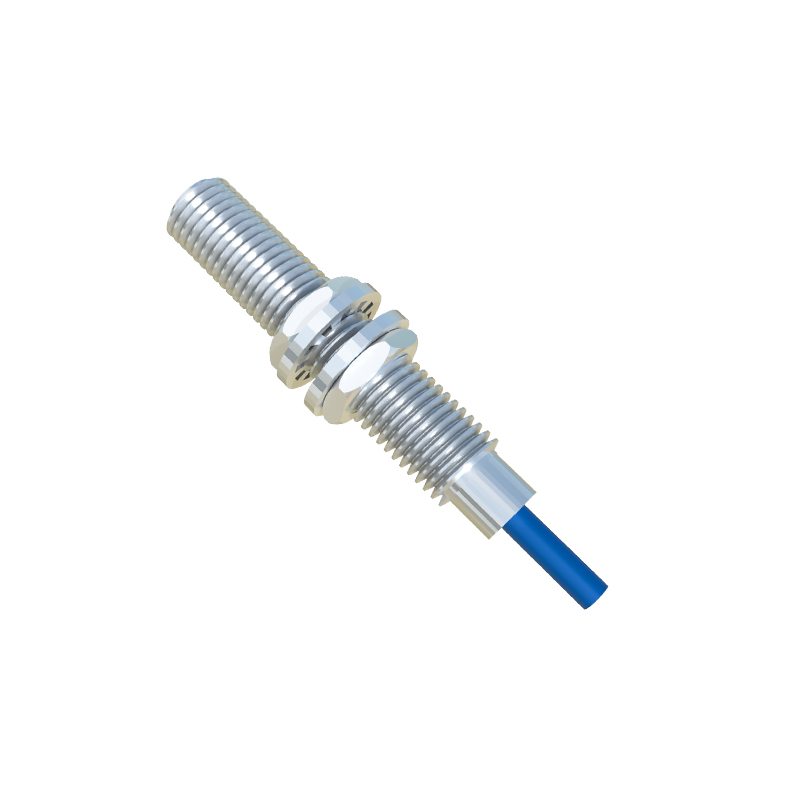
In the realm of industrial automation, PNP proximity speed sensors stand as critical components for monitoring rotational or linear motion with high precision. These sensors operate on the principle of detecting the presence or absence of a target—such as a gear tooth, encoder disc, or ferrous material—without physical contact, thereby minimizing wear and enhancing reliability. The term "PNP" refers to the sensor's output configuration, where the output switches to a positive voltage (typically 24V DC) when a target is detected, making it compatible with many programmable logic controllers (PLCs) and industrial circuits. This article delves into the operational mechanics, key advantages, and practical applications of PNP proximity speed sensors, offering insights for engineers and technicians in the electrical and automation fields.
PNP proximity speed sensors commonly utilize inductive, capacitive, or magnetic sensing technologies. Inductive sensors are prevalent for detecting metallic objects, leveraging electromagnetic fields to sense ferrous materials. When a target enters the sensing range, it alters the field, triggering the PNP output to activate. This design ensures rapid response times—often in microseconds—enabling accurate speed measurement in high-speed machinery like conveyors, motors, and turbines. Capacitive variants, on the other hand, can detect non-metallic materials, expanding their use in industries such as packaging or food processing. Magnetic sensors, including Hall-effect types, are ideal for applications requiring robustness in harsh environments, such as automotive or heavy machinery.
The advantages of PNP proximity speed sensors are manifold. First, their non-contact nature eliminates mechanical friction, leading to longer service life and reduced maintenance costs. Second, they offer high immunity to environmental factors like dust, moisture, and vibration when properly sealed (e.g., IP67 ratings), ensuring stable performance in demanding settings. Third, the PNP output simplifies wiring and integration, as it sources current to the load, which aligns with common sinking input modules in industrial control systems. Engineers often prefer PNP sensors for their straightforward compatibility, reducing installation time and potential errors. Additionally, these sensors provide consistent accuracy, with typical sensing distances ranging from a few millimeters to several centimeters, depending on the model and target material.
In practical applications, PNP proximity speed sensors are indispensable for speed monitoring and control. For instance, in conveyor systems, they measure belt speed to prevent slippage or overload, integrating with PLCs to adjust motor drives automatically. In automotive assembly lines, they monitor wheel rotation for alignment checks, while in wind turbines, they track blade speed to optimize energy output. Another key use is in safety systems, where sensors detect overspeed conditions in elevators or industrial fans, triggering alarms or shutdowns to prevent accidents. Calibration and alignment are crucial for optimal performance; misplacement can lead to false readings or missed targets. Regular maintenance, such as cleaning sensing surfaces and checking electrical connections, helps sustain accuracy over time.
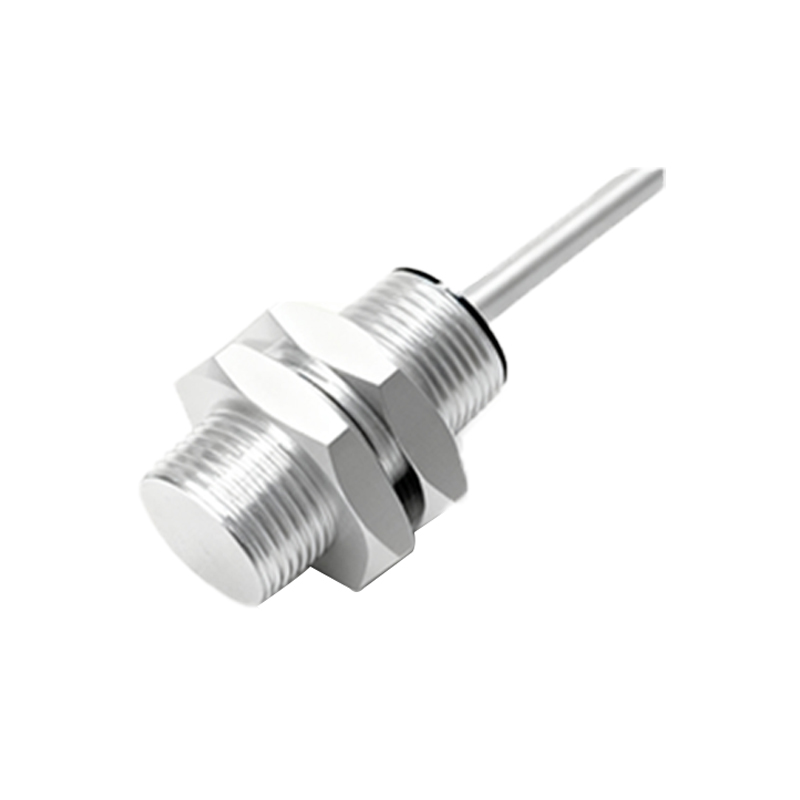
When selecting a PNP proximity speed sensor, engineers must consider factors like sensing range, target material, output frequency, and environmental conditions. For high-speed applications, sensors with fast switching frequencies (e.g., up to 5 kHz) are essential to capture rapid motion without lag. Temperature tolerance is also vital, as extreme heat or cold can affect sensitivity. Modern advancements include smart sensors with diagnostic features, such as IO-Link communication, which enable real-time data monitoring and predictive maintenance. These innovations enhance efficiency in Industry 4.0 setups, where sensors contribute to interconnected, data-driven operations.
In summary, PNP proximity speed sensors are versatile tools that bolster automation by providing reliable, contactless speed detection. Their design leverages PNP output for seamless integration, while their durability and precision support diverse industrial tasks. As technology evolves, these sensors continue to adapt, offering smarter solutions for tomorrow's automated landscapes. For professionals in the electrical industry, understanding their nuances ensures optimal deployment, driving productivity and safety in modern facilities.