In the intricate world of industrial automation and control systems, the proximity switch stands as a fundamental component, enabling non-contact detection of objects. Among the various operating voltages available, the 5V DC proximity sensor holds a distinct and crucial position, particularly in modern, integrated electronic environments. This article delves into the specifics of 5V proximity sensors, exploring their operation, advantages, typical applications, and key selection criteria.
A proximity switch, fundamentally, is a sensor that detects the presence or absence of an object without physical contact. It achieves this by emitting an electromagnetic field, light beam, or ultrasonic signal and looking for changes in the field or return signal. The 5V specification refers to its operating voltage, meaning it requires a 5-volt direct current power supply to function. This voltage level is not arbitrary; it is the standard logic-level voltage for many microcontrollers, single-board computers (like Arduino or Raspberry Pi), and digital circuits. This inherent compatibility is the primary driver behind the widespread adoption of 5V sensors in prototyping, robotics, and low-power control panels.
The core technology behind these sensors varies, with inductive and capacitive types being most common for 5V DC models. Inductive proximity switches are the workhorses for detecting metallic objects. They generate an oscillating electromagnetic field from a coil. When a ferrous or non-ferrous metal object enters this field, it induces eddy currents, which dampen the oscillation. The sensor's circuitry detects this damping and triggers a solid-state switch. Capacitive sensors, on the other hand, can detect both metallic and non-metallic materials (plastics, wood, liquids, etc.) by measuring changes in capacitance caused by the object's dielectric properties interfering with the sensor's electrostatic field.
The output of a 5V proximity sensor is typically a digital signal. The most common configurations are NPN (sinking) and PNP (sourcing) transistor outputs. In an NPN configuration, the output acts as a switch to ground (0V), while in a PNP, it switches to the positive supply voltage (+5V). This output can directly interface with the digital input pin of a microcontroller, making integration remarkably straightforward. Some advanced models also offer analog output (e.g., 0-5V or 4-20mA with an external resistor) proportional to the distance, but the digital on/off switch is the standard for simple detection tasks.
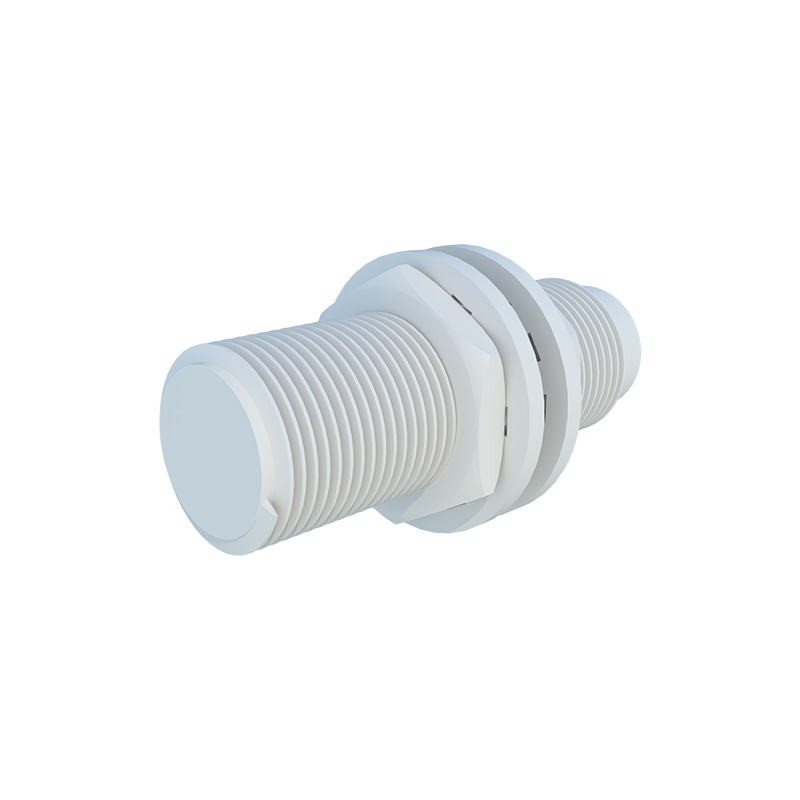
The advantages of using a 5V proximity sensor are significant. First and foremost is Direct Microcontroller Interface. Eliminating the need for voltage level shifters or complex interfacing modules simplifies circuit design and reduces component count. Secondly, they offer Low Power Consumption. Operating at 5V generally draws less current than higher-voltage counterparts (like 12V or 24V), making them ideal for battery-powered or energy-sensitive applications. Thirdly, they contribute to System Integration. In a cabinet or control system where logic circuits run on 5V, using sensors of the same voltage streamlines the power supply design and minimizes wiring complexity. Finally, they are often Compact and Cost-Effective for the performance offered, suited for space-constrained applications.
Typical applications for 5V proximity sensors are vast. In Robotics and Mechatronics, they are used for end-effector positioning, object detection on grippers, and limit switching in robotic joints. In Consumer Electronics and DIY Projects, they are ubiquitous in interactive installations, automated model setups, and smart devices. PCB Handling and Assembly machines use them to detect the presence of circuit boards or components. They serve as Non-contact Limit Switches in small-scale CNC machines or 3D printers. Furthermore, they are integral in Liquid Level Detection (using capacitive types) for small reservoirs and in Coin Detection Mechanisms in vending machines or gaming devices.
When selecting a 5V proximity sensor for a project, several parameters must be carefully considered:
1. Sensing Type: Inductive for metals, capacitive for a wider range of materials.
2. Sensing Distance: The nominal range (Sn) specified by the manufacturer. Ensure it meets your application's physical constraints.
3. Output Configuration: Choose between NPN (sinking) or PNP (sourcing) based on your controller's input circuit requirements.
4. Output Function: Normally Open (NO) or Normally Closed (NC) contact logic.
5. Physical Size and Housing: Cylindrical (e.g., M8, M12, M18 threads) or rectangular housings, with materials like nickel-plated brass or stainless steel for environmental robustness.
6. Switching Frequency: How quickly the sensor can detect objects passing by, critical for high-speed counting applications.
7