In the realm of industrial automation, laser trigger sensors have become indispensable components for precision detection and control. However, their performance during daytime operations, particularly under varying ambient light conditions, presents unique challenges and considerations. This article delves into the operational principles, key factors affecting daytime efficacy, and best practices for optimizing laser sensors in illuminated environments.
Laser trigger sensors typically operate by emitting a focused beam of light—often in the visible or infrared spectrum—toward a target. A photodetector then measures the reflected or interrupted beam to trigger an output signal. During daytime, ambient light from sources such as sunlight, overhead lighting, or reflective surfaces can interfere with this process. Sunlight, especially, contains broad-spectrum radiation that may saturate the sensor's receiver, leading to false triggers or reduced sensitivity. To counteract this, modern sensors incorporate several adaptive technologies.

One critical feature is the use of modulated laser signals. Instead of emitting a continuous beam, these sensors pulse the laser at a specific frequency. The receiver is tuned to detect only this modulation, effectively filtering out constant ambient light. This technique significantly enhances signal-to-noise ratio, ensuring reliable operation even in bright conditions. Additionally, many industrial-grade sensors are equipped with adjustable sensitivity settings and automatic gain control (AGC). AGC dynamically adjusts the receiver's amplification based on ambient light levels, maintaining consistent performance throughout the day.
The choice of laser wavelength also plays a pivotal role. Infrared (IR) lasers, commonly at 850 nm or 940 nm, are less susceptible to visible daylight interference compared to visible red lasers (e.g., 650 nm). IR sensors can be paired with optical filters that block visible light, further minimizing noise. However, it's essential to consider the application environment—for instance, in outdoor settings, direct sunlight can still contain significant IR components, necessitating robust shielding or housing designs.
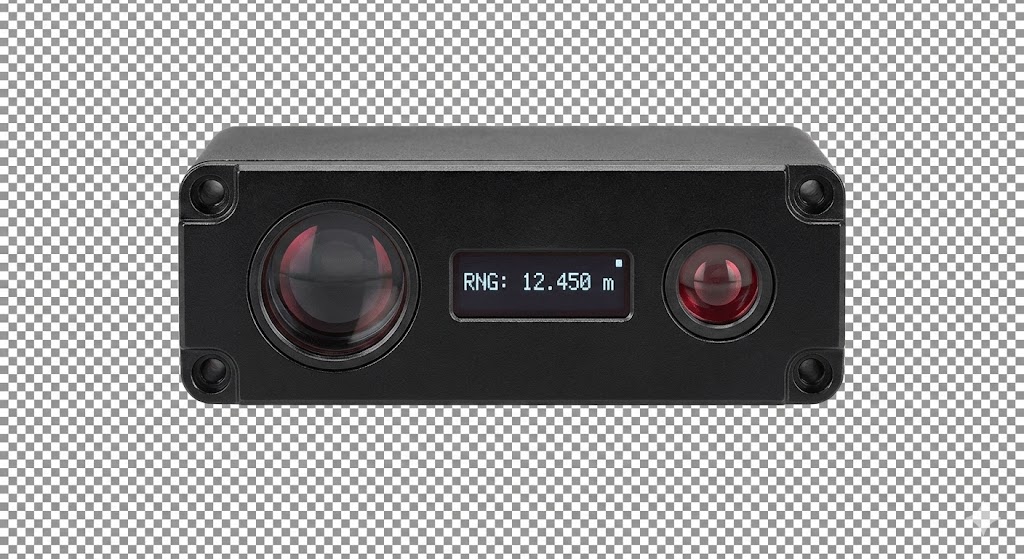
Environmental factors like dust, fog, or reflective backgrounds can exacerbate daytime challenges. Dust particles may scatter laser light, while reflective surfaces like metal or glass can cause unintended beam reflections, leading to erroneous readings. To mitigate these issues, sensors with polarized lenses or background suppression technology are recommended. These features help distinguish the true target signal from ambient noise, enhancing accuracy in complex industrial setups.
Practical implementation tips include proper sensor alignment and installation. Mounting sensors away from direct sunlight or using protective shrouds can reduce ambient light exposure. Regular maintenance, such as cleaning lenses and checking for obstructions, ensures long-term reliability. Furthermore, integrating sensors with programmable logic controllers (PLCs) allows for real-time monitoring and adjustment based on daytime conditions, enabling adaptive system responses.
In summary, while daytime operation poses challenges for laser trigger sensors, advancements in modulation, wavelength selection, and adaptive electronics have substantially improved their robustness. By understanding the interplay of ambient light, environmental factors, and sensor technology, engineers can deploy these devices effectively across diverse industrial applications—from assembly lines and packaging machinery to outdoor logistics and safety systems. Continuous innovation in sensor design promises even greater resilience and precision, solidifying their role in the future of industrial automation.