In the dynamic landscape of industrial automation, the demand for precision, reliability, and adaptability has never been higher. Among the myriad of components that drive modern manufacturing and processing systems, inductive proximity sensors stand out as critical elements for non-contact detection of metallic objects. While off-the-shelf sensors serve many applications effectively, complex or unique operational environments often necessitate custom inductive proximity sensors. Customization in this domain is not merely a luxury but a strategic imperative to enhance system performance, ensure longevity, and optimize total cost of ownership.
The core principle of an inductive proximity sensor involves generating an electromagnetic field via a coil and oscillator. When a metallic target enters this field, eddy currents are induced, causing a change in oscillation amplitude. This change is detected, processed, and converted into a switch signal. Standard sensors are designed around common parameters such as sensing range, housing material, output type (e.g., NPN/PNP, NO/NC), and connection methods. However, industrial challenges frequently extend beyond these baseline specifications.
Key areas for customization include form factor and mechanical design. In tightly packed machinery or applications with severe space constraints, a standard cylindrical or rectangular housing may be unsuitable. Engineers can collaborate with sensor manufacturers to develop compact, low-profile, or oddly shaped housings that integrate seamlessly into the mechanical assembly. Material selection is equally crucial; for instance, sensors deployed in corrosive environments—common in chemical processing or marine applications—may require housings crafted from stainless steel (e.g., V4A/316L) or specialized plastics like PEEK or PVDF, rather than standard nickel-plated brass or PA plastic. The sealing integrity, denoted by IP (Ingress Protection) or NEMA ratings, can also be enhanced beyond typical IP67 levels to IP68, IP69K, or even higher for submersion, high-pressure washdown, or extreme dust conditions.
Electrical and performance characteristics offer another vast arena for tailoring. The sensing range may need adjustment; while standard ranges are sufficient for many tasks, some applications require either extremely short-range detection for high precision or extended ranges for unusual mounting configurations. The switching frequency, which determines how quickly the sensor can detect successive targets, can be optimized for high-speed production lines. Output circuitry can be customized to interface with specific PLCs (Programmable Logic Controllers) or legacy control systems, including analog outputs (4-20mA, 0-10V) for distance-proportional signaling or specialized digital protocols. Furthermore, built-in diagnostics like IO-Link functionality can be incorporated, enabling real-time monitoring of sensor health, temperature, and switch point adjustments remotely, which is pivotal for Industry 4.0 and predictive maintenance strategies.
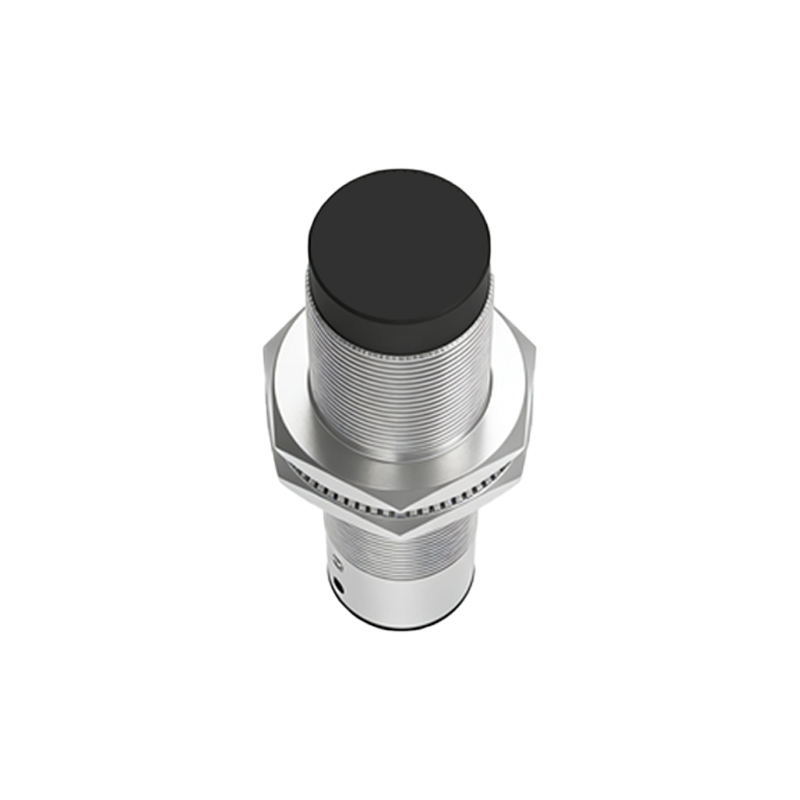
Environmental resilience is a paramount consideration. Sensors operating in extreme temperatures—from cryogenic freezers to near forging ovens—need components and soldering techniques rated for thermal stress. High-vibration environments, such as those near heavy presses or on mobile equipment, demand robust internal construction and secure mounting solutions to prevent failure from fatigue. Electromagnetic interference (EMI) from variable frequency drives or welding equipment can be mitigated through custom shielding and filtering in the sensor's electronics.
The process of developing a custom inductive proximity sensor typically begins with a detailed application analysis. This involves understanding the target material (e.g., mild steel, stainless steel, aluminum—which has a different detection factor), the required sensing distance, environmental exposures, electrical supply, and signal integration needs. Prototyping and rigorous testing under simulated or actual operating conditions follow to validate performance. While lead times and costs are higher than for standard products, the return on investment is realized through reduced downtime, fewer false triggers, lower replacement rates, and seamless system integration.
In conclusion, the customization of inductive proximity sensors represents a sophisticated engineering partnership between the end-user and the manufacturer. It transforms a generic component into a tailored solution that addresses specific operational hurdles. As industries push towards greater efficiency, miniaturization, and connectivity, the role of custom-designed sensors will only expand, solidifying their status as indispensable, high-performance assets in the automated factory of the future.