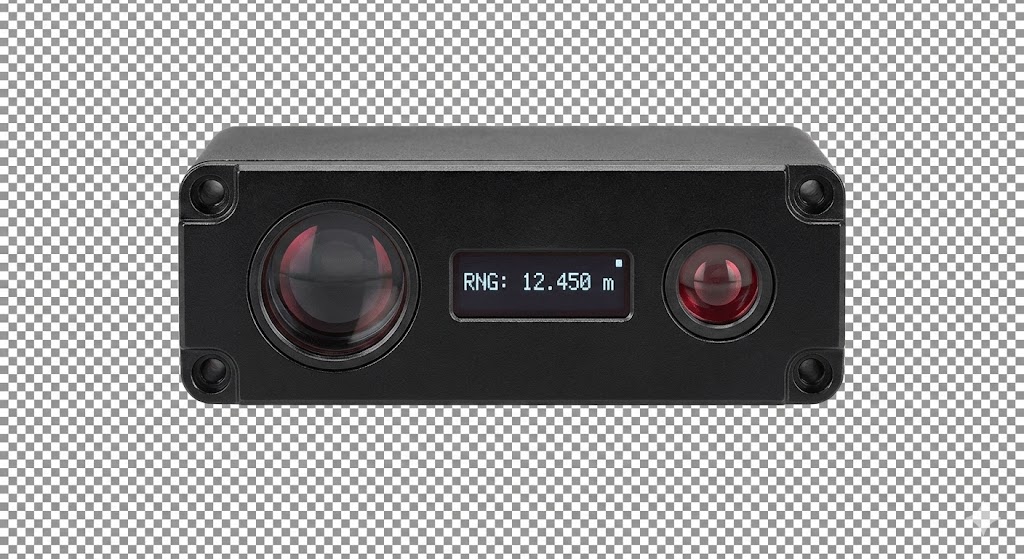
In the realm of industrial automation, precision measurement is paramount. Laser distance sensors have emerged as a cornerstone technology, offering non-contact, high-accuracy solutions for a myriad of applications. This article delves into the operational principles, diverse applications, and key considerations for selecting the right sensor for your needs.
At its core, a laser distance sensor operates by emitting a focused beam of light—typically from a laser diode—towards a target object. The sensor then measures the time it takes for the reflected light to return to a detector (Time-of-Flight or ToF principle) or analyzes the phase shift of the modulated laser beam (phase-shift method). For extremely high precision over short ranges, triangulation is another common principle, where the position of the reflected spot on a linear sensor array is used to calculate distance. These methods enable measurements with sub-millimeter accuracy, even at significant distances, making them far superior to traditional mechanical or ultrasonic methods in terms of speed, precision, and reliability.

The applications of laser distance sensors are vast and span numerous industries. In manufacturing and robotics, they are indispensable for positioning, contour profiling, and dimensional inspection of components on assembly lines. In logistics and warehousing, they facilitate palletizing, level detection in silos, and volume measurement of packages. The construction industry utilizes them for alignment, monitoring structural deformations, and surveying. Furthermore, they are critical in automotive applications for adaptive cruise control, collision avoidance, and autonomous vehicle navigation. Their ability to perform in harsh environments—withstanding dust, vibration, and variable lighting conditions—makes them exceptionally versatile.
When selecting a laser distance sensor, several technical parameters must be carefully evaluated. The measuring range is the first consideration, defining the minimum and maximum distances the device can accurately measure. Accuracy and resolution determine the sensor's precision; high-end models can achieve resolutions in the micrometer range. The response time or sampling rate is crucial for dynamic applications, such as tracking moving objects. The laser class (e.g., Class 1, 2, or 3R) indicates safety levels, with Class 1 being inherently safe under all conditions of normal use. Environmental ratings like IP67 are essential for operation in dusty or wet conditions. Additionally, the output interface (analog voltage/current, digital IO, RS-232, Ethernet, or fieldbus protocols like PROFINET) must be compatible with the existing control system.

Installation and operational best practices are key to optimal performance. Ensure the sensor is mounted securely to minimize vibration. The target surface's properties significantly affect performance; highly reflective or dark, absorbent surfaces can challenge some sensors, though many modern units feature advanced algorithms to compensate. Regular maintenance, primarily keeping the lens clean, is simple but vital. Always adhere to the manufacturer's guidelines for eye safety regarding the laser beam.
Looking ahead, the evolution of laser distance sensing technology continues. Trends include miniaturization, reduced power consumption, enhanced intelligence with integrated processors for edge computing, and the integration of multi-sensor data fusion. These advancements promise even broader adoption in smart factories, IoT ecosystems, and next-generation autonomous systems.
In conclusion, laser distance sensors are powerful, flexible tools that solve complex measurement challenges across industries. A thorough understanding of their working principles, coupled with a careful analysis of application requirements and sensor specifications, will guide engineers and system integrators toward an optimal and reliable implementation, driving efficiency and innovation in their operations.