In the rapidly evolving landscape of industrial automation, laser navigation sensors have emerged as a cornerstone technology, enabling precise, reliable, and efficient guidance for autonomous systems. These sensors operate on the principle of emitting laser beams and analyzing their reflections to map environments and determine position, orientation, and movement paths. Unlike traditional navigation methods that rely on physical guides or less accurate sensors, laser navigation offers high-resolution, real-time data critical for complex applications.
The core mechanism involves a laser emitter and a receiver, often integrated into a single unit. The laser scans the surroundings, and the reflected light is captured to create detailed point cloud maps. Advanced algorithms, such as Simultaneous Localization and Mapping (SLAM), process this data to allow devices like Automated Guided Vehicles (AGVs), mobile robots, and drones to navigate dynamically without predefined tracks. This flexibility is particularly valuable in warehouses, manufacturing plants, and logistics centers, where layouts frequently change.
Key advantages of laser navigation sensors include their exceptional accuracy, often within millimeters, and their ability to function in diverse lighting conditions, as they are not dependent on ambient light. They also provide robust performance in harsh industrial environments, resisting interference from dust, vibrations, and electromagnetic noise. Recent innovations have led to the development of compact, cost-effective sensors with enhanced range and faster processing speeds, making them accessible for small to large-scale operations.

Applications span across multiple sectors. In logistics, AGVs equipped with laser sensors optimize material handling by autonomously transporting goods, reducing human error and increasing throughput. In robotics, these sensors enable collaborative robots (cobots) to safely interact with human workers, adapting to real-time obstacles. Additionally, in agriculture, autonomous harvesters use laser navigation for precise field navigation, improving crop yield and resource efficiency. The healthcare industry also benefits, with automated guided systems transporting medical supplies in hospitals.
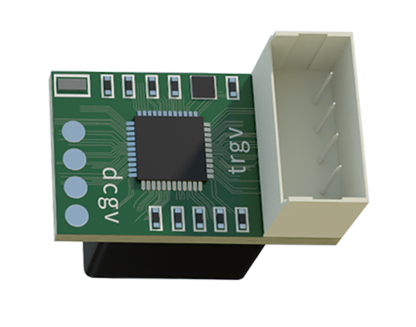
Despite their benefits, challenges such as high initial costs and complexity in reflective or transparent surface environments persist. However, ongoing research in sensor fusion—combining laser data with vision systems or inertial measurement units—is mitigating these issues, paving the way for more resilient navigation solutions. As Industry 4.0 advances, the integration of laser navigation sensors with IoT and AI will further enhance predictive maintenance and adaptive routing, solidifying their role in smart factories.
In conclusion, laser navigation sensors represent a transformative technology driving automation forward. Their precision, adaptability, and growing affordability are revolutionizing how industries approach navigation, promising increased safety, efficiency, and scalability in automated systems worldwide.