In the realm of industrial automation, the reliability and precision of sensing components are paramount. Among the myriad of devices available, the E2E2-X2D1 proximity sensor stands out as a quintessential example of robust design and dependable performance. Engineered for demanding environments, this cylindrical, shielded inductive proximity sensor is a critical component in countless machinery and control systems worldwide. This article provides a detailed technical examination of the E2E2-X2D1, covering its specifications, operational principles, application scenarios, and key advantages.
The E2E2-X2D1 is a non-contact, inductive-type proximity switch. Its fundamental operating principle is based on electromagnetic induction. The sensor generates a high-frequency oscillating electromagnetic field from its active face. When a metallic target—specifically, a ferrous metal like iron or steel—enters this detection field, eddy currents are induced on the target's surface. This causes a change in the oscillation amplitude within the sensor's coil circuit. The sensor's built-in circuitry detects this change and triggers a solid-state output switch, signaling the presence of the target. A key feature of the "shielded" or "flush-mountable" design of the E2E2-X2D1 is that the sensing field is concentrated at the front of the sensor. This allows for side-by-side mounting without mutual interference and enables detection even when the sensor is embedded in a metal mounting bracket, a common requirement in machine design.
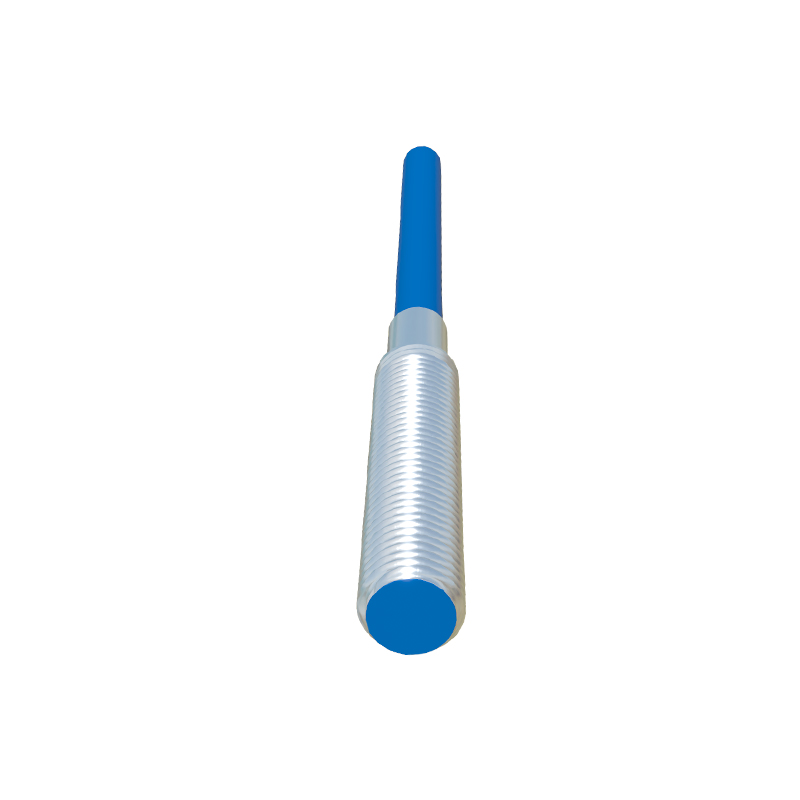
Delving into its core specifications, the E2E2-X2D1 typically offers a standard sensing distance of 2 mm. It is crucial to note that this rated sensing distance is defined for a standard target of mild steel (Fe 360) measuring 1mm thick and with sides equal to the diameter of the sensor's sensing face or 3 times the rated sensing distance, whichever is greater. The sensor's housing is constructed from nickel-plated brass, providing excellent resistance to corrosion and mechanical stress. It boasts an IP67 ingress protection rating, signifying complete protection against dust and protection against the effects of temporary immersion in water up to 1 meter for 30 minutes. This makes it suitable for use in washdown areas or outdoor settings where exposure to coolants, oils, and water sprays is likely.
The electrical characteristics are equally robust. The E2E2-X2D1 is designed for a DC supply voltage, commonly in the 10-30 VDC range. It features a normally open (NO) configuration, meaning the output switches to the "on" state when a target is detected. The output type is typically a 3-wire configuration with an NPN transistor output, which is a standard for sinking logic in many PLC (Programmable Logic Controller) input modules. Its switching frequency is sufficiently high for high-speed counting or positioning applications on production lines. Furthermore, it incorporates protection against short-circuit, reverse polarity, and surge voltages, enhancing its longevity and system safety.
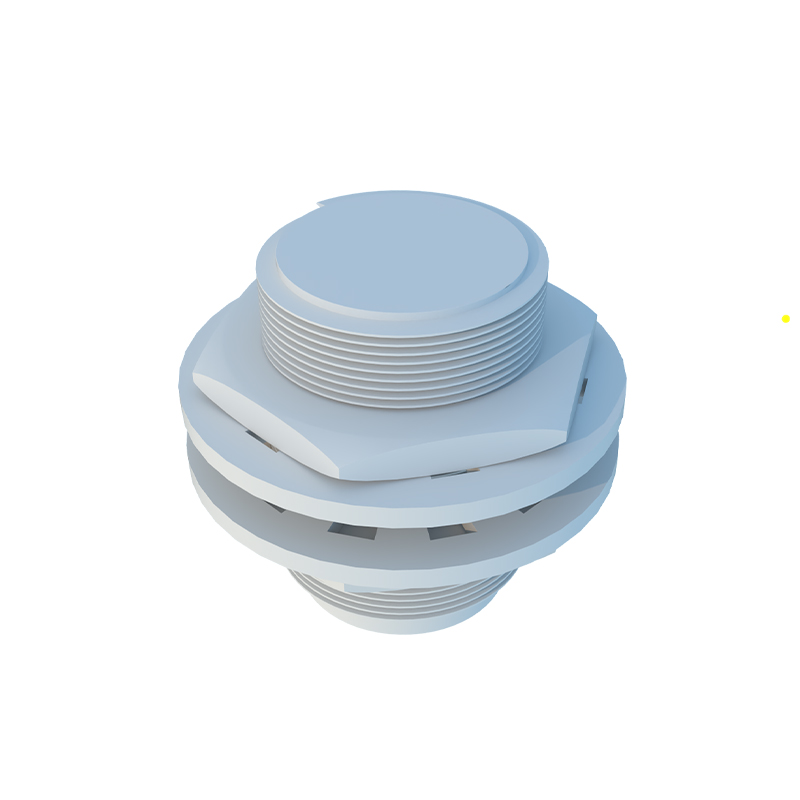
Application scenarios for the E2E2-X2D1 are vast and varied across industrial sectors. In automotive assembly lines, it is used for part presence verification, such as confirming a cylinder head is in place before a machining operation. In packaging machinery, it detects the position of metallic components on a conveyor or verifies the closure of a metal lid. Within material handling systems, these sensors are indispensable for end-of-travel detection on actuators, rotary encoder feedback, or detecting the position of metal pallets. Its shielded design is particularly valuable in metal fabrication and CNC machining centers, where sensors must be mounted flush within metal structures to detect tool position or workpiece clamping.
When compared to unshielded sensors or other sensing technologies like capacitive or photoelectric sensors, the E2E2-X2D1 offers distinct benefits. Its immunity to non-metallic substances (dust, chips, liquids) prevents false triggering. The mechanical and environmental durability translates to reduced maintenance and lower total cost of ownership. The consistent performance across temperature variations ensures process stability. For system integrators and maintenance engineers, selecting the correct sensor involves considering not just the sensing distance, but also the target material, size, mounting constraints, and environmental conditions. The E2E2-X2D1, with its balanced specifications, often presents an optimal solution for general-purpose metallic object detection.
In conclusion, the E2E2-X2D1 proximity sensor exemplifies the engineering excellence required for modern industrial automation. Its shielded inductive design, rugged construction, and reliable electrical performance make it a versatile and trustworthy workhorse. Understanding its technical nuances—from the physics of its operation to its practical installation guidelines—empowers engineers to design more efficient, reliable, and safe automated systems. As industries continue to evolve towards greater connectivity and precision, components like the E2E2-X2D1 will remain foundational elements in the