In the demanding world of industrial automation and control, reliability is non-negotiable. Sensors operating in harsh environments—exposed to coolants, washdowns, rain, or humidity—require robust protection to ensure continuous operation and system integrity. Among the most critical components in such settings are waterproof two-wire proximity switch sensors. These devices offer a streamlined, durable solution for non-contact object detection where environmental ingress is a constant threat. This article delves into the technology, advantages, selection criteria, and application best practices for these essential industrial components.
A two-wire proximity sensor is fundamentally a solid-state electronic device that detects the presence or absence of a metallic (inductive type) or sometimes non-metallic (capacitive type) target without physical contact. The "two-wire" designation is key: it integrates the power supply and signal output into the same two wires, simplifying installation dramatically compared to three-wire or four-wire models. There is no separate power wire and output wire; the sensor modulates the current flowing through the loop to indicate its switching state. When a target is within the specified sensing range, the sensor's internal circuitry changes the current flow, which is detected by the connected controller, such as a Programmable Logic Controller (PLC).
The "waterproof" aspect is achieved through meticulous design and sealing. Typically, these sensors conform to international protection standards, most commonly denoted by an IP (Ingress Protection) rating. For waterproof proximity sensors, ratings such as IP67, IP68, and IP69K are prevalent. An IP67 rating guarantees protection against temporary immersion in water (up to 1 meter for 30 minutes). IP68 offers protection against continuous immersion under conditions specified by the manufacturer. IP69K signifies protection against high-pressure, high-temperature washdowns, making it ideal for food & beverage or pharmaceutical industries where stringent hygiene cleaning is routine. The sealing is accomplished using specialized materials like epoxy resin, silicone seals, and high-grade stainless steel or PBT sensing faces and housings.
The primary advantages of opting for a waterproof two-wire configuration are multifold. First is installation simplicity and cost reduction. With only two wires to connect, wiring is straightforward, reducing installation time, potential wiring errors, and the need for additional conduits or junction boxes. This directly lowers labor and material costs. Second is enhanced reliability. The reduced number of connection points minimizes failure risks. The waterproof sealing protects sensitive internal electronics from liquids, dust, oils, and chemicals, leading to a longer operational lifespan and reduced maintenance downtime. Third, they offer excellent electrical noise immunity, a crucial factor in environments rich with motors, variable frequency drives, and welding equipment.
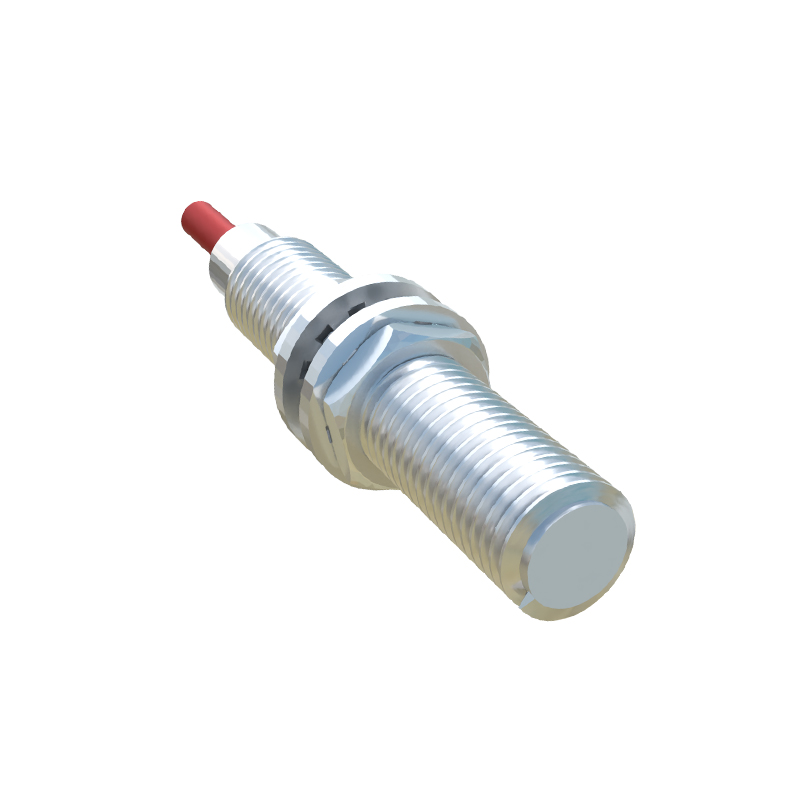
However, engineers must consider certain operational characteristics. Two-wire sensors have a residual current or "leakage current" when in the "off" state. This small current flow must be compatible with the input module of the PLC or relay to which it is connected. If the leakage current is too high for the PLC's threshold, it may falsely indicate an "on" signal. Conversely, when "on," the sensor exhibits a voltage drop across its terminals. This drop must be accounted for in system voltage design to ensure the PLC receives a sufficiently high signal. Understanding these parameters from the sensor's datasheet is essential for proper integration.
Selecting the right waterproof two-wire proximity sensor requires careful analysis of several application parameters:
1. Sensing Object: Determine if the target is metallic (requiring an inductive sensor) or non-metallic/liquid (requiring a capacitive sensor). For metals, the sensing distance varies with the type of metal (steel, aluminum, brass).
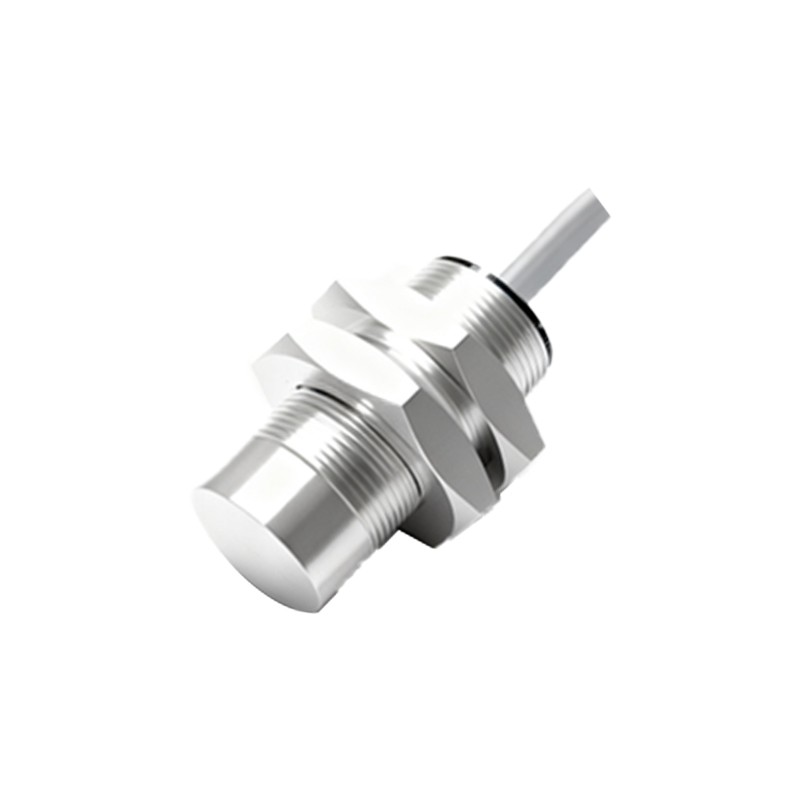
2. Sensing Range: Choose a sensor with a nominal sensing range (Sn) that accommodates the required installation distance with a safety margin, typically 10-20% less than Sn to account for temperature variations and part tolerances.
3. Environmental Conditions: Define the required IP rating based on exposure to water, pressure, temperature extremes, and chemicals. IP67 is common for general factory floor splash, while IP68/69K is for submersion or aggressive cleaning.
4. Electrical Specifications: Match the sensor's operating voltage (e.g., 10-30V DC) and output type (typically NPN sinking or PNP sourcing, though two-wire AC models also exist) with the control system. Verify the leakage current and voltage drop are within the controller's acceptable limits.
5. Housing Material: Stainless steel (e.g., V2A/AISI 304, V4A/AISI 316) offers excellent corrosion resistance for harsh chemical or marine environments. Nickel-plated brass or PBT plastic are other common, cost-effective options for less aggressive settings.
6. Output Function: Normally Open (NO