Total Reflection Laser Sensors represent a sophisticated class of optoelectronic devices that have become indispensable in modern industrial automation and precision measurement. Unlike conventional diffuse or retro-reflective sensors, these sensors operate on a fundamental optical principle: when a laser beam strikes a surface at an angle greater than the critical angle, it undergoes total internal reflection, effectively "disappearing" from the detection point. The sensor's receiver is positioned to detect the presence or absence of this reflected beam. Any disturbance—such as the presence of a target object, a change in surface properties, or the introduction of a medium—breaks this total reflection condition, causing a portion of the light to scatter or refract away. This minute change is detected, triggering a high-speed, high-precision output signal.
The core mechanism hinges on the critical angle, defined by Snell's Law and dependent on the refractive indices of the two media involved (typically air and the target or a prism surface). This principle grants total reflection laser sensors their remarkable sensitivity. They can detect transparent, glossy, or ultra-thin objects—such as glass panels, plastic films, semiconductor wafers, and clear bottles—that often confound standard photoelectric sensors. Their ability to ignore color variations and focus purely on the presence/absence of a surface interface makes them exceptionally reliable.
In industrial applications, these sensors excel in several key areas. On high-speed packaging lines, they reliably detect the presence of transparent lids or tamper-evident seals on containers, ensuring product integrity. In electronics manufacturing, they are used for wafer presence verification, LCD panel counting, and detecting the precise positioning of components on PCBs without physical contact. The printing industry utilizes them for paper jam detection and sheet counting, even with glossy or laminated materials. Furthermore, their immunity to ambient light and electrical noise makes them suitable for harsh environments, including areas with strong washdowns or significant vibration.
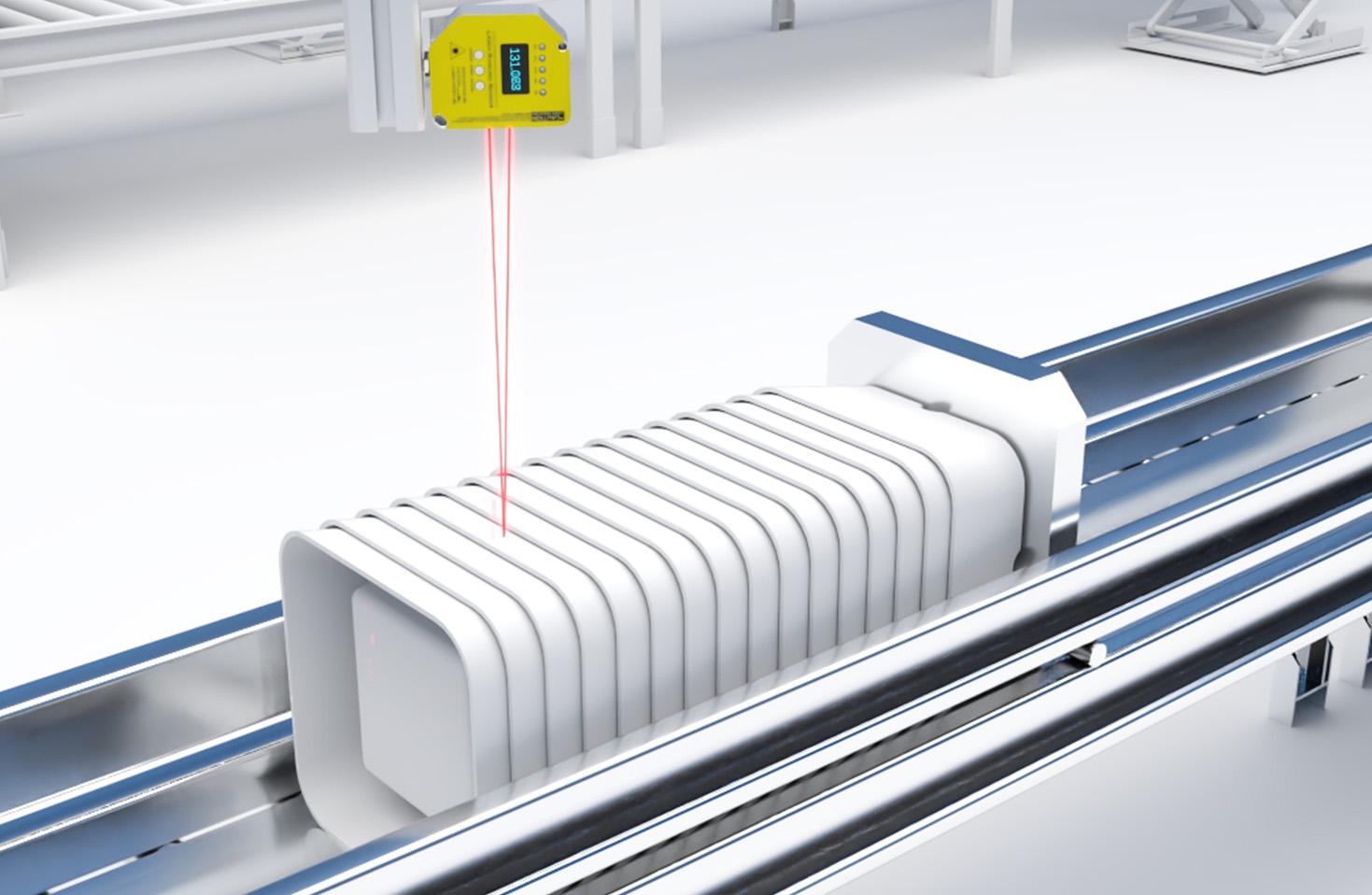
Recent technological advancements have significantly enhanced the capabilities of total reflection laser sensors. The integration of high-power, focused laser diodes with wavelengths in the visible red or blue spectrum improves visibility for alignment and allows for detection of specific material types. Advanced digital signal processing (DSP) chips within the sensor housing can now differentiate between a true target signal and background noise caused by dust or minor vibrations, drastically improving stability. The miniaturization of components has led to compact sensor designs that can be installed in space-constrained locations. Additionally, modern variants feature programmable logic, allowing users to set custom sensitivity thresholds, response times, and output modes (e.g., light-on/dark-on) via intuitive teach-in buttons or software interfaces, simplifying integration into complex machinery.
When selecting and implementing a total reflection laser sensor, engineers must consider several critical parameters. The sensing distance, which is typically shorter than for other photoelectric types, must be matched to the application. The size and nature of the target, especially its surface finish and transparency, are paramount. Environmental factors like temperature extremes, condensation, or contaminant buildup on the sensor's optical window must be mitigated, often through the use of models with IP67 or higher ingress protection ratings. Proper alignment remains crucial; although laser spots aid in setup, mechanical fixtures or alignment tools are recommended for optimal performance. Regular maintenance, primarily keeping the lens clean, is essential for long-term reliability.

Looking forward, the convergence of total reflection laser sensing with Industry 4.0 frameworks is a clear trend. Sensors with integrated IO-Link communication can transmit not just a binary signal but also diagnostic data—such as internal temperature, signal strength, and operating hours—enabling predictive maintenance and seamless integration into digital twin models. Research continues into multi-point array sensors and systems capable of profiling surfaces rather than just detecting presence, opening new possibilities in quality inspection.
In conclusion, total reflection laser sensors are a pinnacle of applied optical engineering, solving unique detection challenges with elegance and precision. Their continued evolution, driven by advancements in optics, electronics, and digital communication, ensures they will remain a critical tool for engineers seeking to enhance automation efficiency, product quality, and system intelligence across a diverse range of manufacturing and processing industries.
