Laser scanning sensors, also known as laser distance sensors or LiDAR (Light Detection and Ranging) sensors in certain configurations, are pivotal components in modern industrial automation, robotics, and quality control systems. Their core function is to measure distance, detect objects, and generate precise two-dimensional or three-dimensional profiles of a target area without physical contact. The fundamental principle hinges on the time-of-flight (ToF) method or triangulation, depending on the specific design and application requirements.
The most prevalent operational principle for long-range scanning is the Time-of-Flight method. The sensor emits a pulsed or modulated laser beam towards a target. The beam reflects off the object's surface and returns to a photodetector within the sensor. An internal high-speed clock precisely measures the time delay between the emission and reception of the light pulse. Since the speed of light (c) is a known constant (approximately 3×10^8 m/s), the distance (d) to the object can be calculated using the simple formula: d = (c × Δt) / 2, where Δt is the measured time of flight. The division by two accounts for the round-trip journey of the light. Modern ToF scanners can perform millions of these measurements per second, creating a dense cloud of distance points, or a "point cloud," which software interprets as a contour or profile.
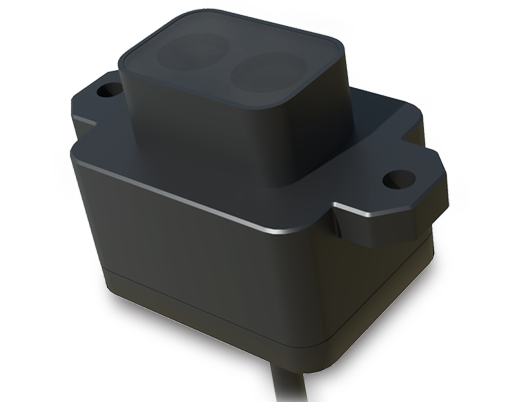
For applications demanding very high accuracy at shorter ranges, laser triangulation is often employed. Here, the laser emitter, the measured point on the target, and the receiving sensor (typically a CCD or CMOS linear array) form the three vertices of a triangle. A focused laser spot or line is projected onto the target surface. The reflected light is imaged onto the position-sensitive detector at an angle relative to the emission axis. As the target's distance changes, the position of the laser spot on the detector shifts. Using the known baseline distance between the laser source and the detector and the fixed angle, the sensor's processor calculates the target distance through trigonometric relationships. This method provides exceptional micron-level resolution for tasks like surface inspection, thickness measurement, and weld seam tracking.
A critical component of a scanning sensor is its beam deflection mechanism. To achieve a line or area scan, the laser beam must be swept across the field of view. This is commonly accomplished using a rotating polygonal mirror, a galvanometer-driven mirror (galvo), or a resonant mirror. A rotating mirror with multiple facets spins at high speed, deflecting the beam to create a scanning line. For more complex 2D or 3D scanning patterns, two mirrors moving on perpendicular axes (e.g., in a galvo scanner) can direct the beam precisely across a plane. The synchronization between the beam's angular position and the distance measurement for each point is crucial for accurate profile reconstruction.
The performance of a laser scanner is characterized by several key parameters. Resolution refers to the smallest detectable change in distance. Measurement range defines the minimum and maximum distances over which the sensor operates reliably. Scanning frequency, or the number of profiles captured per second, determines how fast a process can be monitored. Environmental factors such as ambient light, surface color, reflectivity, and material transparency (e.g., glass) pose significant challenges. Dark, matte surfaces absorb light, reducing signal strength, while shiny surfaces can cause specular reflections that mislead the detector. Advanced sensors employ adaptive exposure control, multiple echo processing (to filter out secondary reflections), and sophisticated algorithms to compensate for these material effects.
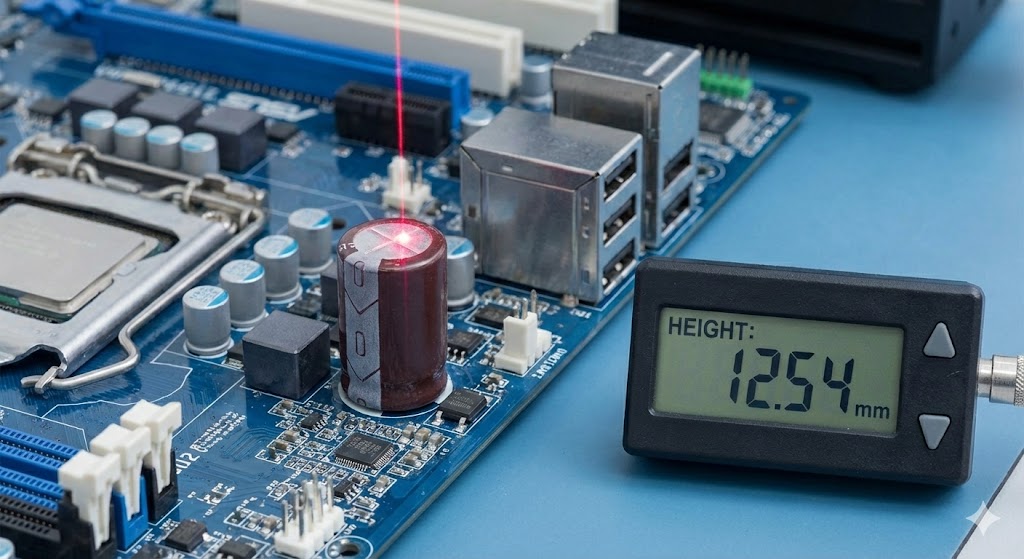
In industrial practice, laser scanning sensors are indispensable. They enable precise contour measurement in automotive assembly, ensuring body panel gaps are within tolerance. In logistics, they form the core of dimensioning systems that measure parcel sizes on conveyor belts. They guide autonomous mobile robots (AMRs) by continuously mapping their surroundings for navigation and obstacle avoidance. In bulk material handling, scanners monitor the volume and profile of stockpiles in silos or on conveyor belts. Furthermore, they are used for deformation analysis, robotic bin picking, and even in safety systems as laser scanner guards that create protective fields around hazardous machinery.
The ongoing evolution of laser scanning technology focuses on increasing speed, accuracy, and robustness while reducing size and cost. The integration of multi-echo evaluation and real-time data processing with industrial communication protocols like EtherCAT or PROFINET allows for seamless integration into Industry 4.0 and smart factory ecosystems. As machine vision and automation demands grow more complex, the laser scanning sensor remains a fundamental tool, transforming physical geometries into actionable digital data with remarkable speed and precision, thereby driving efficiency, quality, and safety across countless industrial sectors.