Laser sensors are pivotal components in modern industrial automation, offering high precision, non-contact measurement, and reliability across diverse environments. These devices operate by emitting laser beams and analyzing reflected light to detect presence, measure distance, or assess object characteristics. Understanding the various types of laser sensors is essential for selecting the right technology for specific applications.
One primary category is triangulation laser sensors, which calculate distance based on the angle of reflected light. They are widely used for height detection, contour profiling, and thickness measurement in manufacturing lines, such as in automotive assembly or electronics production. Their sub-millimeter accuracy makes them ideal for quality control.
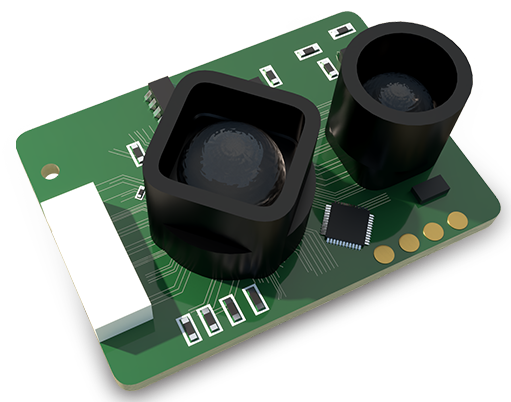
Time-of-flight (ToF) laser sensors measure distance by calculating the time taken for a laser pulse to return after hitting an object. These sensors excel in long-range applications, like warehouse automation for pallet positioning or AGV (Automated Guided Vehicle) navigation, offering ranges up to several meters with moderate precision.
Confocal laser sensors utilize multiple focal points to achieve micron-level resolution, suitable for measuring transparent or reflective surfaces, such as glass thickness or semiconductor wafers. Their ability to handle challenging materials makes them valuable in high-tech industries.
Laser contrast sensors detect differences in color, texture, or material by analyzing reflectivity. Common in packaging and printing, they ensure label alignment or sort materials based on surface properties, enhancing production efficiency.
Laser profile sensors project a line of laser light to capture 2D or 3D profiles, used for inspecting complex shapes, weld seams, or tire treads. They provide comprehensive data for robotics and aerospace applications.
Laser distance sensors, including interferometric types, offer nanometer precision for calibration tasks in metrology labs or precision machining. They are critical in environments where minimal error is tolerated.
Each type leverages unique principles: triangulation for close-range accuracy, ToF for versatility, confocal for delicate surfaces, contrast for material differentiation, profile for dimensional analysis, and distance for ultra-precision. Factors like environmental conditions (e.g., dust, vibration), target material, required speed, and accuracy influence selection. For instance, in harsh settings, sensors with robust housings and IP ratings are preferred.
Industries benefit significantly from laser sensors. In automotive manufacturing, they ensure part alignment and weld quality; in logistics, they optimize inventory management; in pharmaceuticals, they verify packaging integrity. Emerging trends include integration with IoT for real-time data analytics and miniaturization for portable devices.
In summary, laser sensors encompass a range of technologies tailored to specific needs, from basic detection to complex measurements. Their adoption drives efficiency, safety, and innovation in industrial processes, making them indispensable tools in the era of smart manufacturing. As technology advances, we can expect even more compact, affordable, and multifunctional laser sensors to emerge, further expanding their applications.