Laser counting sensors are pivotal components in modern industrial automation, offering high precision and reliability for various counting applications. These devices operate by emitting a focused laser beam toward a target object. When the object interrupts the beam, the sensor detects the change in light reception, triggering a count. This principle, known as through-beam sensing, ensures accurate detection even with small, fast-moving, or transparent items, making laser counters superior to traditional mechanical or photoelectric sensors in many scenarios.
The core technology behind laser counting sensors involves a laser diode, a receiver, and sophisticated signal processing circuitry. The laser diode generates a coherent, narrow beam of light, which maintains its intensity over longer distances compared to standard LED light sources. This coherence allows for precise beam alignment and minimal dispersion, enabling the sensor to detect objects with high positional accuracy. The receiver, typically a phototransistor or photodiode, converts the received light into an electrical signal. Advanced models incorporate background suppression or triangulation methods to filter out ambient light and irrelevant reflections, ensuring counts are only registered for intended objects.
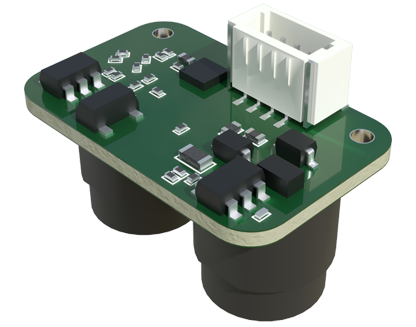
In industrial settings, laser counting sensors are deployed across numerous sectors. In packaging lines, they count products such as bottles, pills, or electronic components before boxing. In logistics and warehousing, they monitor items on conveyor belts, facilitating inventory management and order fulfillment. The automotive industry utilizes these sensors to count parts during assembly, while the pharmaceutical sector relies on them for precise pill counting to ensure correct dosages. Their ability to operate at high speeds—often counting thousands of items per minute—makes them indispensable for high-throughput environments.

Key advantages of laser counting sensors include their non-contact operation, which eliminates wear and tear, and their high resolution, capable of detecting objects as small as 0.1 millimeters. They are also less susceptible to environmental factors like dust or vibration when properly housed, though regular maintenance of lenses is recommended to prevent contamination. Modern sensors often feature programmable logic controllers (PLC) compatibility, offering adjustable sensitivity, output formats (e.g., NPN/PNP), and communication protocols like IO-Link for seamless integration into Industry 4.0 systems.
When selecting a laser counting sensor, engineers must consider factors such as sensing distance, object size, material, and ambient conditions. For instance, in clean rooms, sensors with low particle emission are preferred, while in outdoor applications, robust housings with high ingress protection (IP) ratings are necessary. Calibration is crucial; improper alignment can lead to false counts or missed detections. Best practices involve periodic testing with sample objects and using alignment tools provided by manufacturers.
Looking ahead, innovations in laser counting sensors focus on enhancing smart capabilities. Integration with artificial intelligence allows for predictive maintenance, where sensors self-diagnose issues like lens fogging or power degradation. Miniaturization trends enable their use in compact robotics, while advancements in wavelength diversity improve performance with challenging materials like glass or shiny metals. As industries strive for greater efficiency, laser counting sensors will continue to evolve, driving automation forward with unmatched precision and adaptability.