In industrial automation and machinery design, proximity sensors play a critical role in non-contact detection, position sensing, and object counting. Among the various models available, the S8 series of cylindrical inductive proximity sensors is widely recognized for its robust construction, reliable performance, and versatility. A common question from maintenance technicians, automation engineers, and system integrators is: "Where is the S8 proximity sensor typically located or installed?" This article provides a detailed, professional guide to the common mounting locations, installation considerations, and application-specific positioning for S8-type sensors.
The physical location of an S8 proximity sensor is fundamentally determined by its function within a machine or process line. These sensors are not centralized in a control cabinet but are distributed at key mechanical points where detection is required. The standard S8 form factor is an 8mm diameter cylindrical barrel, often with a threaded body (e.g., M8 x 1 or M12 x 1 threading) for easy mounting in a drilled and tapped hole or a standard mounting bracket. The sensing face is located at the front (non-threaded end) of the cylinder. Therefore, the "location" refers to the precise point where this sensing face is positioned relative to the target object.
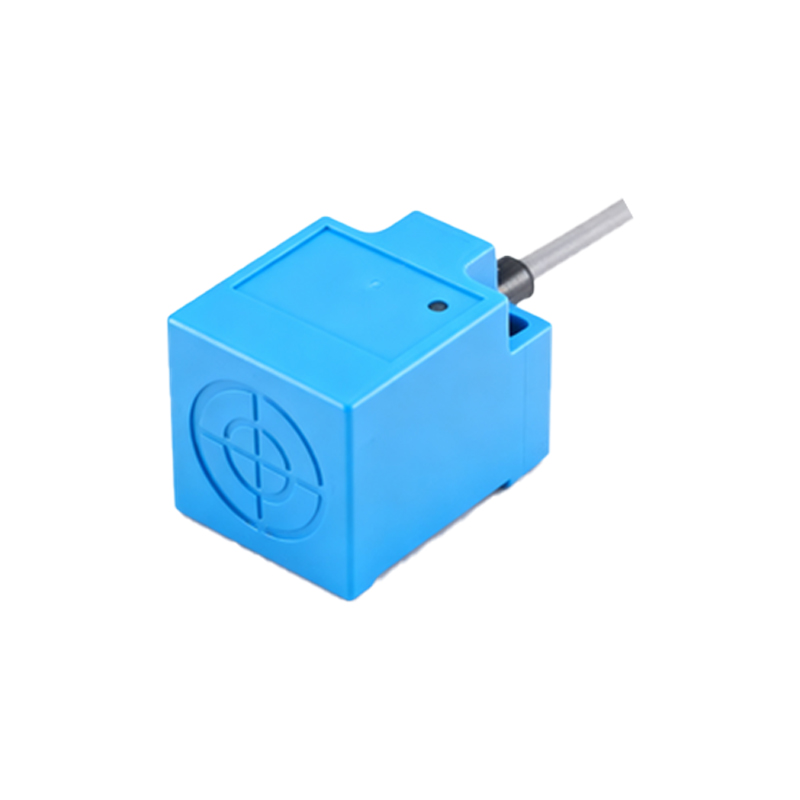
Typical installation locations include mounting on machine frames, actuator housings, linear slide units, and fixture plates. For example, on a pneumatic cylinder, an S8 sensor is frequently mounted into a pre-drilled hole or a sensor groove on the cylinder body to detect the piston rod's extended or retracted position. The sensor is positioned so its sensing face is aligned with the path of the cylinder's piston magnet or a metal flag. In conveyor systems, multiple S8 sensors may be located along the frame to detect the presence of products, pallets, or to count items as they pass a specific point. They are often mounted on L-shaped brackets, allowing adjustment of the sensing distance and angle.
Another crucial location is on rotating equipment, such as indexing tables or motor shafts. Here, S8 sensors are mounted stationary adjacent to the rotating component. A metal target (like a gear tooth, key, or dedicated flag) is fixed to the rotating part. As the target passes the sensor's sensing face, it triggers a pulse, used for speed monitoring, angular position, or zero-point reference. The sensor must be located at a precise gap (the rated sensing distance, typically 1.5mm or 2mm for standard 8mm models) from the target's path. Exceeding this nominal distance can lead to unreliable detection.
The environment heavily influences the optimal location. In areas with heavy metallic dust or chip accumulation, locating the sensor slightly away from the direct fallout zone or using a sensor with a flush-mounting capability (which allows installation embedded in metal) can prevent false triggers. For washdown or humid environments, ensuring the location permits the use of an S8 sensor with a high IP rating (e.g., IP67 or IP69K) is essential. The electrical connection point—the cable or connector at the rear of the sensor—is also part of its location consideration. Cables must be routed through cable carriers or secured in strain relief clamps to prevent wire fatigue from constant machine movement.
Installation is not merely about physical placement. The sensor's location must account for its electrical characteristics. The brown wire (+V), blue wire (0V), and black wire (signal output) must be connected to the correct terminals in the nearby junction box or directly to a programmable logic controller (PLC) input module. Often, a junction box is located within a cable's length (1-2 meters) of the sensor cluster for easy wiring. For sensing ferrous metals, the location is straightforward. For non-ferrous metals like aluminum or copper, a factor-of-reduction applies, requiring the sensor to be located closer to the target or the use of a "non-ferrous" specific model.
In summary, the S8 proximity sensor is located at the precise point of detection on industrial equipment. Its position is defined by the need to sense a metallic target's presence, absence, or position with a consistent air gap. Successful location requires mechanical stability, correct alignment, adherence to sensing distance specifications, and protection from environmental hazards. Always consult the specific manufacturer's datasheet for the exact S8 model in use, as dimensions, sensing ranges, and mounting recommendations may have slight variations. Proper location and installation ensure maximum reliability, reduce downtime, and are foundational to efficient automated system operation.