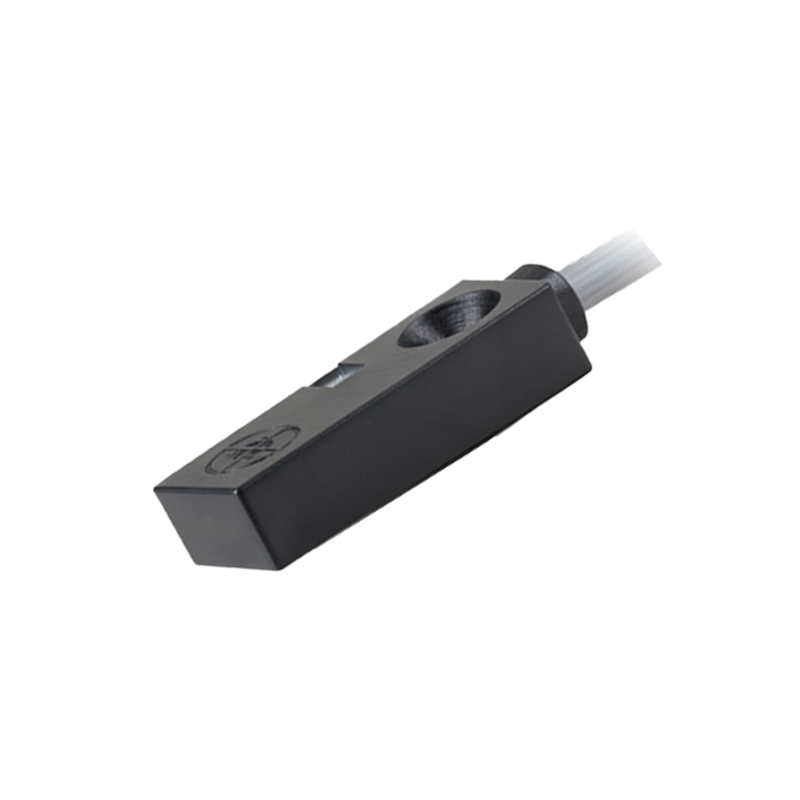
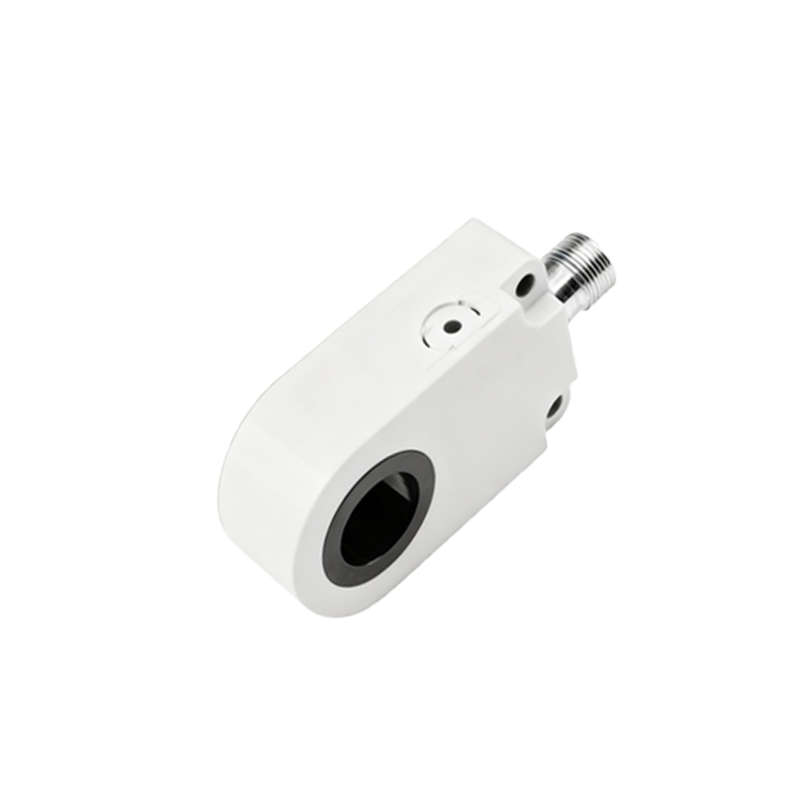
In the realm of industrial automation and control systems, the reliable detection of metallic objects is a fundamental requirement. Among the various sensing technologies available, inductive proximity sensors stand out for their robustness, non-contact operation, and precision. This article delves into the specifics of a common and highly effective variant: the PNP 5mm inductive proximity sensor, explaining its operating principle, key characteristics, wiring, and typical applications.
At its core, an inductive proximity sensor generates an electromagnetic field from a coil within its sensing face. When a metallic object, typically ferrous (like iron or steel) or non-ferrous (like aluminum, copper, or brass), enters this field, eddy currents are induced on the surface of the target. These eddy currents cause a measurable change in the oscillation amplitude of the sensor's internal LC circuit. The sensor's electronics detect this change and subsequently switch its output state. The "5mm" designation refers to the nominal sensing distance (Sn). For a standard 5mm sensor, this is the guaranteed operating distance for a defined standard target (usually a 1mm thick square of mild steel, Fe 360). It is crucial to note that the effective sensing range can vary with different metals; for instance, it is reduced for non-ferrous metals like aluminum.
The "PNP" specification defines the sensor's output transistor type and switching logic. A PNP sensor, also known as a "sourcing" sensor, switches the positive voltage supply line. In its normal state (no target present), the output signal line is disconnected (open circuit). When a target is detected within the sensing range, the internal PNP transistor activates, connecting the output signal line to the positive supply voltage (+V). This provides a positive voltage signal to the connected load, such as a PLC input, relay, or indicator lamp. The complementary type is the NPN (sinking) sensor. The choice between PNP and NPN often depends on the prevailing control system architecture and the input type of the controller; PNP is commonly used with PLCs that have sourcing inputs in many regions.
Wiring a typical 3-wire DC PNP 5mm inductive sensor is straightforward. The three wires are usually color-coded: Brown for the positive supply voltage (+V, typically 10-30V DC), Blue for the common negative or 0V, and Black (or sometimes White) for the output signal. The load is connected between the Black output wire and the Blue 0V wire. When the sensor detects metal, the Black wire is switched to the supply voltage, completing the circuit and activating the load. These sensors also feature built-in protection against short-circuits, reverse polarity, and often electromagnetic interference (EMI), ensuring longevity in harsh industrial environments.
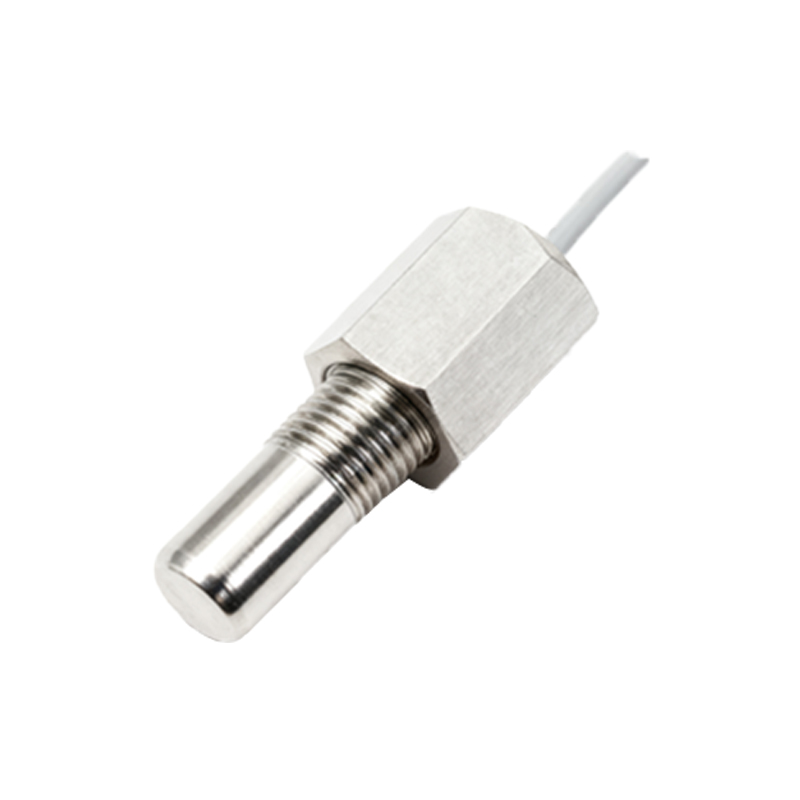
The compact 5mm sensing range makes these sensors ideal for applications requiring precise positioning or detection of small metallic parts. Common use cases include end-position detection of cylinders in pneumatic systems, verifying the presence of metal caps or components on assembly lines, counting metallic objects on conveyors, and monitoring the position of machine tool slides. Their solid-state design, with no moving mechanical parts, guarantees a high number of operating cycles and exceptional reliability. Many models are available with different housing materials (like nickel-plated brass or stainless steel) and protection ratings (commonly IP67), allowing them to perform reliably in the presence of coolants, oils, and dust.
When selecting a PNP 5mm inductive sensor, engineers must consider several parameters beyond the basic specifications. The switching frequency defines how quickly the sensor can detect objects passing by, which is critical for high-speed applications. Hysteresis, a small difference between the switch-on and switch-off points, prevents output chatter when a target is at the edge of the sensing range. Additionally, factors like temperature range, flush or non-flush mounting capability (which affects the sensing field shape and neighboring metal influence), and the specific type of metal to be detected are all vital for optimal system integration. By understanding these details, automation professionals can leverage the PNP 5mm inductive proximity sensor to create more efficient, reliable, and precise control systems for a wide array of industrial machinery.