In the realm of industrial automation, particularly within welding applications, achieving consistent, high-quality welds is paramount. This demands precise control over the welding torch's path relative to the workpiece joint. Traditional mechanical guidance or manual programming often falls short when dealing with part variations, thermal distortion, or complex joint geometries. This is where weld seam laser distance sensors emerge as a critical enabling technology, providing non-contact, real-time measurement to guide robotic welding systems with exceptional accuracy.
A weld seam laser distance sensor, often a type of laser triangulation sensor or a profile scanner, operates by projecting a visible or infrared laser line or spot onto the target surface—the weld joint. The reflected light is captured by a receiver (typically a CMOS or CCD array) at a known angle. By analyzing the position of the reflected light spot or the deformation of the laser line on the receiver, the sensor's onboard processor calculates the exact distance to the surface. When scanned across a joint—be it a V-groove, lap, fillet, or butt joint—the sensor captures a precise 2D or 3D profile of the seam's geometry before the welding arc is struck.
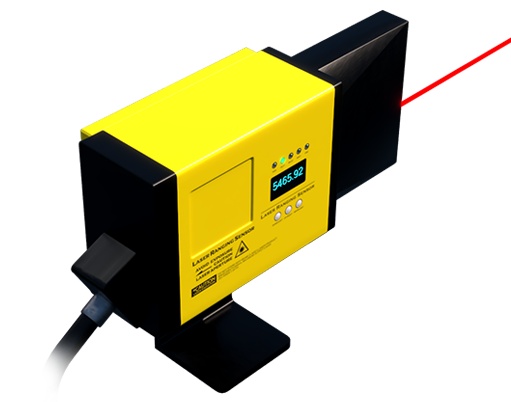
The core advantages of utilizing laser sensors for weld seam tracking are multifaceted. First and foremost is precision. Modern sensors can achieve measurement resolutions in the micron range, allowing them to detect subtle gaps, misalignments, and variations in seam depth and width. This data is transmitted in real-time to the robot controller, which dynamically adjusts the torch position, travel speed, and welding parameters (like wire feed rate and arc voltage) to compensate for any deviations from the programmed path. This adaptive control is crucial for ensuring complete penetration, proper bead geometry, and ultimately, weld integrity.

Secondly, these sensors offer remarkable speed and non-contact operation. The measurement process does not interfere with the workpiece and is performed at high frequencies, enabling real-time tracking even at high welding speeds. This is essential for high-volume production environments such as automotive manufacturing, shipbuilding, and pipeline construction. Furthermore, the non-contact nature eliminates tool wear and mechanical damage to the sensor or the workpiece, ensuring long-term reliability and reducing maintenance downtime.
Integration of a laser seam tracking system typically involves mounting the sensor on the welding torch or a fixed position ahead of the torch. Key parameters for sensor selection include measurement range, resolution, scanning frequency, and the required field of view. Environmental robustness is non-negotiable; sensors must be housed in rugged enclosures rated for IP67 or higher to withstand intense heat, spatter, electromagnetic interference from the welding arc, and ambient shop floor conditions like dust and vibration. Advanced models incorporate protective windows with air purge systems to keep the optical path clear of fumes and spatter.
The application spectrum is broad. In automotive body-in-white assembly, lasers track complex flanged seams for spot and MIG welding. In heavy machinery, they guide the welding of thick plates with prepared bevels. They are indispensable for orbital welding of pipes and for cladding or hardfacing operations where precise material deposition is critical. Beyond mere tracking, the rich profile data can be used for offline quality inspection, measuring weld bead size, and detecting defects like undercut or excessive reinforcement.
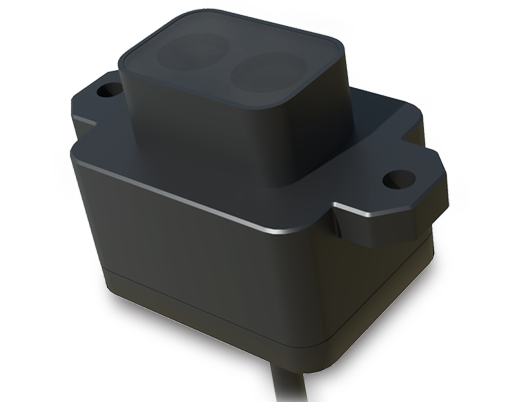
Despite their capabilities, successful implementation requires careful consideration. The reflectivity and color of the base material can affect signal strength, though many sensors have automatic gain control to compensate. Highly reflective or dark surfaces may require parameter tuning. The initial investment and system integration effort are higher than for pre-programmed paths, but the return on investment is realized through dramatic reductions in rework, scrap, and post-weld machining, alongside significant gains in productivity and first-pass weld quality.
Looking forward, the convergence of laser sensing with advanced machine vision and AI algorithms is pushing boundaries. Systems are evolving from simple tracking to predictive analytics and closed-loop process control, where sensor data not only guides the torch but also actively optimizes the weld process parameters in real-time based on the actual joint condition. This trend towards intelligent, sensor-driven welding cells is a cornerstone of Industry 4.0, paving the way for fully adaptive manufacturing systems that guarantee quality, efficiency, and flexibility.
In conclusion, weld seam laser distance sensors are far more than just measurement devices; they are the intelligent eyes of automated welding systems. By delivering accurate, real-time geometric data of the weld joint, they empower robots to weld with a level of adaptability and precision that mimics, and often surpasses, skilled human welders. Their adoption is a definitive step towards achieving zero-defect manufacturing in metal fabrication, ensuring structural safety, operational longevity, and cost-effectiveness across countless industries.