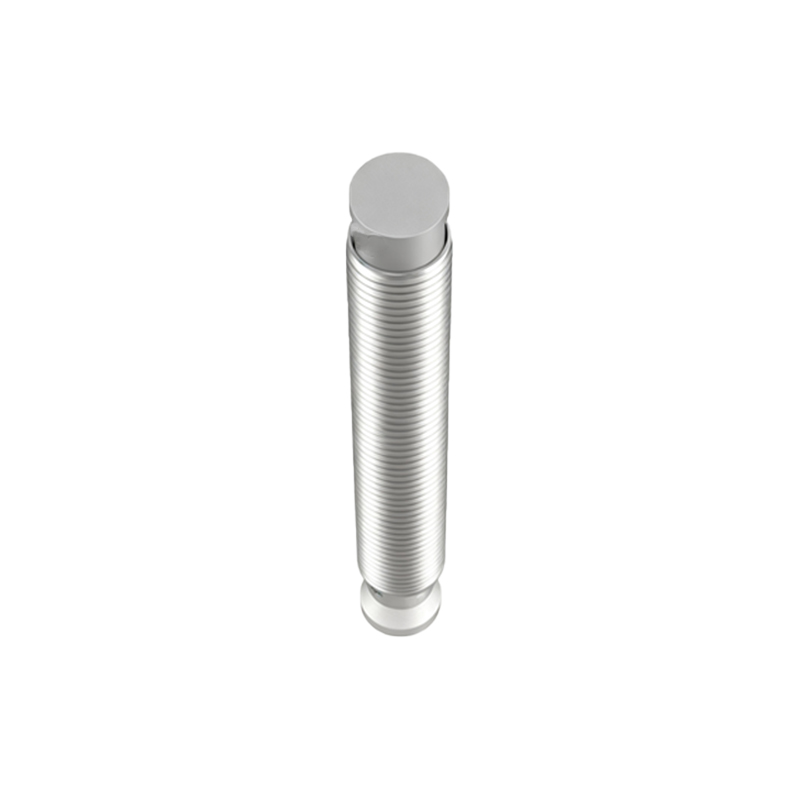
Inductive proximity sensors are fundamental components in modern industrial automation, offering non-contact detection of metallic objects. Operating on the principle of electromagnetic induction, these robust devices have become indispensable for tasks ranging from simple object presence detection to complex positioning and counting in high-speed machinery. This article delves into the core technology, explores key application areas, and provides a framework for selecting the right sensor for specific operational needs.
At the heart of an inductive proximity sensor lies an oscillator circuit that generates a high-frequency electromagnetic field at its active face, typically emanating from a coil wound around a ferrite core. When a conductive metal target enters this oscillating field, eddy currents are induced on the target's surface. These eddy currents draw energy from the sensor's oscillator, resulting in a measurable energy loss or amplitude reduction. An internal evaluation circuit detects this change and triggers a solid-state output switch, signaling the presence of the object. It is crucial to note that the effectiveness of this process depends on the target material's conductivity and permeability. Ferrous metals like steel and iron, due to their high permeability, are detected at the longest ranges. Non-ferrous metals such as aluminum, copper, or brass have lower permeability but still sufficient conductivity to be reliably detected, though often at a reduced sensing distance.
The defining characteristics of inductive sensors contribute significantly to their widespread adoption. Their non-contact nature ensures zero mechanical wear on both the sensor and the target, leading to exceptional longevity and maintenance-free operation. They are inherently robust, featuring housings often made of nickel-plated brass, stainless steel, or high-grade plastics like PBT, which provide excellent resistance to oils, coolants, and dust. Many models conform to IP67 or IP69K ingress protection ratings, making them suitable for harsh washdown environments in food and beverage or pharmaceutical industries. Furthermore, they offer high switching frequencies, capable of detecting thousands of objects per minute, and exhibit remarkable precision and repeatability in positioning tasks.
Application scenarios for inductive proximity sensors are vast and varied. In material handling and packaging, they are used for detecting metal parts on conveyors, counting products, and monitoring fill levels in bins or hoppers. In machine tools and CNC equipment, they serve as precise end-position limit switches for axes, tool breakage detection, and part clamping verification. The automotive industry relies on them heavily in assembly lines for robot positioning, weld gun control, and part presence confirmation. Their immunity to ambient light, dust, and moisture makes them superior to optical sensors in many dirty industrial settings. A specialized variant, the cylindrical threaded barrel style, is perhaps the most common, designed for easy mounting in standard holes with locknuts.
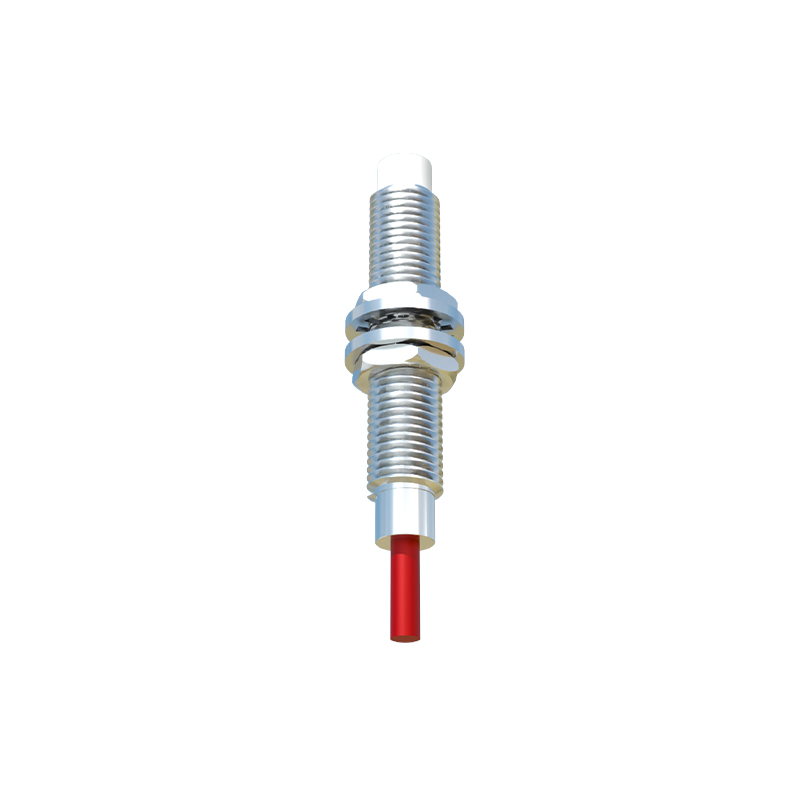
Selecting the appropriate inductive sensor requires careful consideration of several parameters. The nominal sensing distance (Sn), as specified by the manufacturer, is a key starting point but is typically derated for real-world conditions and non-ferrous targets. The mounting style—flush, non-flush, or shielded—affects the sensing range and installation; flush-mounted sensors can be embedded in metal without interference, whereas non-flush types offer longer ranges but require a metal-free zone around them. Output configuration is another critical choice: PNP (sourcing) or NPN (sinking) transistor outputs are standard, with 2-wire DC and analog (4-20 mA or 0-10V) outputs available for specific needs. The operating voltage range (commonly 10-30V DC), switching frequency, housing material, and connection type (cable or quick-disconnect) must all align with the application's electrical, mechanical, and environmental demands.
In conclusion, inductive proximity sensors represent a mature, reliable, and versatile sensing technology. Their operation, based on inducing eddy currents in metallic targets, provides a robust solution for countless industrial automation challenges. By understanding the underlying electromagnetic principles and carefully matching sensor specifications—such as sensing distance, housing style, output type, and environmental rating—to the application requirements, engineers and technicians can ensure optimal system performance, enhanced safety, and improved operational efficiency. As automation evolves, these sensors continue to be a cornerstone of reliable and precise object detection.