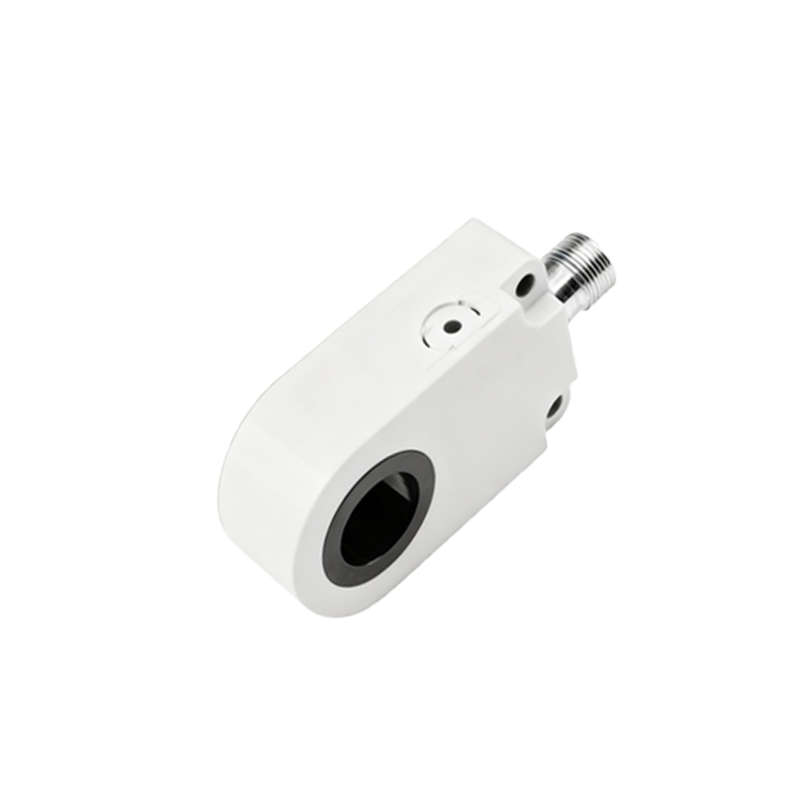
In the rapidly evolving landscape of industrial automation, the demand for reliable, high-performance sensing solutions has never been greater. Among the myriad of technologies available, inductive proximity sensors stand out for their robustness and non-contact operation. However, traditional inductive sensors often face limitations in detection range, typically maxing out at a few tens of millimeters. This is where ultra-long range inductive proximity sensors come into play, pushing the boundaries to deliver detection capabilities exceeding 100 mm, and in some advanced models, even reaching up to 150 mm. This breakthrough is transforming applications across heavy machinery, material handling, and automotive manufacturing, where distance and durability are paramount.
The core principle behind these sensors remains based on electromagnetic induction. An oscillator generates a high-frequency electromagnetic field from a coil within the sensor’s active face. When a metallic target enters this field, eddy currents are induced on the target’s surface, causing a change in the oscillation amplitude. This change is detected by the sensor’s circuitry, triggering an output signal. What sets ultra-long range variants apart is the sophisticated engineering in coil design, oscillator stability, and signal processing algorithms. Enhanced coil geometries, often utilizing ferrite cores or specialized winding techniques, amplify the electromagnetic field’s reach without proportionally increasing sensor size. Simultaneously, advanced microprocessors filter out environmental noise—such as from adjacent machinery or temperature fluctuations—ensuring stable, accurate detection even at extended ranges.
Key advantages of ultra-long range inductive proximity sensors are manifold. First, they significantly enhance operational safety by allowing earlier detection of large metallic objects, such as crane hooks or robotic arms, enabling smoother deceleration and preventing collisions. In automated storage and retrieval systems (AS/RS), these sensors can detect pallets or containers from a distance, optimizing logistics flow without requiring physical contact. Second, their immunity to harsh conditions is notable. Encased in robust housings made of stainless steel or PBT plastic, they resist dust, moisture, oils, and mechanical shocks, complying with IP67 or higher ingress protection ratings. This makes them ideal for outdoor use or in foundries and mining operations. Third, installation flexibility improves, as sensors can be mounted farther from targets, reducing wear and simplifying maintenance in cramped or hazardous environments.
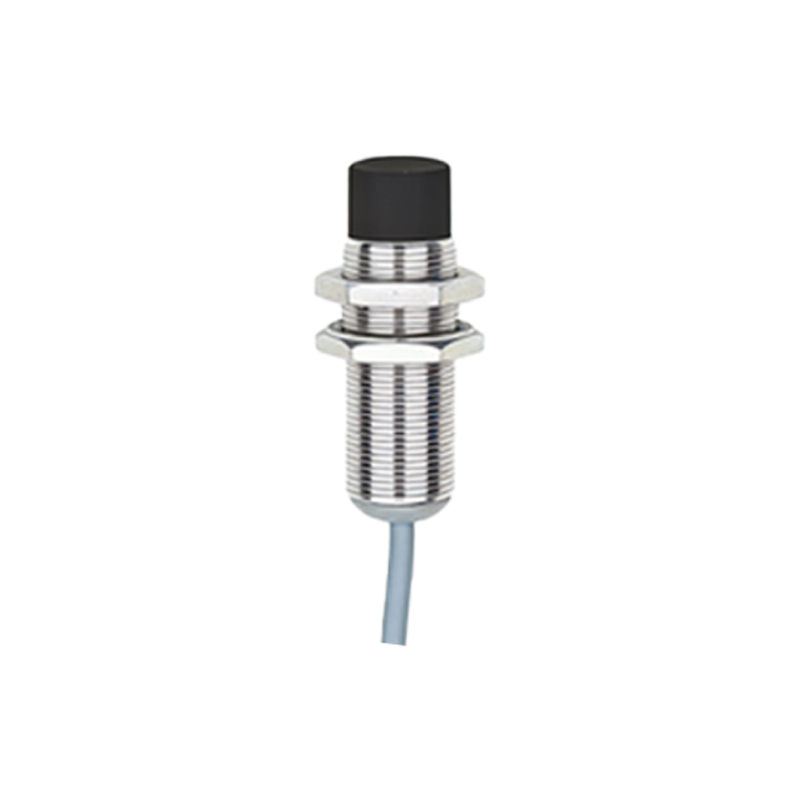
Despite their benefits, selecting and deploying ultra-long range sensors requires careful consideration. Target material is crucial; while they work best with ferrous metals like steel and iron, detection range drops for non-ferrous metals like aluminum or copper. Sensor size also correlates with range—larger diameters generally offer longer ranges, but may not fit space-constrained setups. Additionally, background suppression features are vital to ignore interfering metals behind the intended target, preventing false triggers. Modern sensors often incorporate teach-in functions or programmable parameters via IO-Link communication, allowing users to fine-tune sensing distances and output modes on-site.
Looking ahead, the integration of Industry 4.0 technologies is propelling these sensors into smarter roles. With embedded diagnostics and predictive maintenance capabilities, they can monitor their own health and alert operators to potential failures before downtime occurs. Wireless connectivity options are emerging, enabling easier deployment in mobile equipment. As industries continue to prioritize efficiency and safety, ultra-long range inductive proximity sensors will undoubtedly play a pivotal role, bridging gaps between mechanical systems and digital control networks. Their evolution reflects a broader trend toward more adaptive, resilient automation solutions that can thrive in demanding real-world conditions.
In conclusion, ultra-long range inductive proximity sensors represent a significant leap forward in sensing technology. By extending reliable detection to distances once thought impractical, they empower engineers to design more innovative, efficient, and safe automated systems. Whether in manufacturing plants, ports, or energy facilities, these sensors are proving indispensable for the future of industrial automation.