In the rapidly evolving landscape of industrial automation, the selection of a high-quality laser sensor is a critical decision that directly impacts operational efficiency, safety, and product quality. A good laser sensor transcends basic functionality; it is a reliable, precise, and robust component engineered to thrive in demanding environments. This article delves into the essential characteristics that define an excellent laser sensor and provides guidance for engineers and procurement specialists.
First and foremost, precision and accuracy are non-negotiable. A superior laser sensor offers high-resolution measurement with minimal deviation. Key specifications to scrutinize include linearity error, repeatability, and resolution. For instance, in applications like semiconductor wafer alignment or precision gap measurement, a sensor with sub-micron repeatability is indispensable. The quality of the laser beam itself—its focus, spot size, and stability—directly influences these metrics. A well-collimated beam with a small, consistent spot size enables precise targeting, even on complex or reflective surfaces.
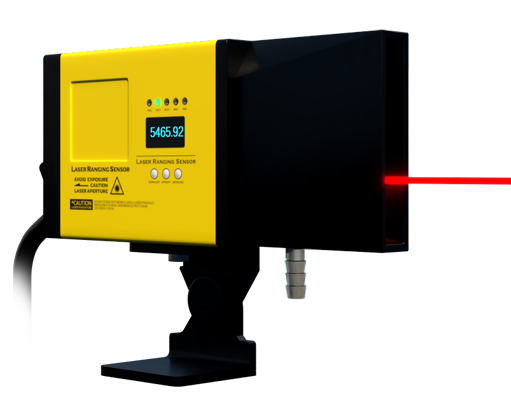
Environmental robustness is the second pillar. Industrial settings are rife with challenges: temperature fluctuations, humidity, dust, oil mist, and mechanical vibrations. A good laser sensor is housed in a rugged enclosure, typically with an IP67 or higher ingress protection rating, ensuring resistance to dust and water jets. It should have a wide operating temperature range, often from -10°C to 50°C or beyond, without significant drift in performance. Furthermore, immunity to ambient light interference, particularly from other lasers or strong workshop lighting, is crucial. Advanced models incorporate optical filters and modulated laser light to distinguish their signal from background noise.
The third critical aspect is versatility in functionality and integration. Modern laser sensors are not just measuring devices; they are intelligent nodes. Look for features such as programmable logic, multiple switching outputs (PNP/NPN, analog, IO-Link, Ethernet/IP), and teach-in capabilities for easy setup. The ability to perform different measurement principles—like time-of-flight for distance, triangulation for displacement, or contrast recognition for presence detection—adds immense value. Seamless integration into existing control architectures (PLC, PC) via standard communication protocols is essential for reducing commissioning time and complexity.
Application suitability is paramount. A sensor perfect for long-range outdoor logistics scanning may be unsuitable for high-speed bottling line inspection. Consider the specific use case: Is it for precise 2D/3D profiling, object detection on a conveyor, thickness measurement, or edge guidance? The required sensing range, response time (often in microseconds), and the material properties of the target (color, reflectivity, texture) must guide the selection. For example, a diffuse reflection sensor works well on matte surfaces, while a retro-reflective or through-beam sensor might be necessary for clear glass or highly reflective metals.
Finally, long-term reliability and support form the foundation of a wise investment. A good laser sensor comes from a manufacturer with a proven track record, offering comprehensive technical documentation, robust software tools for configuration and diagnostics, and accessible global service support. Mean Time Between Failures (MTBF) data can be a useful indicator of durability. The total cost of ownership, which includes installation, calibration, maintenance, and potential downtime, should be evaluated rather than just the initial purchase price.
In conclusion, a good laser sensor is characterized by uncompromising precision, rugged construction for industrial endurance, smart and flexible integration features, and a design tailored for specific application challenges. By meticulously evaluating these factors against your operational requirements, you can select a sensor that not only performs today but continues to deliver reliable, accurate data for years to come, forming a cornerstone of your automated system's intelligence and efficiency.