In the high-speed world of industrial automation, milliseconds matter. The question "How fast are proximity sensors?" is fundamental to designing efficient, reliable, and safe systems. The short answer is: exceptionally fast, but the complete picture involves understanding the nuances of response time, its measurement, and the factors that influence it.
At its core, the response time of a proximity sensor is the total time elapsed between a change in the target's position (the sensing event) and the corresponding change in the sensor's output signal. This is not an instantaneous process. It is typically broken down into two key components: the approach time and the release time. The approach time is the duration from when a target enters the sensing range to when the output switch activates. Conversely, the release time is the period from when the target leaves the sensing range to when the output switch deactivates. These values are often specified separately in datasheets and are usually measured in microseconds (µs) or milliseconds (ms).
Modern inductive and capacitive proximity sensors routinely achieve response times in the range of 50 to 500 microseconds. For context, 500 microseconds is half of one millisecond—a blink of an eye is roughly 300 to 400 milliseconds. High-speed models, particularly those designed for precise positioning or small-part detection on fast-moving assembly lines, can boast response times as low as 10-20 µs. Photoelectric sensors, depending on their sensing mode (through-beam, retro-reflective, diffuse), also offer very high speeds, often in the sub-millisecond range, though light-based detection can be influenced by other factors like target color and surface finish.
Several critical factors directly impact a sensor's achievable response time. First is the sensor's operating principle. Inductive sensors, detecting metallic objects, generally have very consistent and fast response times. Capacitive sensors, which can detect non-metals, might have slightly different characteristics. Second, the oscillator frequency and internal circuitry design play a huge role. Higher-frequency oscillation allows for faster detection cycles. Third, the sensing distance and target size matter. A larger target entering the field fully will trigger a faster, cleaner response than a small, thin target at the edge of the sensing range. Fourth, the output configuration is crucial. Sensors with a solid-state NPN or PNP output switch much faster than those with a mechanical relay output, which has inherent physical movement delays. Finally, environmental conditions like extreme temperatures or electrical noise can degrade performance.
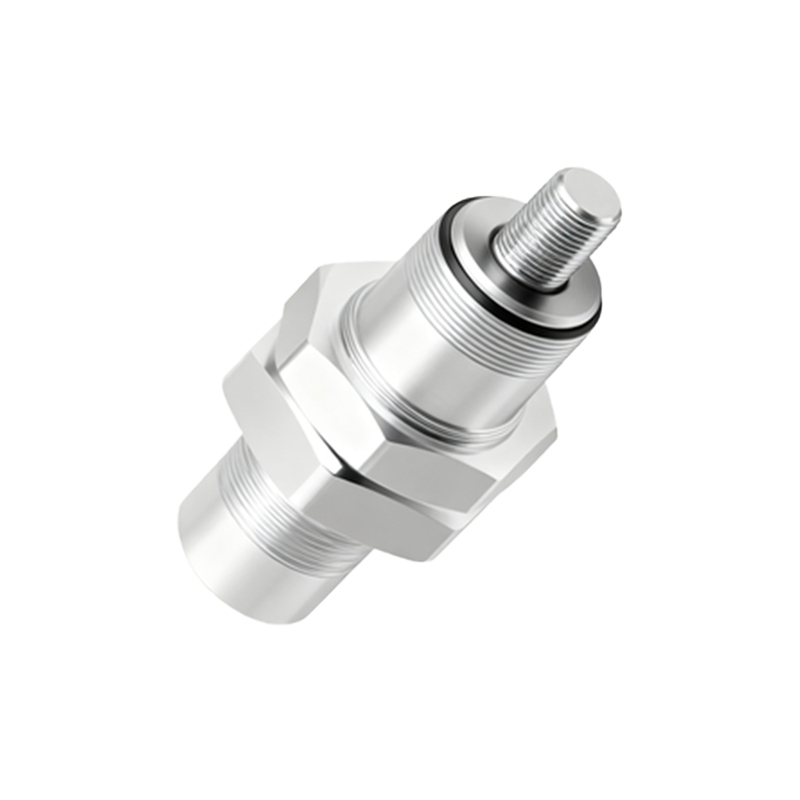
Understanding the specification is key. Reputable manufacturers provide detailed response time graphs in their datasheets. A standard graph plots the sensor's output state against the target position over time. It visually defines the approach and release times, often showing a slight hysteresis (the difference between the switch-on and switch-off points). It's vital to note that the published response time is usually measured under ideal laboratory conditions: a standard target (often a square of mild steel for inductive sensors), moving at a defined speed, under controlled temperature and voltage. Real-world applications may see variations.
For applications requiring ultra-high speed, such as counting small parts on a bottling line, monitoring gear teeth rotation, or controlling high-speed pneumatic actuators, selecting a sensor with a sub-100 µs response time is often non-negotiable. Engineers must calculate the required speed based on the maximum object velocity and the needed detection precision. A simple formula is often used: Required Response Time ≤ (Target Size / Target Speed). This ensures the sensor can reliably detect an object before it passes by.
In conclusion, proximity sensors are indeed fast—fast enough for the vast majority of industrial automation tasks. Their speed is a primary reason for their dominance over mechanical limit switches. However, "fast" is a relative term. By delving into datasheet specifications, understanding the difference between approach and release time, and accounting for application-specific variables like target material and environmental noise, engineers can select the optimal sensor. This ensures not just raw speed, but reliable, repeatable performance that keeps production lines running smoothly, safely, and at peak efficiency. The true measure of a sensor's speed is its consistent performance under your specific operating conditions.